Home / Travel / Italy · Where to stay
Where to stay in Florence: the neighbourhoods compared
Duomo, Santa Croce, Oltrarno, Santo Spirito, San Niccolò, San Lorenzo and Fiesole: how Florence's main areas differ, who each suits and what to check.
This guide contains affiliate links, marked as such. If you book through them, Bloiq may earn a commission at no extra cost to you.
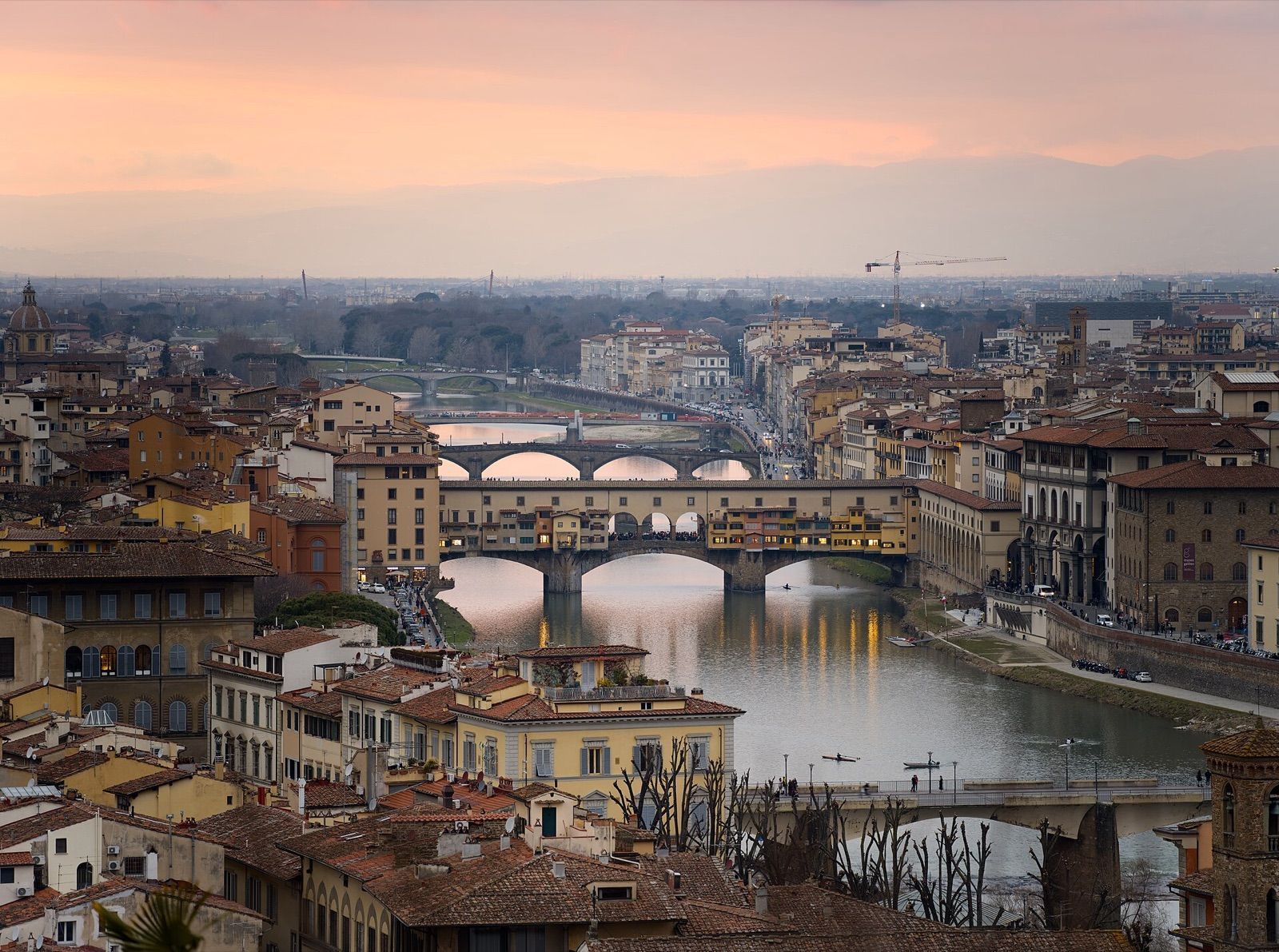
Florence is compact. You can walk from the train station to the Ponte Vecchio in about 15 minutes, and almost every major museum and church sits within the historic centre. That makes choosing a base less about distance than about atmosphere: crowded Renaissance streets on the north bank of the Arno, or the quieter, workshop-lined lanes on the south bank. Here's how the main areas compare, and who each one suits.
The quick answer
- First visit, short stay: Duomo and the Centro Storico.
- Lively squares and food markets: Santa Croce.
- Artisans and a local feel: Oltrarno.
- Evening atmosphere with the locals: Santo Spirito.
- Quiet, romantic and near the viewpoints: San Niccolò.
- Arriving by train, day trips, markets: San Lorenzo and the station area.
- Cooler air, views and calm: Fiesole, in the hills.
Duomo and the Centro Storico: the heart of the Renaissance
The streets around the cathedral, with Brunelleschi's dome, the Baptistery and Giotto's bell tower, lead in minutes to Piazza della Signoria, the Uffizi Gallery and the Ponte Vecchio. The whole historic centre is a UNESCO World Heritage Site, and staying here means you can see the main sights early in the morning or late in the evening, when the crowds thin.
Good for: first-time visitors, short stays and anyone who wants to walk everywhere. Consider: it's the busiest and usually the most expensive area, and restaurants on the main squares cater heavily to visitors. Many buildings are old, with stairs, small rooms and street noise late into the evening.
Santa Croce: squares, markets and a lively evening
East of the centre, Santa Croce is built around the great Franciscan basilica where Michelangelo, Galileo and Machiavelli are buried. Nearby is the Sant'Ambrogio food market, one of the city's most local, and the streets between them have wine bars, trattorias and a young crowd at night.
Good for: food lovers, couples and travellers who like a lively evening close to the sights. Consider: the streets around the square and towards Sant'Ambrogio can be loud late at night, especially at weekends. Ask for a room away from the street if you're a light sleeper.
Oltrarno: the artisans' side of the river
"Beyond the Arno", the south bank is home to the Pitti Palace and the Boboli Gardens, but also to framers, bookbinders, goldsmiths, leatherworkers and furniture restorers who still work in small ground-floor workshops. The San Frediano area, towards the western city gate, feels particularly local.
Good for: repeat visitors and anyone who wants a slower, more residential Florence while staying within walking distance of the Ponte Vecchio. Consider: crossing the river adds a few minutes to most sightseeing walks, and the bridges funnel crowds at peak times.
Santo Spirito: the local evening scene
Part of the Oltrarno, the area around Piazza Santo Spirito deserves its own mention. The square, in front of Brunelleschi's plain-fronted church, has a morning market, cafés and restaurants, and becomes one of the city's favourite places to spend the evening, with people spilling out of bars onto the church steps.
Good for: younger travellers, couples and anyone who wants to be where Florentines go out. Consider: the square is noisy late into the night, particularly in summer. Streets a block or two away offer the atmosphere without the noise.
San Niccolò: quiet and romantic
At the eastern end of the Oltrarno, San Niccolò is a small, village-like neighbourhood below Piazzale Michelangelo, the famous viewpoint over the city, and the Romanesque church of San Miniato al Monte. It has a handful of good restaurants and wine bars, and a medieval gate and old walls that lead up towards the hillside.
Good for: couples, photographers and anyone who wants calm evenings and sunset views nearby. Consider: choice is limited, and the walk to the Duomo takes around 20 to 25 minutes. The climbs to the viewpoints are steep.
San Lorenzo and near the station: practical and central
Around Santa Maria Novella station and the church of San Lorenzo, you'll find the Medici Chapels, the Mercato Centrale food hall, market stalls selling leather goods, and a wide choice of accommodation at every level. The Accademia Gallery, home of Michelangelo's David, is a short walk away.
Good for: travellers arriving by train, day-trippers heading to Pisa, Siena or Lucca, and anyone looking for more choice. Consider: the streets closest to the station are busy, less attractive and can feel uncomfortable late at night. The market streets are crowded by day.
Fiesole: the hilltop alternative
On a hill north-east of the city, Fiesole is a small town with an Etruscan and Roman past, including a Roman theatre, and sweeping views over Florence. It's noticeably cooler on summer evenings and much quieter than the city.
Good for: longer stays, families, travellers with a car and anyone who wants countryside calm with the city nearby. Consider: a bus ride or taxi separates you from the centre, which makes evenings in Florence less spontaneous. Check how late buses run back up the hill.
How the areas compare
| Area | Feel | Night noise | Best for |
|---|---|---|---|
| Duomo / Centro Storico | Monumental, busy | Medium | First visits |
| Santa Croce | Lively, local markets | Medium to high | Food, evenings |
| Oltrarno | Artisan, residential | Low to medium | Repeat visits |
| Santo Spirito | Bohemian, social | High on the square | Going out |
| San Niccolò | Village-like, quiet | Low | Couples, views |
| San Lorenzo / station | Practical, busy | Medium | Trains, day trips |
| Fiesole | Hilltop, calm | Low | Longer stays |
Getting around
- From the airports: Florence's own airport is small and close to the city, with a tram line to the station area. Pisa airport, which has more flights, is connected to Florence by train with a short shuttle link at the Pisa end.
- Walking: the centre is flat (except around San Niccolò and Fiesole) and best seen on foot. Distances are short, but pavements are narrow and uneven.
- Buses: city buses serve the outer areas and the hill to Fiesole. They're useful for reaching Piazzale Michelangelo without the climb.
- Trains: Santa Maria Novella is the main station, with frequent services to Rome, Bologna, Milan, Pisa and Lucca. Some high-speed trains use other city stations, so check your ticket.
- Driving: the historic centre is a limited traffic zone (ZTL), and cameras fine unauthorised vehicles. If you arrive by car, park outside the zone and ask your accommodation about access.
Practical tips before you book
- Book museums ahead. Timed tickets for the Uffizi and the Accademia often sell out, especially in spring and summer. Check the official sites.
- Air conditioning is essential from June to September; Florence sits in a river basin and gets very hot.
- Check for a lift. Many hotels and apartments occupy upper floors of historic buildings, and some have steep stairs only.
- City tourist tax: Florence charges a per-person, per-night tax that varies with the type of accommodation, usually paid on arrival. Check the current rate.
- Holiday apartments: Florence has restricted new short-term rentals in the historic centre. Make sure any apartment you book is registered.
Choose the Duomo area for a first short visit, Santa Croce or Santo Spirito for evenings out, and the Oltrarno or San Niccolò for a quieter stay that still keeps Florence on your doorstep.
Bloiq is reader-supported. Some links may earn us a commission; it never affects what we write. How we make money.
Cover photo: Daniel Lu (User:dllu), CC BY-SA 4.0, via Wikimedia Commons