Home / Travel / Mexico · Where to stay
Where to stay in Cancún and the Riviera Maya: areas compared
Cancún's Hotel Zone, downtown, Isla Mujeres, Playa del Carmen, Puerto Morelos, Tulum or Costa Mujeres? How the coast compares, plus sargassum, hurricanes and transport.
This guide contains affiliate links, marked as such. If you book through them, Bloiq may earn a commission at no extra cost to you.
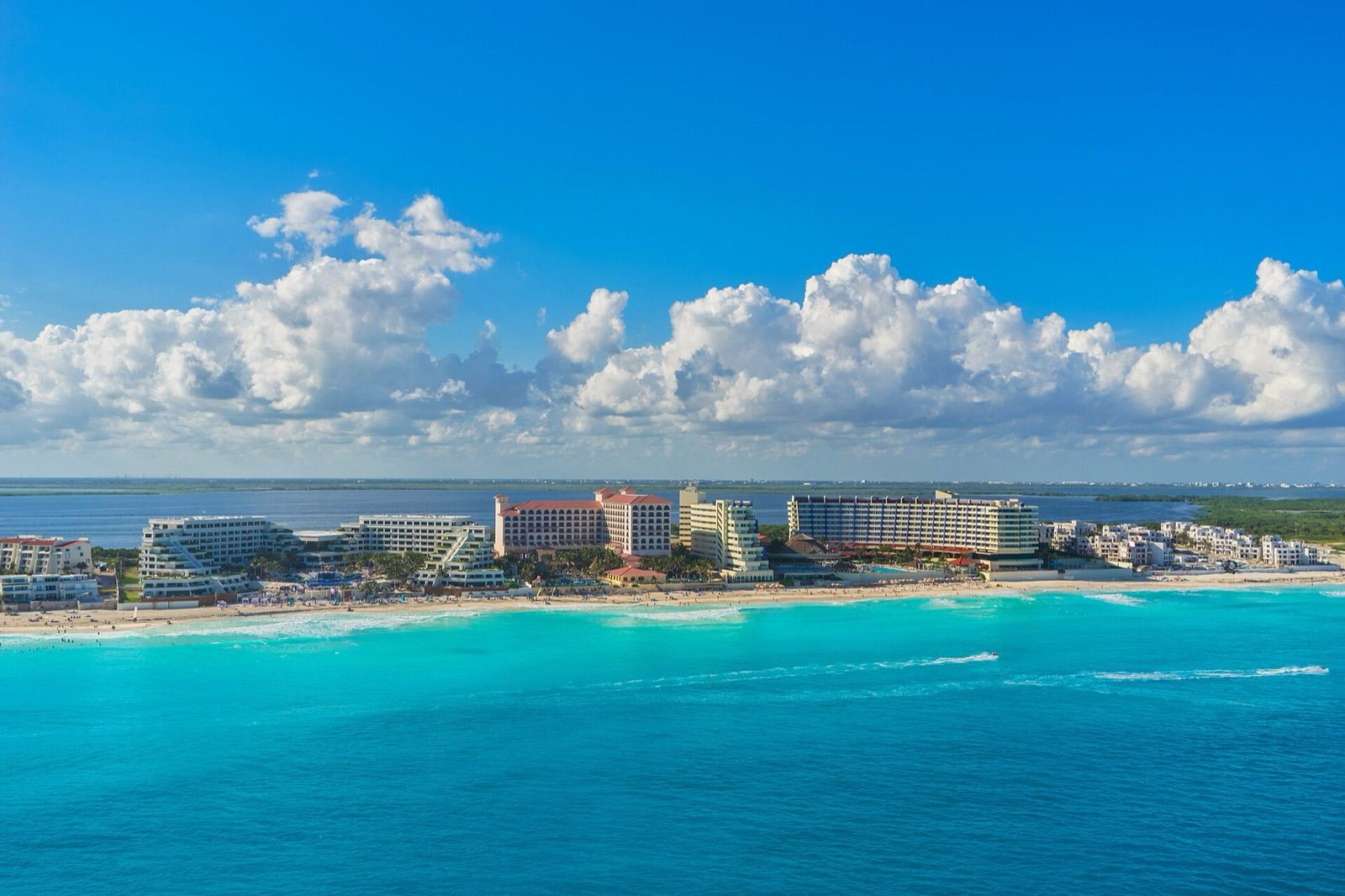
Mexico's Caribbean coast stretches more than 100 km from Cancún south to Tulum, and the places along it could hardly be more different: a strip of high-rise resorts, a car-free island, a pedestrian party street, a fishing village and a jungle-and-ruins town. Choosing a base is less about the "best" area and more about the kind of holiday you want, and how far you're willing to travel from the airport. Here's how the main options compare.
The quick answer
- Big resorts, nightlife and short transfers: Cancún Hotel Zone.
- Local life and a lower budget: downtown Cancún.
- Island pace and calm water: Isla Mujeres.
- Walkable town with restaurants and a beach: Playa del Carmen.
- Quiet village with a reef offshore: Puerto Morelos.
- Cenotes, ruins and boutique stays: Tulum.
- Newer all-inclusive resorts away from the crowds: Costa Mujeres.
All-inclusive or independent?
Much of this coast is built around all-inclusive resorts, where meals, drinks and activities are included in the room rate. They suit travellers who want to stay put, families who like predictable costs, and anyone who values an easy week of pool and beach. The trade-offs are that you'll see less of Mexico, resort food can become repetitive over a long stay, and many large resorts are set apart from towns.
Independent travellers usually prefer bases like Playa del Carmen, Isla Mujeres, Puerto Morelos or Tulum town, where you can walk to restaurants and use buses and colectivos for day trips. Many people combine the two: a few days at a resort, then a few days in a town.
Cancún Hotel Zone: the classic strip
The Zona Hotelera is a narrow, 7-shaped sandbar about 22 km long, with the Caribbean on one side and the Nichupté lagoon on the other. It's lined with large resorts, shopping centres and restaurants, and the party district around Punta Cancún, at the corner of the "7", has the big clubs.
Good for: first-timers, groups, nightlife, and short airport transfers (typically 15–30 minutes). Consider: it's built-up and not especially Mexican in feel. Beaches on the northern stretch face the bay and have calmer water, while the long east-facing stretch south of Punta Cancún has beautiful sand but stronger waves and currents. Always check the beach flags.
Downtown Cancún: the city itself
Downtown (el centro) is where most residents live and work, with markets, local restaurants, a lively evening plaza and the main long-distance bus station.
Good for: budget travellers, longer stays, and anyone who wants real city life and easy onward buses. Consider: there's no beach, so you'll ride the bus to the Hotel Zone or take the ferry to Isla Mujeres for the sea.
Isla Mujeres: slow island life
A short ferry ride from Cancún, Isla Mujeres is a small, narrow island about 7 km long. The town at its northern tip is walkable and colourful, and nearby Playa Norte has shallow, calm, turquoise water. Visitors get around on foot, by bike or in rented golf carts.
Good for: couples, families with young children, and anyone who wants a relaxed pace close to the airport. Consider: day-trippers crowd the town around midday, choice is smaller than on the mainland, and you'll build ferry times into every excursion.
Playa del Carmen: the walkable town
About an hour south of Cancún airport, Playa del Carmen grew from a fishing village into a sizeable town. Its pedestrian Fifth Avenue (Quinta Avenida) runs parallel to the beach and is lined with restaurants, bars and shops, and ferries leave for the island of Cozumel.
Good for: independent travellers, couples, digital nomads and anyone who wants to walk everywhere. Consider: the central beaches are narrower and busier than those elsewhere, and parts of Fifth Avenue feel commercial. Streets around the busiest bar area can be loud late at night.
Puerto Morelos: the quiet middle
Between Cancún and Playa del Carmen, Puerto Morelos is a small town with a leaning lighthouse, a central square and a protected coral reef close offshore, good for snorkelling trips. Inland, a road leads to a string of cenotes.
Good for: families, couples and anyone who wants calm with a short airport transfer (roughly 20–30 minutes). Consider: nightlife is limited, and the large resorts nearby are spread out along the coast, not in the village.
Tulum: ruins, cenotes and the beach road
Tulum, about two hours from Cancún airport, has a Maya archaeological site on a cliff above the sea, nearby cenotes, and a long beach backed by boutique hotels along a narrow coastal road. The town (pueblo), a short drive inland, has more affordable accommodation and restaurants.
Good for: couples, cenote and ruins enthusiasts, and design-minded travellers. Consider: the beach road is expensive, traffic and taxis can be frustrating, and much of the coast is now within a national park with access rules. A newer airport near Tulum shortens the journey if flights suit you.
Costa Mujeres: the new resort coast
North of downtown Cancún, Costa Mujeres is a newer area of large all-inclusive resorts on a coast facing Isla Mujeres. The beaches are wide and the water is often calm.
Good for: travellers who plan to stay mostly on the resort. Consider: it's isolated, with little outside the resorts, so every outing means a taxi or a tour.
Sargassum and hurricane season
- Sargassum is a floating seaweed that can pile up on Caribbean beaches in large quantities. Arrivals vary widely from year to year, but they are most common from spring through late summer. East-facing beaches along the Riviera Maya are the most exposed, while bay-facing beaches such as Playa Norte on Isla Mujeres and Cancún's northern strip are often less affected. Check recent local sargassum reports close to your trip.
- Hurricane season in the Atlantic runs from June to November, with the highest risk usually from August to October. Storms are unpredictable, so travel insurance that covers weather disruption is worth considering for these months.
- Dry season is roughly December to April, which is also peak season, with higher prices and more crowds.
Getting around
- From the airport: Cancún International serves the whole coast. Options include pre-booked shuttles, taxis and first-class ADO buses to downtown Cancún, Playa del Carmen and Tulum.
- Buses and colectivos: long-distance buses link the main towns, and shared vans (colectivos) run frequently along Highway 307 between Cancún, Playa del Carmen and Tulum.
- Hotel Zone buses: frequent local buses run the length of the Hotel Zone to downtown.
- Tren Maya: the newer train serves stops including Cancún airport, Puerto Morelos, Playa del Carmen and Tulum. Services and timetables have changed since it opened, so check the current schedule.
- Rental car: useful for cenotes and ruins. Highway 307 is good, but watch for speed bumps (topes) in towns.
Practical tips before you book
- Check the drive time from the airport, not just the distance. Tulum and southern resorts are a long transfer after a flight.
- Quintana Roo charges a visitor fee to foreign tourists, paid online. Check the current rules on the official site before you go.
- Compare total prices: local lodging taxes and, in some areas, fees are added to room rates.
- Use biodegradable, mineral sunscreen where required; many cenotes and marine parks ask for it or ban other types.
- Drink bottled or filtered water, as is standard advice across the region.
- Check your government's travel advice for the region before booking.
Pick Cancún's Hotel Zone or Costa Mujeres for resort ease, Isla Mujeres or Puerto Morelos for calm, and Playa del Carmen or Tulum for a town to explore, and plan around the seasons.
Bloiq is reader-supported. Some links may earn us a commission; it never affects what we write. How we make money.
Cover photo: alyssa BLACK. from toronto, canada, CC BY-SA 2.0, via Wikimedia Commons

.jpg)