Home / Travel / United States · Where to stay
Where to stay in Boston: Back Bay, Beacon Hill, Seaport and more
Back Bay, Beacon Hill, the North End, Downtown, Seaport or Cambridge? How Boston's main areas compare, who each suits and how the T links them.
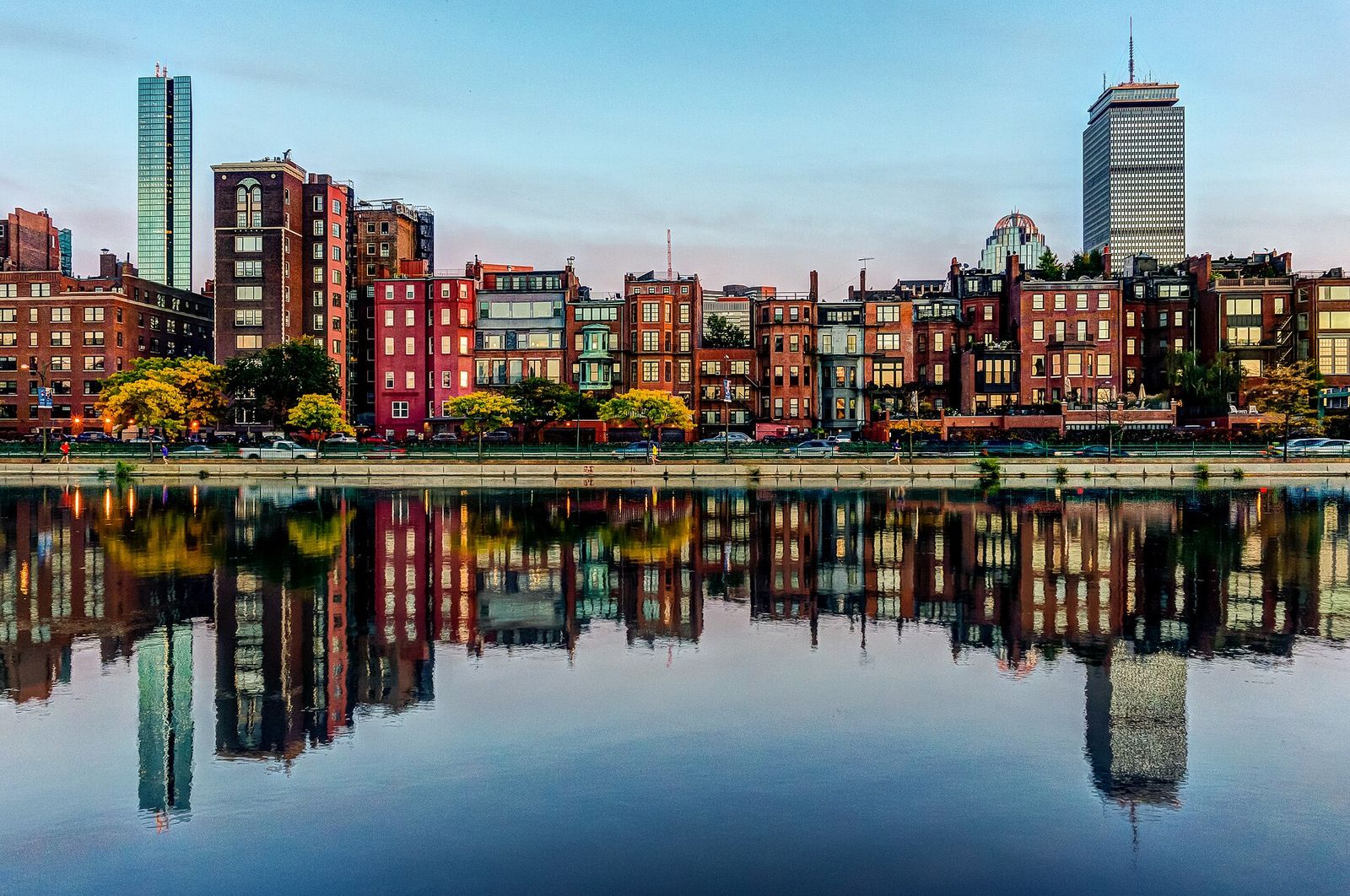
Boston is one of the most walkable cities in North America. Most of its sights fit within a few kilometres, and the historic core can be crossed on foot in well under an hour. That makes the choice of neighbourhood less about distance and more about feel: Victorian boulevards, gas-lit lanes, Italian bakeries or glass towers on the harbour. Here's how the main areas compare, including Cambridge across the river.
The quick answer
- First visit, want a bit of everything: Back Bay.
- Historic charm and quiet evenings: Beacon Hill.
- Food and the Freedom Trail on your doorstep: the North End (or nearby Downtown).
- Sightseeing at the centre of it all: Downtown and the Waterfront.
- Modern hotels, conventions and harbour views: the Seaport.
- Universities, bookshops and a slightly slower pace: Cambridge.
- Baseball, museums and a lively student feel: Fenway and Kenmore.
Back Bay: the classic all-rounder
Built on filled-in tidal flats in the 19th century, Back Bay is a planned grid of brownstone streets running parallel to the Charles River. Commonwealth Avenue has a tree-lined promenade down its centre, Newbury Street is lined with shops and cafés in old townhouses, and Copley Square holds Trinity Church and the Boston Public Library. The Public Garden and the Esplanade along the river are a short walk away.
Good for: first-time visitors, couples, shoppers and anyone who wants a central, attractive and flat base with plenty of hotel choice. Consider: it's one of the pricier areas, and the larger hotels around Copley and the Prudential Center can feel more business-like than characterful.
Beacon Hill: gas lamps and brick lanes
Just north of Boston Common, Beacon Hill is a small residential neighbourhood of Federal-style brick row houses, narrow lanes and gas lamps, crowned by the gold-domed Massachusetts State House. Charles Street, at the foot of the hill, has antique shops, cafés and small restaurants.
Good for: couples, repeat visitors and anyone who likes a quiet, historic setting within walking distance of everything. Consider: there are only a few hotels and small inns, the streets are steep in places and paved with brick, and people live here, so keep noise down on the residential lanes.
The North End: Boston's Little Italy
The North End is one of the city's oldest neighbourhoods, a tight web of streets known for Italian-American restaurants, bakeries and cafés. Paul Revere's House and the Old North Church are both here, on the Freedom Trail, and the harbour and the Rose Kennedy Greenway are at its edges.
Good for: food lovers and history fans who want atmosphere and the Freedom Trail outside the door. Consider: hotels are scarce in the North End itself, and many visitors stay in short-term rentals or just outside it, near North Station or the Waterfront. Streets are busy with diners on summer evenings.
Downtown and the Waterfront: at the heart of things
The area around Downtown Crossing, Faneuil Hall and the old harbour wharves is the historic and commercial centre. The Freedom Trail runs through it, the New England Aquarium is on the Waterfront, and harbour cruises and ferries leave from the wharves.
Good for: short trips, sightseeing-heavy itineraries and families who want the aquarium and the Common nearby. Consider: the Financial District empties out in the evening, so some streets feel quiet after office hours, while the area around Faneuil Hall stays busy with visitors.
The Seaport: modern and on the harbour
The Seaport District, across the Fort Point Channel from Downtown, has been transformed in recent decades into a district of new hotels, apartment towers, restaurants and the city's main convention centre. The Institute of Contemporary Art sits on the water, and the Harborwalk path runs along the edge.
Good for: conference visitors, travellers who prefer modern hotels, and anyone wanting quick access to the airport, which is close by through a harbour tunnel. Consider: it can feel newer and more corporate than the rest of Boston, and it's windier and more exposed in winter. The historic sights are a 15–30 minute walk away.
Cambridge: across the river
Cambridge is a separate city, linked to Boston by bridges over the Charles River and by the Red Line. Harvard Square has bookshops, cafés, music and the gates of Harvard Yard; Kendall Square is the home of MIT and a cluster of tech and biotech companies; Central Square sits between them with a younger, more eclectic scene. If you're visiting a university, our Harvard campus tour and MIT campus tour cover what to see.
Good for: campus visits, families of students, and travellers who like a lively but less touristy base. Consider: you'll ride the Red Line into Boston for most sights (typically 10–20 minutes), and hotels around graduation and campus events fill up early.
Fenway and Kenmore: baseball and museums
West of Back Bay, Fenway and Kenmore surround Fenway Park, the home of the Red Sox. The Museum of Fine Arts and the Isabella Stewart Gardner Museum are nearby, as are several universities, so the area has a busy student feel.
Good for: baseball and concert fans, museum visitors, and travellers who want a slightly more relaxed area that is still close to Back Bay. Consider: game and concert nights bring crowds, heavier traffic and higher hotel demand.
Getting around
- Walking: the best way to see central Boston. The Freedom Trail, marked by a red line in the pavement, links many historic sites from Boston Common to Charlestown.
- The T: the city's subway, bus and commuter rail network. The Red, Green, Orange and Blue lines cover most areas visitors use, and the Silver Line buses connect the Seaport and the airport. Check the official transit site for current fares and any planned closures, which are common at weekends.
- From the airport: Logan International Airport is unusually close to the centre. The Blue Line (via a shuttle bus from the terminals), the Silver Line, taxis, ride-hailing and seasonal water taxis all make the trip.
- Driving: not recommended in the centre. Streets are narrow and irregular, and hotel parking is limited. Rent a car only for day trips.
Practical tips before you book
- Book early for big events: university graduations in May and June, the Boston Marathon in April, the Head of the Charles Regatta in October, and the autumn foliage season all push up demand. Check event dates before choosing your travel dates.
- Look at the nearest T station, not just the neighbourhood name. Being a short walk from the Red or Green Line makes a big difference.
- Ask about parking if you're arriving by car. Overnight parking at central hotels is limited and charged separately.
- Taxes: Massachusetts and many of its cities add room occupancy taxes to hotel bills. Check the total, including taxes, when you compare prices.
- Winter: January and February are cold and can be snowy. Choosing a base near a T station saves long walks in the slush.
- Going on to New York? Trains connect the two cities in a few hours. See where to stay in New York City.
Choose Back Bay for convenience, Beacon Hill for charm, the North End for food, and Cambridge for a university-town feel, and the rest of Boston is within an easy walk or a short ride.
Bloiq is reader-supported. Some links may earn us a commission; it never affects what we write. How we make money.
Cover photo: Robbie Shade, CC BY 2.0, via Wikimedia Commons