Home / Travel / Canada · Itineraries
Vancouver in 3 days: an itinerary with Whistler and island options
A three-day Vancouver plan grouped by area: Stanley Park and the seawall, Granville Island and Kitsilano, then the North Shore, with Whistler and island options.
This guide contains affiliate links, marked as such. If you book through them, Bloiq may earn a commission at no extra cost to you.
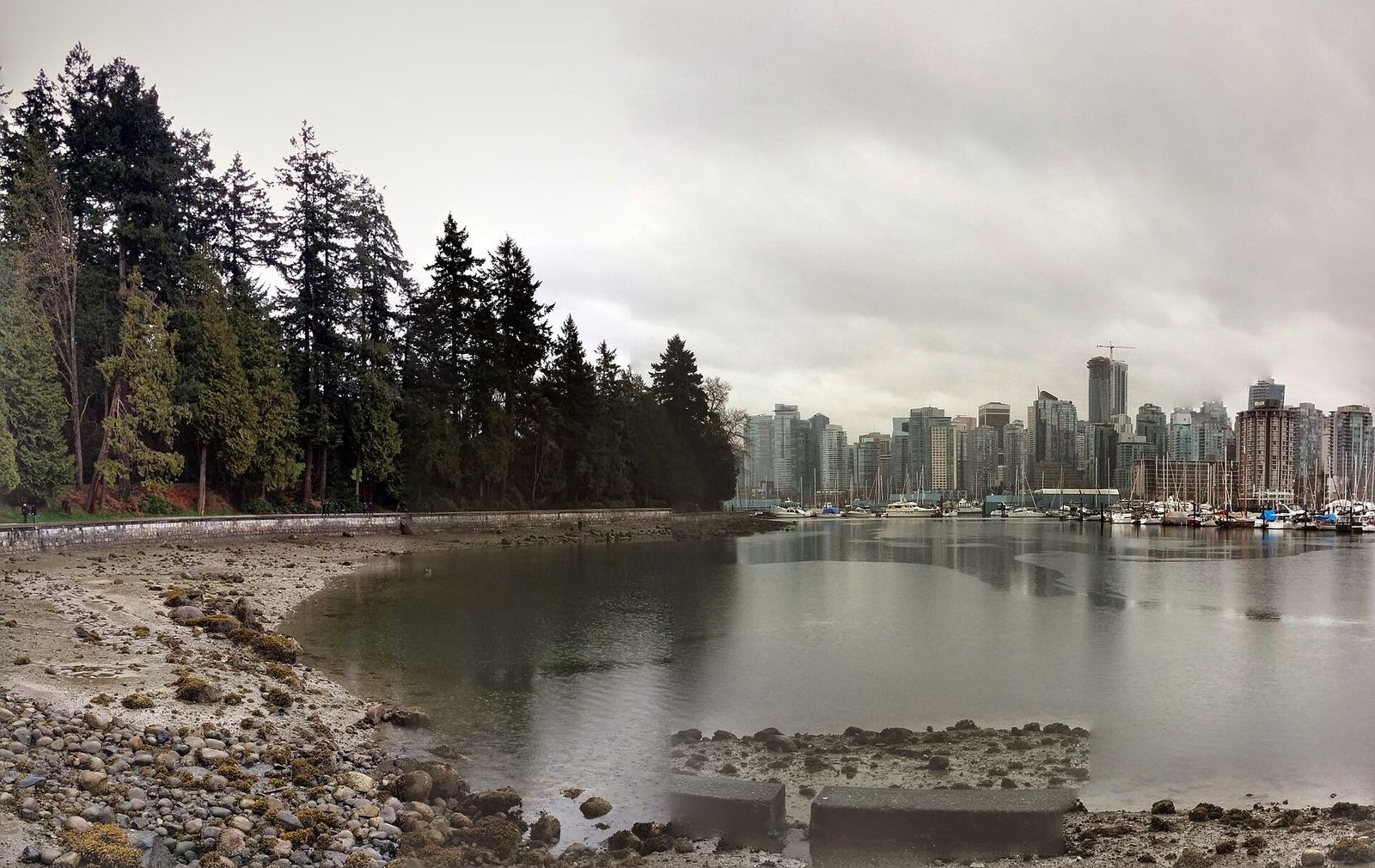
Vancouver's best sights are outdoors: a waterfront path that wraps around the city, beaches within walking distance of downtown, and mountains a short ferry ride away. Three days is enough to see the city at an easy pace, with one day each for the downtown waterfront, the west side and the North Shore. This plan groups each day by area to keep transit short, then shows how to swap in Whistler or an island.
It suits first-time visitors who like walking and don't mind changeable weather. For bases close to the seawall and SkyTrain, see our guide to where to stay in Vancouver.
How the city fits together
- Downtown sits on a peninsula, with Stanley Park at its northwest tip, Coal Harbour and Gastown along the north shore, and the West End and Yaletown to the south.
- False Creek, an inlet crossed by small passenger ferries, separates downtown from Granville Island and Kitsilano.
- The North Shore, with its forested mountains and canyons, lies across Burrard Inlet, linked to downtown by the SeaBus passenger ferry.
- The city stands on the traditional, unceded territories of the Musqueam, Squamish and Tsleil-Waututh Nations, and their art and history are present across it, from Stanley Park to the university museum.
Bring a waterproof layer whatever the season. From roughly October to April, rain is part of most visits.
Day 1: Gastown, Coal Harbour and Stanley Park
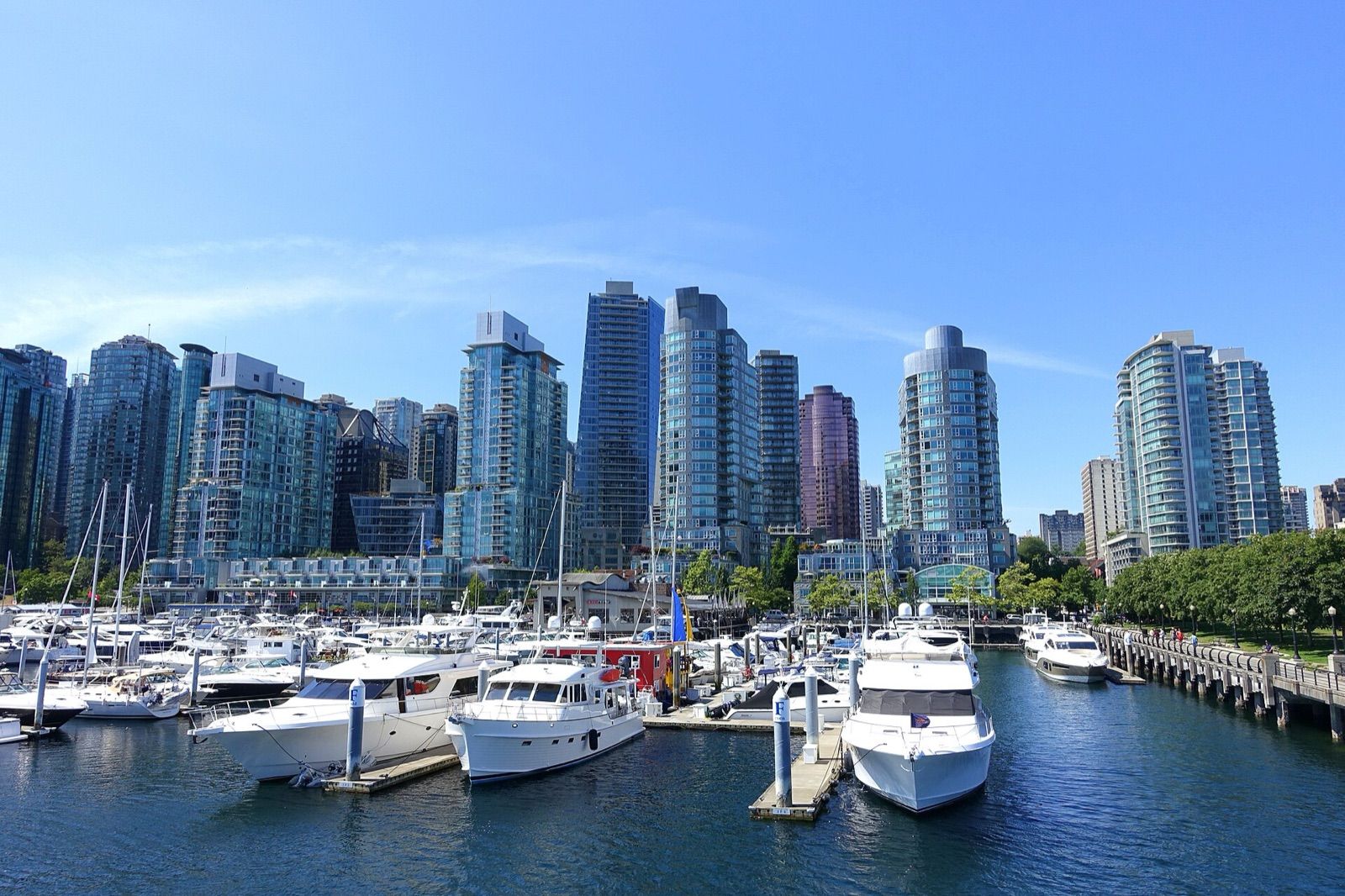
Morning. Start in Gastown, the city's oldest neighbourhood, with cobbled Water Street, Victorian brick buildings and the steam-powered clock. Walk west to Canada Place, the sail-roofed cruise terminal built for Expo 86, then follow the waterfront path through Coal Harbour, past marinas and floatplanes, to the edge of Stanley Park.
Afternoon. Stanley Park is a large forested park, and its seawall circles it for about 9 km. Walk part of it, or rent a bike near the park entrance and ride the full loop (cyclists ride one way, anticlockwise, and helmets are required by law in British Columbia). Stop at the totem poles at Brockton Point, the views of the Lions Gate Bridge from Prospect Point, and the beach at Third Beach. The Vancouver Aquarium, inside the park, is a good break, particularly with children.
Evening. Finish at English Bay for the sunset, then eat on Denman or Davie Street in the West End.
Day 2: Granville Island, Kitsilano and the Museum of Anthropology
Morning. Take one of the small False Creek ferries to Granville Island, a former industrial area under the Granville Street Bridge. Its public market is at its best in the morning, with produce, bakeries and food counters, and the surrounding sheds hold studios, galleries and theatres.
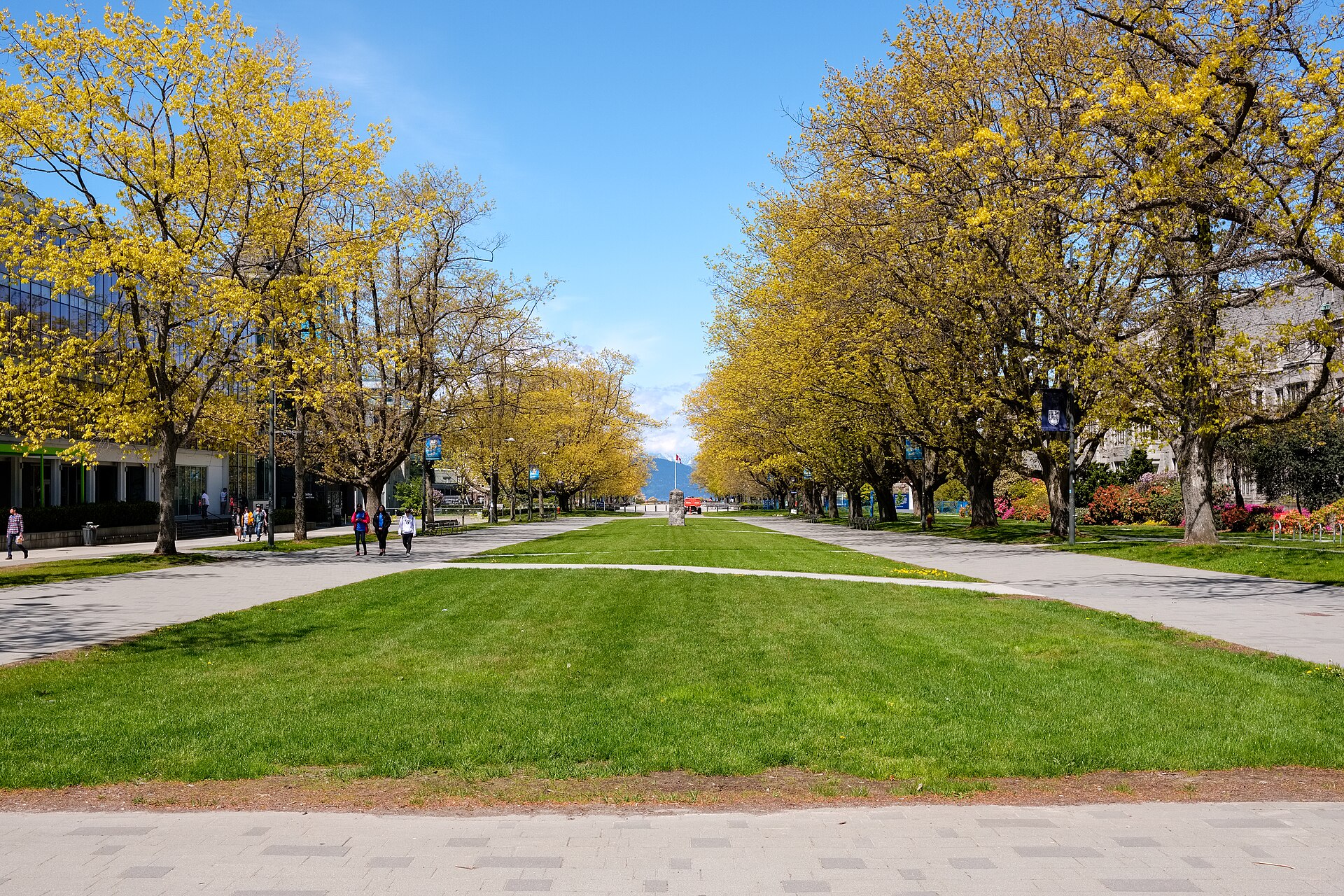
Afternoon. Walk west along the waterfront to Vanier Park, home to the Museum of Vancouver, the space centre and the maritime museum, and on to Kitsilano Beach. From Kitsilano, a bus takes you out to the University of British Columbia and the Museum of Anthropology, whose glass-walled Great Hall displays monumental carved poles and whose collection includes Bill Reid's sculpture The Raven and the First Men. Allow a couple of hours. See our UBC campus tour for more on the grounds.
Evening. Return to Kitsilano for dinner on West 4th Avenue, or to Yaletown, whose converted warehouses are full of restaurants.
Day 3: The North Shore
Morning. Take the SeaBus from Waterfront station to Lonsdale Quay, a crossing of around 15 minutes with fine views back to the skyline. From there, buses run to the North Shore's canyons. The Capilano Suspension Bridge, about 137 m long and 70 m above the river, is a privately run, ticketed park with treetop walkways. Lynn Canyon Park, a municipal park, has a smaller suspension bridge that's free to cross and forest trails to swimming holes; take care near the water, as currents and cliffs have caused serious accidents.
Afternoon. Head to Grouse Mountain, where a gondola climbs to viewpoints over the city, the harbour and, on clear days, the mountains of Washington State. Fit hikers can instead climb the Grouse Grind, a relentlessly steep trail of about 3 km gaining roughly 850 m; it's usually open only from late spring to autumn, so check before you go. Black bears live in these forests: stay on the trails and follow posted guidance.
Evening. Return by SeaBus to Waterfront, steps from Gastown, and spend the evening at its restaurants and cocktail bars.
Option: a day in Whistler
The drive to Whistler on the Sea-to-Sky Highway (Highway 99) takes around two hours without stops, and the road is half the reason to go, hugging Howe Sound below steep mountains. Worthwhile stops include Shannon Falls, the granite Stawamus Chief and the Sea to Sky Gondola near Squamish, and Brandywine Falls south of Whistler. In Whistler, walk the pedestrian village and ride the Peak 2 Peak Gondola between Whistler and Blackcomb mountains. Coaches and tours run from Vancouver if you'd rather not drive.
A day trip is long; staying a night is more relaxing. From autumn to spring, British Columbia requires winter tyres or carried chains on many highways, including this one. Check the current rules and road conditions, and see our guide to tyre chains and snow socks.
Option: Victoria or Bowen Island
Victoria, the provincial capital on Vancouver Island, is reached by car and passenger ferry from Tsawwassen, south of the city, with a crossing of about an hour and a half through the Gulf Islands, or by floatplane from Coal Harbour straight to the Inner Harbour. Allow at least one night: the Inner Harbour, the Parliament Buildings, the Royal BC Museum and the Butchart Gardens fill a day easily. Our guide to the Fairmont Empress covers the harbour area.
For a shorter island trip, Bowen Island is about 20 minutes by ferry from Horseshoe Bay in West Vancouver. It has a small harbour village, walks to lakes and viewpoints, and makes an easy half-day.
What to book ahead
- Ticketed attractions: the Capilano Suspension Bridge and Grouse Mountain get busy in summer; buying online ahead can save time. Check the official sites for current hours.
- Ferries: vehicle reservations are wise for summer weekends and holidays. Foot passengers usually have more flexibility.
- Floatplanes and Whistler stays fill quickly in peak summer and ski season.
- Hotels: summer cruise and conference seasons push up demand downtown, so book early for July and August.
Adapting the plan
- Rain: swap outdoor stops for the Museum of Anthropology, the Vancouver Art Gallery, Science World's geodesic dome at the end of False Creek, the Aquarium, the Granville Island market, or the classical Chinese garden in Chinatown, built in the Ming style by craftspeople from Suzhou.
- With children: the Aquarium, Science World, Kitsilano's seasonal outdoor pool and the beaches are all strong choices. Lynn Canyon suits older children who can stay away from the edges.
- Slower pace: use the False Creek ferries and buses rather than walking between areas, and choose one North Shore sight rather than two.
- Winter: Grouse Mountain becomes a small ski and snowshoe area, and Whistler's ski season usually runs from late autumn to spring.
Practical booking tips
- From the airport: the Canada Line reaches downtown in around 25 minutes. Journeys starting at the airport carry an extra fare, so check the current rate.
- Paying for transit: tap a contactless card or phone at fare gates and on buses, or use the transit system's own card. SkyTrain and SeaBus fares depend on the zones you cross.
- Total costs: room rates usually exclude taxes and sometimes daily fees, and downtown parking is expensive.
- Best months: July to September are usually the driest and busiest; late spring and early autumn are quieter, with more chance of rain.
- Base: downtown, Coal Harbour or the West End puts Days 1 and 3 on foot. Our where to stay in Vancouver guide compares each area.
Bloiq is reader-supported. Some links may earn us a commission; it never affects what we write. How we make money.