Home / Travel / Singapore · Itineraries
Singapore in 3 days: Marina Bay, Chinatown, Little India and Sentosa
A three-day Singapore plan grouped by area: Marina Bay and Gardens by the Bay, Chinatown, Little India and Kampong Glam, then the Botanic Gardens and Sentosa.
Singapore is small, efficient and easy to explore, and three days is enough to see its contrasts: a futuristic waterfront, temple-lined heritage streets, hawker centres serving some of Asia's best food, and a resort island off the south coast. The challenge is the climate. It's hot and humid all year, so this plan groups sights by area, puts outdoor walks in the mornings and evenings, and leaves the middle of the day for air-conditioned museums and long lunches.
The pace is moderate and suits first-time visitors, couples and families. The MRT links almost every stop, and taxis and ride-hailing are quick for short hops.
Day 1: Marina Bay and Gardens by the Bay
Morning. Start in the Civic District, the colonial heart of the city, where the Padang, a broad green field, is framed by grand public buildings. The National Gallery Singapore, in the former Supreme Court and City Hall, holds a large collection of Southeast Asian art. Alternatively, the Asian Civilisations Museum, on the river nearby, is excellent on the region's history and trade. Both are good places to spend the hottest hours.
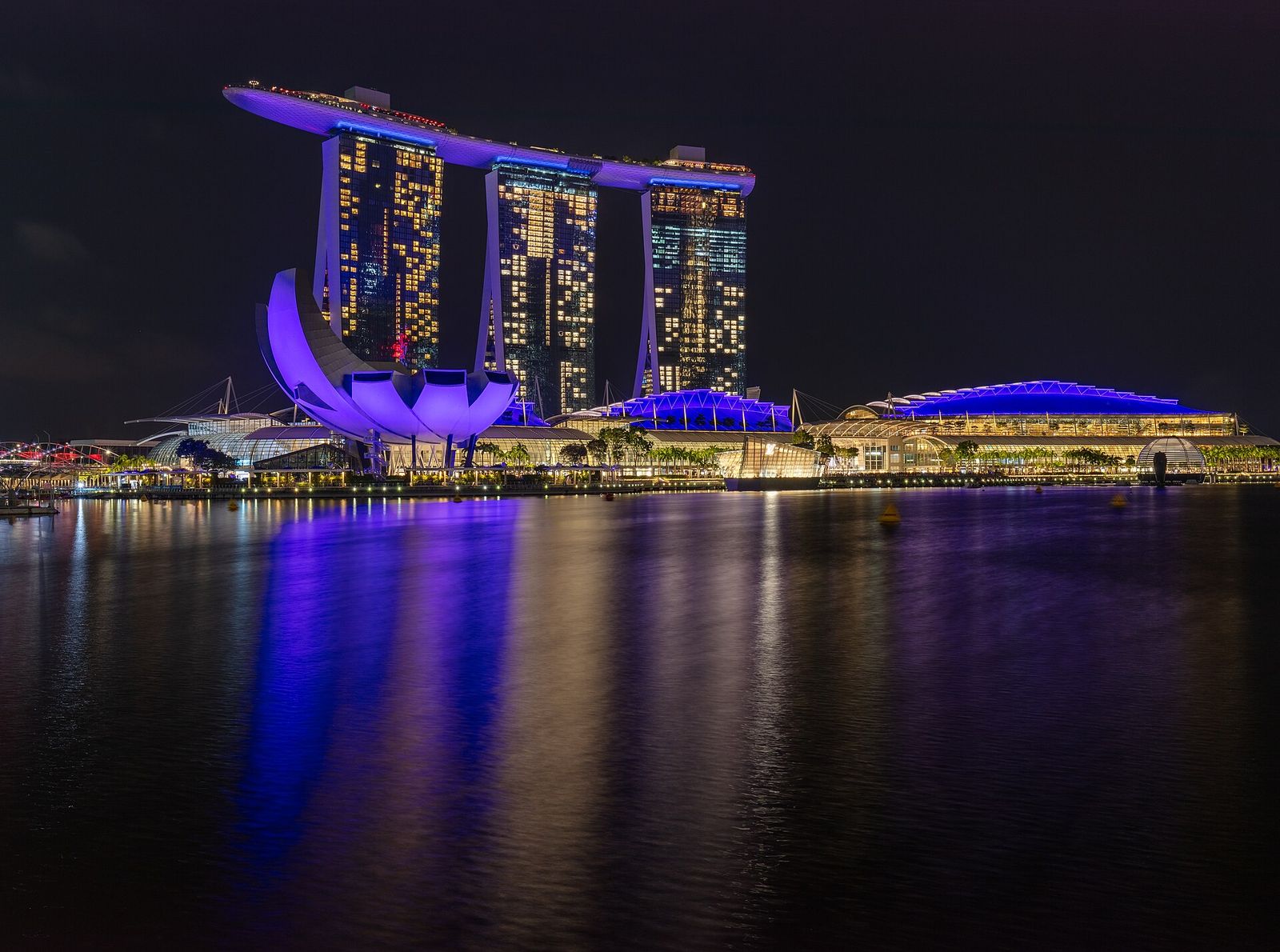
Afternoon. Walk along the river to Merlion Park, where the lion-headed fish statue, the city's emblem, faces the bay. Continue past the spiky domes of the Esplanade arts centre and around the waterfront promenade towards Marina Bay Sands, the three-tower hotel with a ship-like platform across the top. The observation deck there gives the classic view over the bay and the financial district.
Then cross to Gardens by the Bay. The two giant glass conservatories are cool inside: the Flower Dome has plants from Mediterranean-type climates around the world, and the Cloud Forest has a tall indoor mountain wrapped in plants, with a waterfall and a walkway that spirals down from the top.
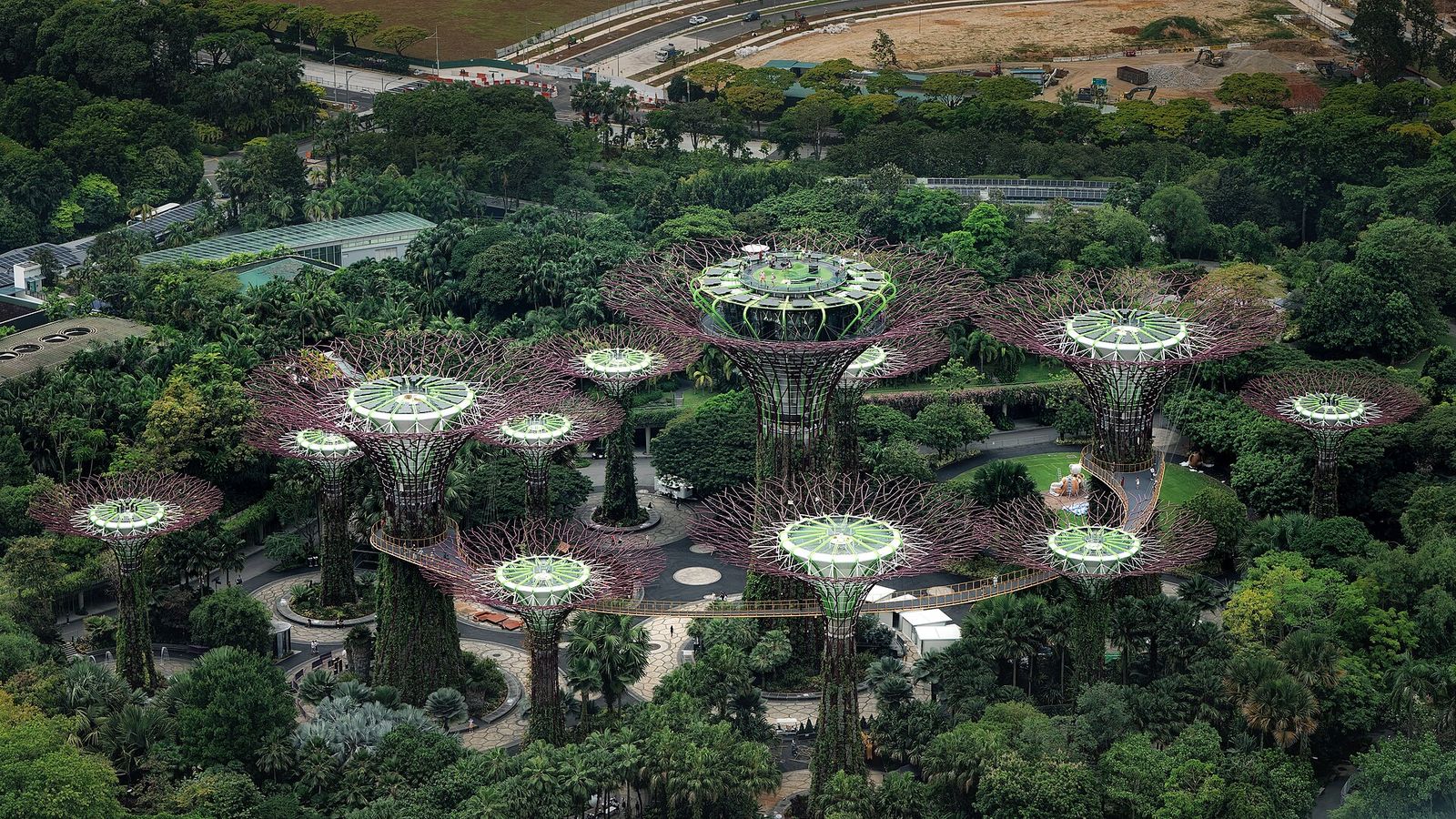
Evening. Stay at the Supertree Grove, the forest of tall vertical gardens, for the free evening light-and-music show, and walk the elevated Skyway between the trees if it's open. Afterwards, the waterfront light show across the bay is another free option; check the times for both. Satay by the Bay or the hawker stalls at Lau Pa Sat, a Victorian cast-iron market hall in the financial district, are good for dinner. For more on the hotel itself, see our guide to Marina Bay Sands.
Day 2: Chinatown, Little India and Kampong Glam
Morning. Go early to Chinatown, before the heat builds. The Buddha Tooth Relic Temple houses, according to Buddhist tradition, a tooth relic of the Buddha, and has a rooftop garden. A few streets away, the Sri Mariamman Temple, with its colourful tiered gateway tower, is Singapore's oldest Hindu temple; shoes come off at the entrance. Nearby, the Thian Hock Keng Temple, one of the oldest Chinese temples in the city, was built by early Hokkien settlers. The Chinatown Heritage Centre, in restored shophouses, shows how crowded and hard life here once was.
Lunch. Eat at a hawker centre. Maxwell Food Centre and the large food centre in the Chinatown Complex are two of the best known. Singapore's hawker culture is on UNESCO's list of intangible cultural heritage, and the stalls serve chicken rice, laksa, char kway teow and much more.
Afternoon. Take the MRT to Little India. Walk along Serangoon Road, past flower-garland stalls, spice shops and gold shops, to the Sri Veeramakaliamman Temple, dedicated to the goddess Kali. The Tekka Centre has a wet market, hawker stalls with food from across South Asia, and upstairs shops selling fabric and saris. The Indian Heritage Centre explains the community's history. In the weeks before Deepavali, the streets are lit with decorations.
Evening. Walk or take a short ride to Kampong Glam, the historic Malay and Arab quarter. The golden-domed Sultan Mosque is its centrepiece; visitors are welcome outside prayer times if dressed modestly, and robes are usually provided. Arab Street has textile and carpet shops, and narrow Haji Lane is lined with small boutiques, murals, cafés and bars. Stay for dinner: Malay, Middle Eastern and Turkish restaurants line the surrounding streets.
Day 3: Botanic Gardens and Sentosa
Morning. Start at the Singapore Botanic Gardens, a UNESCO World Heritage Site founded in the 19th century and open from early morning. Walk the paths past lakes and rainforest, and visit the National Orchid Garden, the one ticketed part, which has a huge collection of orchids, including hybrids named after visiting dignitaries. It's at its best before the heat of the day.
Afternoon. The MRT's Circle line runs from the gardens to HarbourFront, where the Sentosa Express monorail, a cable car and a pedestrian boardwalk cross to Sentosa. The island has beaches (Siloso, Palawan and Tanjong), a large theme park, a large aquarium, adventure parks and Fort Siloso, a coastal fort with tunnels and displays on the Second World War. Choose one big attraction or spend a lazy afternoon on the beach; trying to do everything means a lot of queuing.
Evening. Watch the sunset from the beach, then take the cable car to Mount Faber for views over the harbour, or stay on Sentosa for the evening show on the beach front if it's running. Head back to the mainland for a late dinner at a waterfront restaurant or hawker centre.
What to book ahead
- Observation decks and the Gardens by the Bay conservatories: buying timed tickets online saves queues, especially at sunset and weekends.
- Theme parks and the aquarium on Sentosa: book ahead during school holidays and weekends.
- The Night Safari (see below) and popular restaurants: reserve a few days ahead.
- Accommodation: prices rise around Chinese New Year, major conferences and big events such as the Formula 1 night race. Our guide to where to stay in Singapore compares Marina Bay, Chinatown, Orchard, Little India, Sentosa and more.
Opening hours and show schedules change, so check the official sites before you plan each day.
Adapting the plan
- Rain: heavy showers and thunderstorms can arrive in any month, but usually pass within an hour or two. Move the museums to the wet hours, or add the National Museum of Singapore. Covered walkways link many MRT stations and buildings.
- With children: the Gardens by the Bay conservatories and children's garden, the beaches and theme park on Sentosa, and the zoo, Night Safari and bird park at Mandai, in the north of the island, tend to be the highlights. The Night Safari makes a good fourth evening.
- Slower pace: drop the Civic District museums and split Sentosa into a full beach day.
- Arriving or leaving by air: Changi Airport's glass-domed complex, with its indoor waterfall and gardens, is worth a couple of hours before your flight.
Practical booking tips
- Getting around: tap in and out of the MRT and buses with a contactless bank card or a stored-value transport card. Eating and drinking aren't allowed on the MRT.
- Dress for heat and temples: light, breathable clothes, sun protection and water, plus something that covers shoulders and knees for temples and the mosque.
- Hawker etiquette: locals often reserve a table by leaving a packet of tissues on it, so look for a free seat before you order. Many stalls close one day a week.
- Know the rules: fines apply for littering and some other offences, and there are restrictions on items such as chewing gum and e-cigarettes. Check the current rules before you travel.
- Entry: complete the arrival card online before landing, and check the current entry requirements on the official immigration site.
- Where to stay: a base near an MRT station in Marina Bay, Chinatown, the riverside or Bugis keeps all three days easy. For a historic alternative, see our guide to Raffles Hotel.
Heading on through Asia? See our Hong Kong in 3 days itinerary and our guide to where to stay in Bangkok.
Bloiq is reader-supported. Some links may earn us a commission; it never affects what we write. How we make money.
Cover photo: Mustang Joe, CC0, via Wikimedia Commons