Home / Travel / Italy · Itineraries
Rome in one day: a walking route from the Colosseum to Trastevere
One day in Rome, mostly on foot: the Colosseum and Forum, the Pantheon, the Trevi Fountain and Spanish Steps, Piazza Navona and dinner in Trastevere.
This guide contains affiliate links, marked as such. If you book through them, Bloiq may earn a commission at no extra cost to you.
One day in Rome won't cover everything, but it can cover the essentials. The city's most famous sights fall along a walkable line from ancient Rome in the south-east, through the Baroque piazzas of the historic centre, to Trastevere across the river. This route follows that line almost entirely on foot. It suits a first visit or a stopover, and it assumes an early start and 10–12 km of walking.
With three days, our Rome in 3 days itinerary gives each area its own day and adds a full, well-planned day at the Vatican.
Morning: the Colosseum
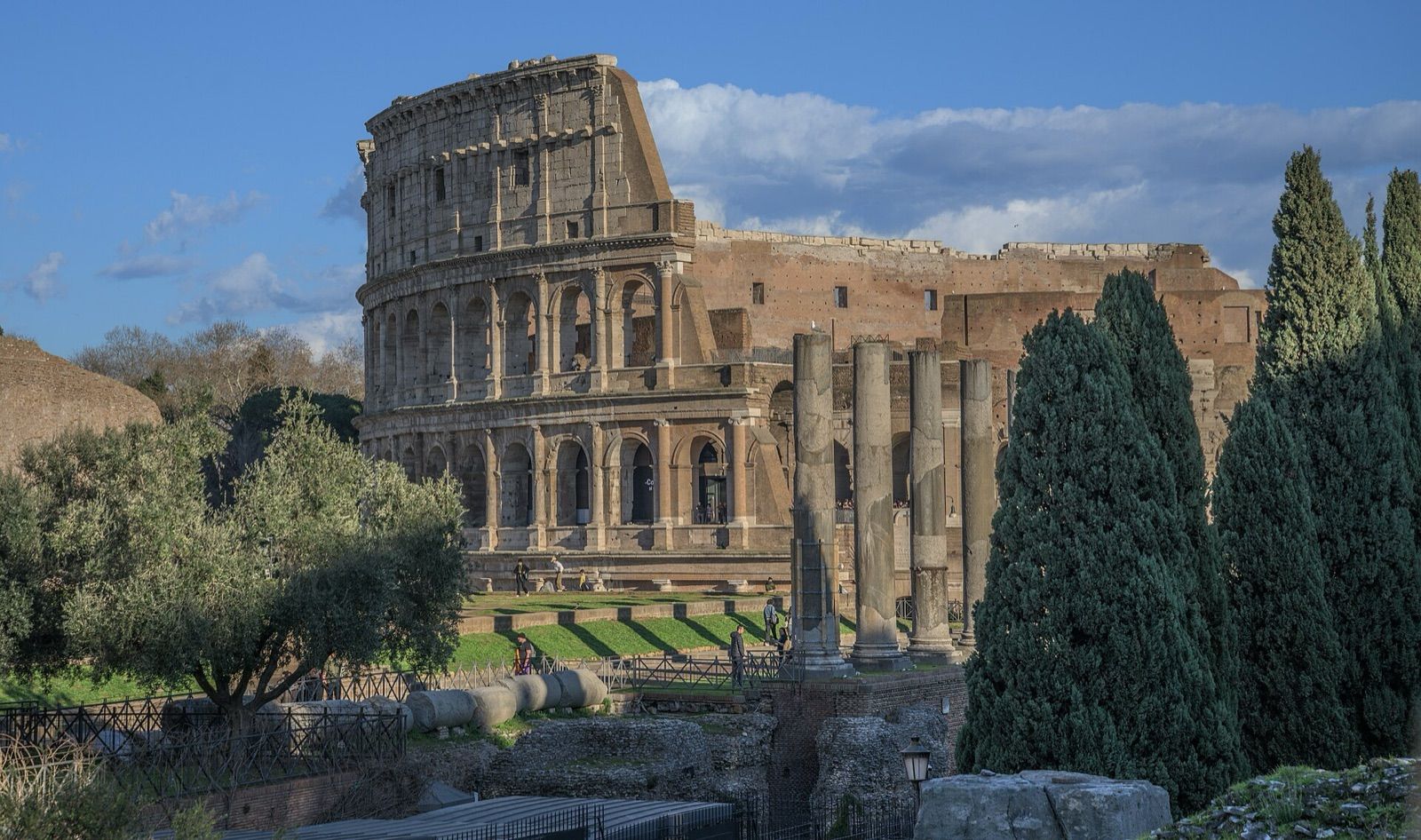
Start at the Colosseum right at opening, with a timed ticket booked ahead. The standard ticket usually covers the Roman Forum and the Palatine Hill next door as well, though tours of the arena floor, the underground passages and the upper levels are sold separately and in limited numbers. Allow about an hour inside. Expect a security check, and carry as little as possible.
The nearest metro station is Colosseo, on line B, and the Monti neighbourhood just north of it is a good place for coffee before you go in.
Late morning: the Roman Forum and the Palatine Hill
Walk through the Roman Forum, the heart of the ancient city: temples, triumphal arches and the remains of the Senate house line the old Sacred Way. Then climb the Palatine Hill, where the emperors built their palaces, for views down over the Forum and across to the Circus Maximus. There's little shade, so bring water and a hat in summer; Rome's public drinking fountains are safe for refilling a bottle. Allow two to three hours for both.
Have lunch in Monti, or around Piazza Venezia on the walk towards the centre.
Early afternoon: the Pantheon
From Piazza Venezia it's about 15 minutes on foot to the Pantheon. Built as a Roman temple and later consecrated as a church, it has stood for nearly two thousand years, and its dome is still the largest unreinforced concrete dome in the world. Light falls through the open oculus at the top. The Pantheon now has an entry charge, so book a slot online or expect a short queue; as it's a church, dress modestly.
Afternoon: the Trevi Fountain and the Spanish Steps
A few minutes away is the Trevi Fountain, the grandest of Rome's Baroque fountains. Tradition says a coin tossed over your shoulder into the water brings you back to Rome. Access to the area right by the basin is now ticketed and controlled, and the whole square gets crowded by mid-afternoon; the fountain is much quieter early or late in the day.
Then walk about ten minutes north to the Spanish Steps, which climb from Piazza di Spagna to the church of Trinità dei Monti. Sitting on the steps isn't allowed, but the view from the top is worth the climb.
Evening: Piazza Navona and Trastevere
As evening comes, walk back west to Piazza Navona, about 20 minutes. The long oval piazza follows the shape of an ancient stadium, and at its centre stands Bernini's Fountain of the Four Rivers, facing Borromini's church of Sant'Agnese in Agone. Campo de' Fiori is a few minutes further south.
Then cross the Tiber by the Ponte Sisto footbridge to Trastevere for dinner in its narrow, ivy-covered lanes. Romans eat late, so restaurants fill from around 8 pm; reserve if you have a specific place in mind.
What about the Vatican?
The Vatican Museums, with the Sistine Chapel, and St Peter's Basilica need at least half a day on their own, so save them for a second day if you can. If the Vatican is your top priority, swap it for the ancient Rome part of this route. Museum tickets sell out in busy periods, and both sites have dress codes (shoulders and knees covered).
What to book ahead
- The Colosseum: timed tickets are released in advance and can sell out, especially for morning slots and guided areas.
- The Pantheon: book a time slot online to avoid queuing.
- The Trevi Fountain basin area: check the current access rules and whether you need a ticket.
- Dinner in Trastevere: reserve on weekends.
Adapting the route
- Heat: from June to August, do the Colosseum and Forum at opening, rest indoors in the early afternoon, and move the fountains to the evening.
- With children: the Colosseum and the Trevi Fountain are the likely highlights; shorten the Forum and use taxis for the longer walks.
- Slower pace: drop the Palatine Hill or the Spanish Steps rather than rushing the rest.
Where to stay
For a single day, stay in the historic centre, around Campo de' Fiori or the Pantheon, so every stop on this route is a short walk away. Monti, near the Colosseum, is a good alternative with a local feel. Our guide to where to stay in Rome compares these areas and more.
Practical booking tips
- Rome charges a per-person, per-night city tax at hotels and rentals. Check the current rate when you book.
- Many historic buildings have small lifts or none; check if you're travelling with heavy luggage.
- Wear shoes with good grip: the cobbles are uneven and slippery after rain.
Bloiq is reader-supported. Some links may earn us a commission; it never affects what we write. How we make money.
Cover photo: Nicholas Hartmann, CC BY-SA 4.0, via Wikimedia Commons