Home / Travel / United States · Campus tours
University of Michigan campus tour: the Diag, the Big House and Ann Arbor
How to visit the University of Michigan in Ann Arbor: the Diag, the Law Quad, the Union and Burton Tower, Michigan Stadium, the Arb, getting there and where to stay.
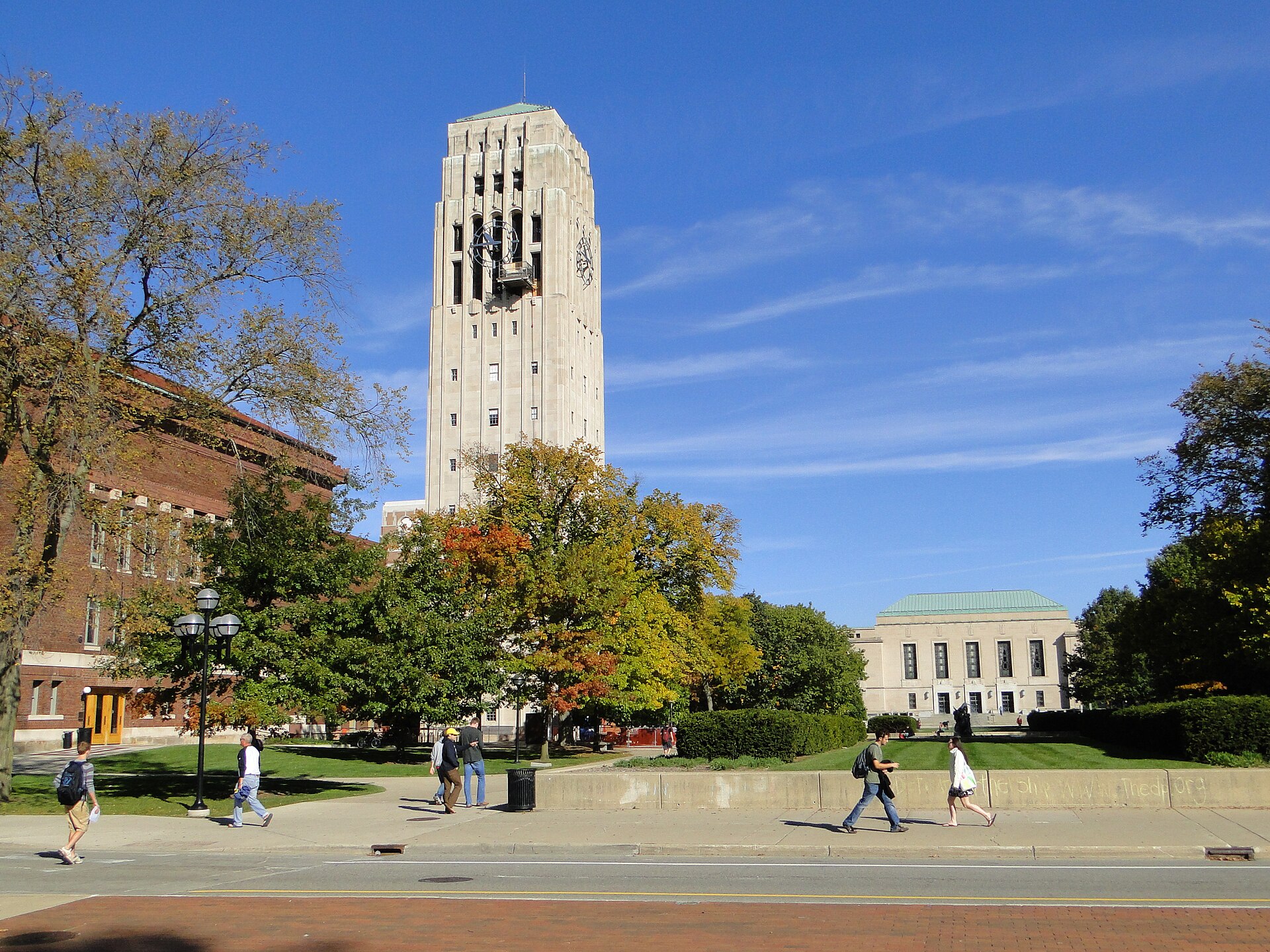
The University of Michigan was founded in Detroit in 1817 and moved to Ann Arbor in 1837, and the two have grown up together ever since. There's no wall between campus and town: lecture halls sit a block from bookshops and coffee houses, and on football Saturdays the whole city turns maize and blue. For a prospective student, that blend of a very large public research university with a walkable college town is the main thing to see. Here's how to plan a visit and what not to miss.
A campus in several parts
Michigan is big, so it helps to know the pieces before you arrive:
- Central Campus is the historic core, next to downtown, with the Diag, the main libraries, the Union and most humanities and science buildings.
- North Campus, a couple of kilometres north-east across the Huron River, houses engineering, music, art and design, and architecture. Frequent university buses link it with Central Campus.
- The medical campus sits between the two, above the river.
- The athletic campus lies south of Central Campus, around Michigan Stadium.
Admissions tours usually concentrate on Central Campus.
The Diag
The Diag is the crossroads of campus, a big open space crossed by diagonal paths between the main buildings. At its centre is a bronze block M set into the pavement. Students walk around it rather than over it: legend says that stepping on the M before your first exam means you'll fail it. On a sunny day the Diag is full of students, club tables and the occasional demonstration, and it's the best place to get a feel for campus life.
On its north side stands Hatcher Graduate Library, one of the main study spots, with grand, quiet reading rooms. The undergraduate library, Shapiro, is right next door.
The Law Quadrangle
A block south of the Diag, the Law Quadrangle is one of the most beautiful corners of campus: a Gothic enclave of stone buildings around a green courtyard, built in the 1920s and early 1930s. Its Reading Room, with a vaulted ceiling and tall stained-glass windows, is often compared to a cathedral. Access to the interior may be limited to the law school community, but the courtyard and exterior are worth a detour.
The Michigan Union and Burton Tower
The Michigan Union, on State Street, is the main student union, with food, meeting rooms and student organisations. It's also a piece of history. In the early hours of 14 October 1960, John F. Kennedy, then a presidential candidate, spoke to students from its steps and first proposed the idea that became the Peace Corps; a plaque marks the spot.
Nearby, Burton Memorial Tower rises above the campus. It holds a carillon that is played regularly during the week, and the bells carry across the Diag.
Game day at the Big House
Michigan Stadium, universally known as the Big House, is the largest stadium in the United States, with room for more than 100,000 fans. On home football Saturdays in autumn, tailgates fill the surrounding streets and the town is packed. It's an unforgettable atmosphere, but it's also the hardest time to find a room or a parking space, and some campus visit programmes aren't offered on game days. If you want both, plan well ahead.
Museums and the Arb
On a free afternoon, the University of Michigan Museum of Art, on State Street, and the Museum of Natural History are both on Central Campus and open to the public. For something outdoors, Nichols Arboretum, known to students as the Arb, spreads over hills and meadows down to the Huron River, a short walk east of campus. Its peony garden, one of the largest in North America, blooms in late May and early June.
Life in Ann Arbor
Most first-year students live in residence halls on or near Central Campus, and many older students move into houses and apartments in the surrounding neighbourhoods. State Street, South University Avenue and Main Street are lined with cafés, restaurants and shops, and the Kerrytown area adds a farmers' market and independent food shops. Theatre, music venues and a huge range of student organisations fill the evenings.
How to get there
- By air: Detroit Metropolitan Airport is roughly 30 to 40 minutes' drive away. An airport coach service runs to Ann Arbor, and taxis and rental cars are available.
- By train: Ann Arbor is a stop on the train line between Chicago and Detroit, which makes it easy to pair with a University of Chicago campus tour.
- In town: Central Campus and downtown are easily walkable. City buses and the university's own buses cover the rest, including North Campus.
How visits work
The admissions office typically offers information sessions and student-led campus tours on many weekdays and some Saturdays during the year, and individual schools and colleges sometimes hold their own sessions. Registration ahead is usually required. Check the university's official admissions and visitor pages for current times, especially around football weekends and holidays.
Picking a neighbourhood for your stay
- Downtown Ann Arbor: the best base for walking to Central Campus, restaurants and Main Street.
- Near campus: a few hotels are within minutes of the Diag.
- Along the highways on the edge of town: more choice and easy parking, a short drive from campus.
On football, graduation and major event weekends, book early or visit on a quieter date.
Before you go
- Weekdays in term show everyday campus life; a football Saturday shows the spirit.
- Winters are cold and snowy; spring and autumn are the most comfortable seasons.
- Bring comfortable shoes: Central Campus alone takes a couple of hours to cover on foot.
Bloiq is reader-supported. Some links may earn us a commission; it never affects what we write. How we make money.
.jpg)