Home / Travel / United States · Campus tours
Johns Hopkins campus tour: the Homewood campus and Baltimore
What to see on a visit to Johns Hopkins University: Gilman Hall, the Beach, the libraries, Homewood Museum, the neighbourhood, and how to plan a Baltimore trip.
Johns Hopkins University opened in 1876, modelled on the research universities of Germany, and it is often described as the first research university in the United States. Its name is attached to several campuses around Baltimore, which can confuse first-time visitors. Undergraduates study at the Homewood campus in north Baltimore, a green enclave of red-brick Georgian buildings, and that's where campus tours happen. This guide explains the layout, the main sights, the neighbourhoods students live in, and the practical side of a visit.
Homewood and the other Hopkins campuses
The university has several locations, and it helps to know which is which:
- Homewood is the main undergraduate campus, home to the schools of arts and sciences and engineering. It's about 5 km north of the Inner Harbor.
- The medical campus in East Baltimore houses the Johns Hopkins Hospital and the schools of medicine, nursing and public health. University shuttles link it with Homewood.
- The Peabody Institute, the university's conservatory of music, is in the Mount Vernon neighbourhood between the two.
Most families spend their visit at Homewood, with perhaps a drive past the hospital's famous dome afterwards.
Gilman Hall and Keyser Quad
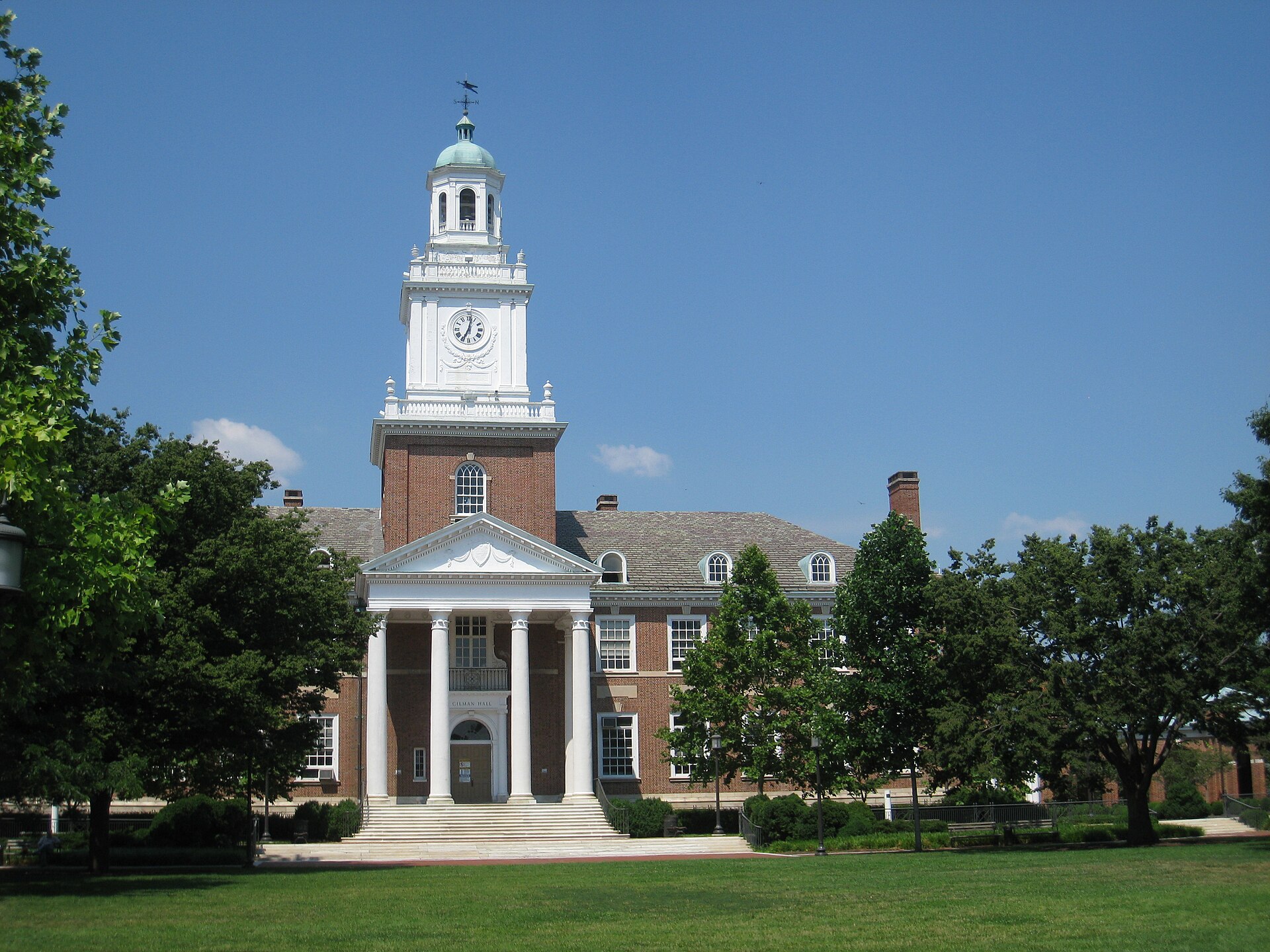
Gilman Hall, with its red brick, white columns and clock tower, is the symbol of Homewood. Completed in 1915, it was the first academic building on the campus and today is home to the humanities, including a central atrium created during a major renovation. It faces Keyser Quadrangle, a lawn crossed by brick paths and lined with more buildings in the same Georgian style, which gives the campus its unified look.
The Beach
On the campus's eastern edge, a long sloping lawn runs beside Charles Street. Students call it the Beach, and on warm days it fills with people lying in the sun, throwing frisbees and studying outdoors. It's the easiest place to see everyday student life, and it's right by the campus's main entrance on Charles Street.
Libraries built for long nights
The Milton S. Eisenhower Library, the main library, looks modest from the quad because most of its floors are below ground level. Connected to it, the glass-walled Brody Learning Commons adds group study rooms, quiet reading areas and plenty of late-night study space. Libraries are generally for students and staff, but tours often point them out.
Homewood Museum and the Baltimore Museum of Art
The campus takes its name from Homewood House, an elegant brick country house completed in the early 1800s for Charles Carroll Jr., son of a signer of the Declaration of Independence. It's now a museum run by the university and one of the finest examples of Federal-period architecture in the country.
Right next to campus, the Baltimore Museum of Art holds an important collection of modern art, including the Cone Collection, with one of the largest groups of works by Henri Matisse anywhere. It's an easy add-on after a tour; check current hours before you go.
Student life around campus
First-year students live in residence halls on or beside the Homewood campus, and many older students move into apartments in the surrounding streets. Charles Village, just east and south, is a neighbourhood of colourful row houses, cafés and casual restaurants. To the west, beyond the wooded Wyman Park, Hampden is known for its quirky shops and restaurants along 36th Street.
Lacrosse is the big sport at Hopkins, and games at Homewood Field draw crowds in spring. Research is the other constant: many undergraduates join labs, some at the medical campus.
How to get there
| Arriving by | Route to Homewood |
|---|---|
| Train (Amtrak or regional rail) | Baltimore Penn Station, then about 10 minutes by taxi or local bus north along Charles Street |
| Air | Baltimore/Washington International (BWI), about 30–40 minutes by car; trains also run from the airport station to Penn Station |
| Car | Via Interstate 83 or Charles Street; follow the university's visitor parking guidance |
Washington, D.C. is about an hour away by train, so families sometimes combine the trip with a visit to the capital.
How to visit
The admissions office typically runs information sessions and student-led tours of Homewood on many weekdays and some other days during the year. Registration in advance is usually expected. If you can't make a scheduled tour, a self-guided route is often available. Check the official Johns Hopkins admissions and visitor pages for current times, formats and parking instructions before you travel.
Staying overnight
- Near campus: a small number of hotels are within walking distance of Homewood, the easiest option for early sessions.
- Mount Vernon: a historic, walkable neighbourhood with museums and restaurants, a short drive or bus ride south.
- Inner Harbor and Harbor East: the largest choice of hotels, close to the waterfront, the National Aquarium and Fells Point, about 15–20 minutes by car from campus.
Tips for the day
- Allow time after the tour for the Beach, Homewood Museum and the art museum next door.
- Spring is lively, with lacrosse season and the lawns at their best; summers are hot and humid.
- Families on a Northeast Corridor trip can link Hopkins with Penn in Philadelphia, a couple of hours north by train.
Bloiq is reader-supported. Some links may earn us a commission; it never affects what we write. How we make money.
Cover photo: Daderot, Public domain, via Wikimedia Commons