Home / Travel / Italy · Itineraries
Florence in 3 days: the Duomo, the Uffizi and Oltrarno
A three-day Florence plan grouped by area: the Duomo and Michelangelo's David, the Uffizi and Santa Croce, then Oltrarno, with timed tickets explained.
Florence has more great art per square metre than almost anywhere, and nearly all of it sits within a compact historic centre you can cross on foot in half an hour. The challenge isn't distance but queues: the big sights run on timed tickets, and the best slots go early. Three days is enough to see the essentials without museum fatigue, as long as you book the key entries and give each day its own area.
This plan suits first-time visitors at a moderate pace. Day 1 covers the cathedral and the Medici quarter north of it, Day 2 the Uffizi, Piazza della Signoria and Santa Croce, and Day 3 crosses the Arno to the Oltrarno and ends at the city's most famous viewpoint.
Day 1: the Duomo, David and San Lorenzo
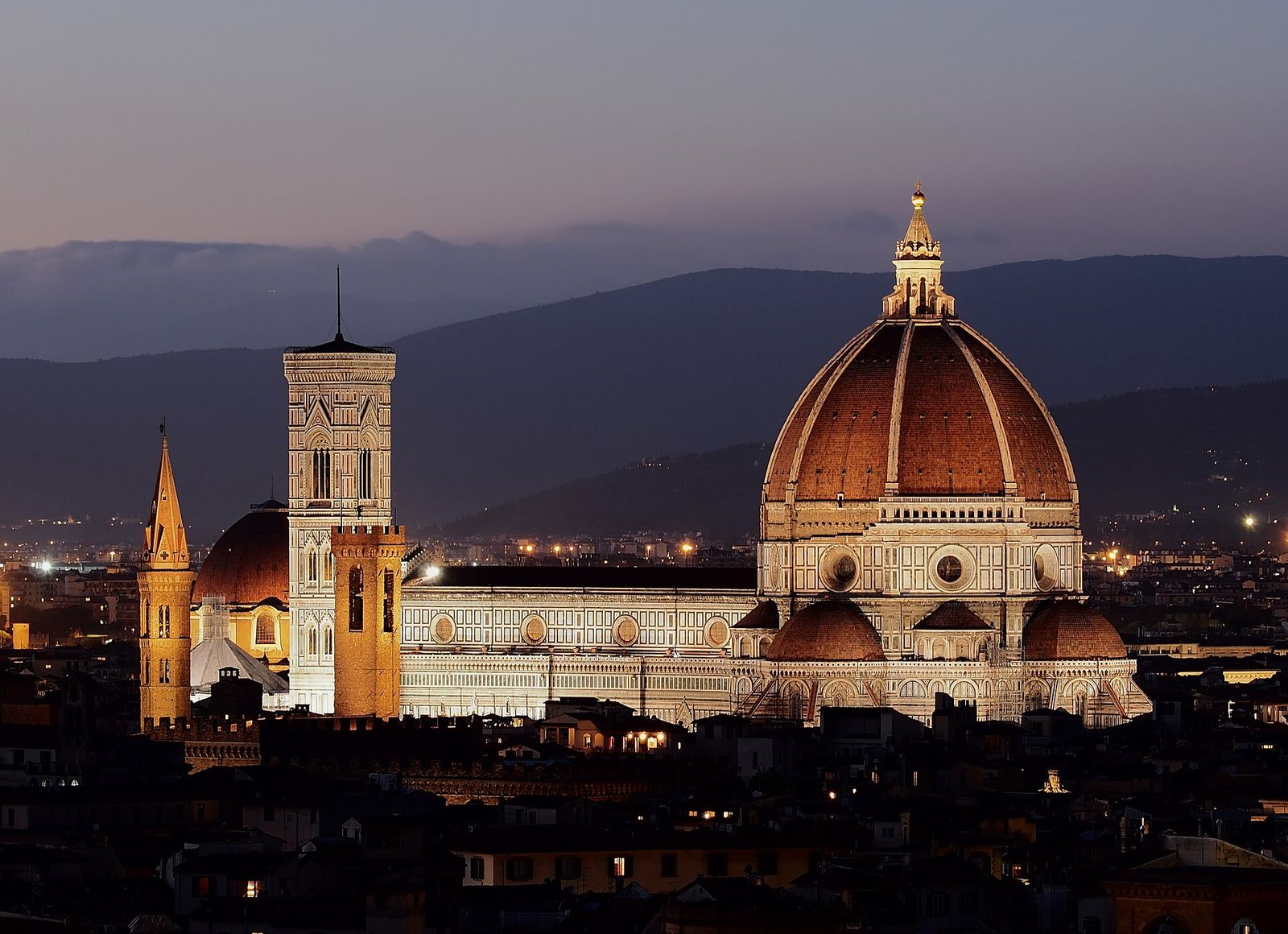
Morning. Start at Piazza del Duomo as early as you can. The Cathedral of Santa Maria del Fiore is crowned by Brunelleschi's dome, completed in the 15th century and still the largest brick dome ever built. Climbing the dome means more than 450 steps up narrow stairs between its two shells, passing close to the frescoes of the Last Judgement inside; it rewards you with the best view in the city. Alternatively, climb Giotto's bell tower, which has a similar number of steps and a view of the dome itself. Then see the octagonal Baptistery, with its golden mosaic ceiling, and the Museo dell'Opera del Duomo, which holds the original gilded bronze "Gates of Paradise" doors by Ghiberti and Michelangelo's late Pietà.
Late morning. Walk five minutes north to the Galleria dell'Accademia to see Michelangelo's David, over five metres tall, at the end of a hall lined with his unfinished "Prisoners". The rest of the gallery is small, so an hour is usually enough.
Afternoon. Have lunch at the Mercato Centrale, whose upstairs food hall is open all day. Then visit the Medici Chapels, where Michelangelo's New Sacristy holds his tombs for members of the family, and the Basilica of San Lorenzo, the Medici parish church, with its plain, unfinished façade. Nearby, Palazzo Medici Riccardi has a small chapel covered in Benozzo Gozzoli's brilliantly coloured frescoes of the Journey of the Magi. If you still have energy, Santa Maria Novella, by the station, holds Masaccio's Holy Trinity fresco.
Evening. Walk to Piazza Santissima Annunziata, framed by Brunelleschi's arcaded Foundling Hospital, then find dinner in the streets around Sant'Ambrogio market.
Day 2: the Uffizi, the Signoria and Santa Croce
Morning. Take the first Uffizi slot you can get. The Uffizi Gallery follows Italian painting from the Middle Ages to the Renaissance and beyond: Botticelli's Birth of Venus and Primavera, Leonardo's Annunciation, Michelangelo's Doni Tondo, and works by Raphael, Titian and Caravaggio. Allow at least three hours, and take a break at the rooftop café, which looks out over the Palazzo Vecchio.
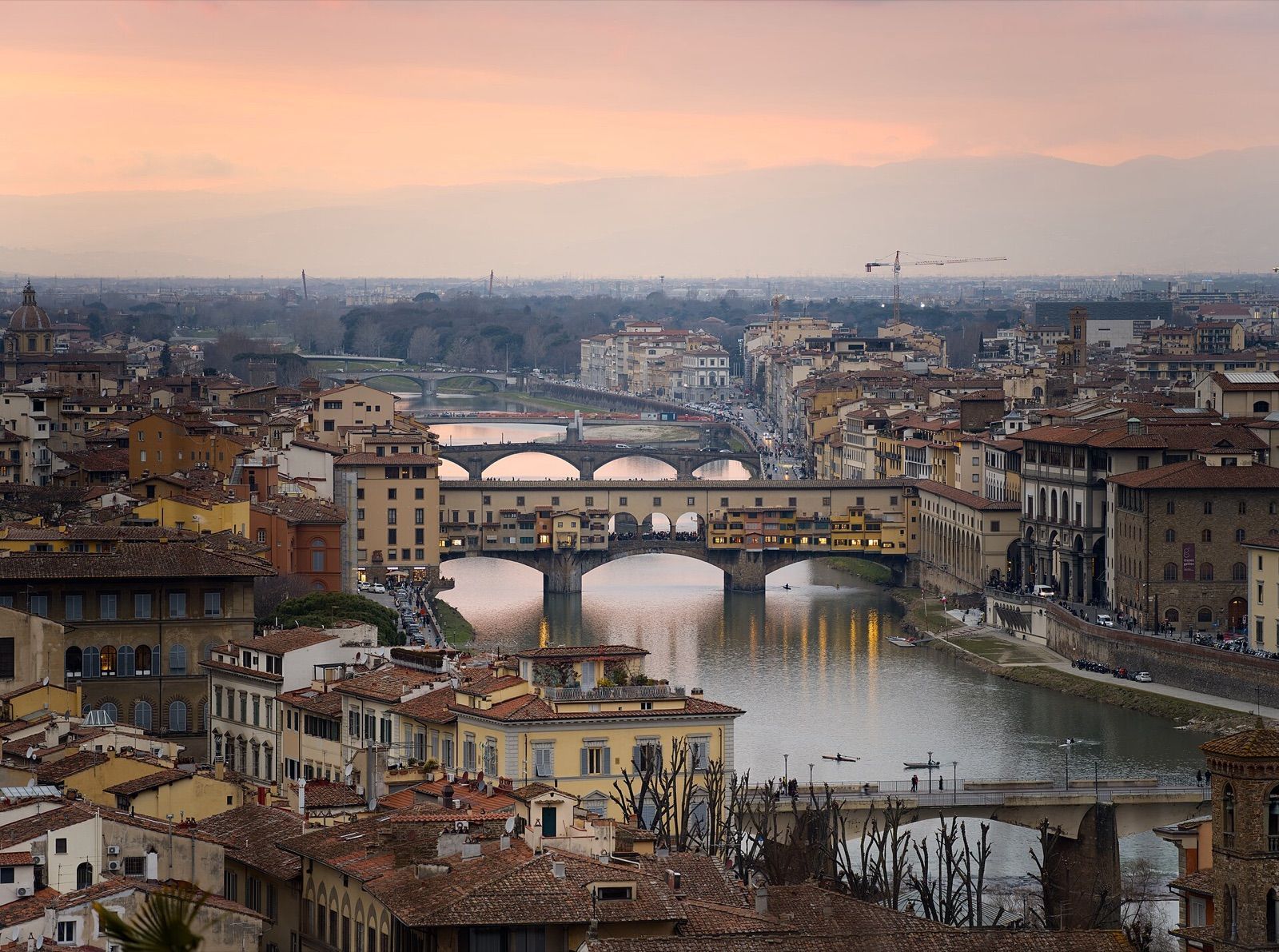
Lunch and early afternoon. Step out into Piazza della Signoria, the city's political heart. The Loggia dei Lanzi shelters Cellini's Perseus and Giambologna's Rape of the Sabine Women, and the copy of David stands at the door of the Palazzo Vecchio, the town hall. Inside, the vast Hall of the Five Hundred is the highlight, and the tower can be climbed in good weather. Then walk to the Ponte Vecchio, the medieval bridge lined with goldsmiths' and jewellers' shops.
Afternoon. Visit the Bargello, a former prison and police headquarters that is now the national sculpture museum, with Donatello's bronze David and works by Michelangelo and Cellini. Finish at the Basilica of Santa Croce, where Michelangelo, Galileo and Machiavelli are buried, with a monument to Dante, and with Giotto frescoes in two side chapels. Its cloister and Brunelleschi's Pazzi Chapel are quiet corners.
Evening. Santa Croce and the streets towards Sant'Ambrogio have wine bars and trattorias. Try a Florentine steak or a plate of ribollita, the Tuscan bread and vegetable soup.
Day 3: Oltrarno, Pitti and Piazzale Michelangelo
Morning. Cross the Ponte Vecchio to the Pitti Palace, the Medici's later home. The Palatine Gallery hangs paintings by Raphael and Titian frame to frame in grand rooms. Behind it, the Boboli Gardens climb the hillside with fountains, grottoes and statues; the Bardini Garden, nearby, is smaller and has fine views of the Duomo.
Afternoon. Explore the Oltrarno, the artisans' side of the river, where framers, bookbinders and goldsmiths still work in ground-floor workshops. Look into Santo Spirito, Brunelleschi's harmonious late church, and visit the Brancacci Chapel in Santa Maria del Carmine, whose frescoes by Masaccio and Masolino were studied by generations of Renaissance artists. Visits there are in small, timed groups, so reserve ahead.
Late afternoon and evening. Walk east to the village-like streets of San Niccolò, then climb the steps to San Miniato al Monte, a Romanesque church with a striped marble façade, where the monks sing evening prayers on many days. Just below it, Piazzale Michelangelo gives the classic panorama over the domes and towers at sunset. Have dinner back in San Niccolò or around Piazza Santo Spirito.
Timed tickets explained
Florence runs on reservations. A few things to understand:
- The Duomo complex: entry to the cathedral itself is usually free, but the dome, bell tower, Baptistery, museum and crypt are covered by passes sold by the cathedral works office. The dome climb needs a specific time slot booked when you buy the pass, and these sell out days or weeks ahead in busy months.
- The Uffizi, Pitti Palace and Boboli Gardens belong to the same state museum group, which offers single tickets and a combined pass valid over several days. You book a time slot for the Uffizi.
- The Accademia has its own timed tickets and long queues without one.
- Booking only through official sites or authorised sellers avoids marked-up resale tickets. A small booking fee is normal.
- Closing days: several major museums, including the Uffizi and the Accademia, typically close on Mondays. Check before you plan.
- Free days: state museums sometimes have free-entry days, which are very crowded. Check the current schedule.
- Dress code: shoulders and knees covered for the cathedral and churches; services take priority.
Prices, opening hours and the passes on offer change, so check each official site before you go.
Adapting the plan
- Rain: swap the Boboli Gardens for longer in the Palatine Gallery, and Piazzale Michelangelo for the Museo Galileo, with Galileo's own instruments.
- With children: the dome climb, the Palazzo Vecchio's family tours and the Museo Galileo usually work; break up museum time with gelato and the Boboli Gardens.
- Slower pace: skip the Medici Chapels and the Bargello, and give the Uffizi a whole morning without anything else booked.
- Summer heat: do climbs and gardens early, museums in the afternoon.
- More time: our guide to day trips from Florence covers Siena, Pisa, Lucca, Chianti and Bologna, and the Tuscany hill towns road trip goes further.
Practical booking tips
- Where to stay: the Duomo area and San Lorenzo put Days 1 and 2 on foot; Oltrarno and San Niccolò are calmer bases close to Day 3. Our guide to where to stay in Florence compares the neighbourhoods.
- Getting around: the historic centre is best on foot. Driving is restricted in the limited traffic zone (ZTL), enforced by cameras; if you hire a car, don't drive into the centre, and check the current rules with your accommodation.
- Arriving: the main station, Santa Maria Novella, is a short walk from the Duomo. A tram links Florence airport to the station area, and trains connect Pisa airport.
- Tourist tax: Florence charges a tax on overnight stays, usually paid at your accommodation. Check the current rate.
- Entry rules: Italy is in the Schengen area, which is introducing new electronic entry systems for many non-EU visitors. Check the current rules on official sites before you travel.
Bloiq is reader-supported. Some links may earn us a commission; it never affects what we write. How we make money.
Cover photo: Petar Milošević, CC BY-SA 4.0, via Wikimedia Commons