Home / Travel / Canada · Hotels
Fairmont Banff Springs: the castle hotel, its setting and what's nearby
A guide to the Fairmont Banff Springs in Banff National Park: its railway history, where it sits, how to get there, the best nearby sights and when to go.
This guide contains affiliate links, marked as such. If you book through them, Bloiq may earn a commission at no extra cost to you.
Rising from the forest above the Bow River, the Fairmont Banff Springs is often called the castle in the Rockies. It sits just south of the town of Banff, inside Canada's oldest national park, with mountains on every side. This guide explains the hotel's story, how its location works in practice, what to see nearby and who it suits best.
A railway hotel in the mountains
The Canadian Pacific Railway opened the first hotel here in 1888. The idea, credited to the railway's general manager William Cornelius Van Horne, was simple: if the scenery couldn't be exported, bring the tourists to it by train. The original building was a large wooden hotel.
After a fire in 1926 destroyed part of that wooden structure, the railway rebuilt in stone. Today's hotel, with its turrets, steep roofs and Scottish baronial touches, was completed in 1928. It's now a National Historic Site of Canada and remains the town's best-known landmark.
Where it is and how to get there
The hotel stands on a rise at the south end of town, above the point where the Spray River meets the Bow. The town centre is roughly a 20-minute walk away, partly uphill on the return.
- By air: the nearest major airport is Calgary, roughly 1.5–2 hours' drive east on the Trans-Canada Highway. Scheduled airport shuttles run to Banff hotels, or you can rent a car.
- Park pass: everyone stopping in Banff National Park needs a Parks Canada pass. Check the current rules and fees on the official site before you go.
- Local buses: Banff's Roam Transit buses link the hotel area with the town centre and several sights, which saves parking hassles in summer.
The classic view from Surprise Corner
For the postcard view of the hotel framed by forest and mountains, head to Surprise Corner, a viewpoint at the end of Buffalo Street across the river. It's a short drive or a pleasant walk from town. Come early in the morning, before the tour buses arrive and while the light falls on the hotel's facade.
Bow Falls and the Spray River
Directly below the hotel, a short walk leads to Bow Falls, a wide, low waterfall where the river drops over a rock ledge. From there, trails follow the Spray River south past the golf course and into quiet forest. The Spray River loop is a popular, mostly gentle walk or bike ride of a couple of hours. As anywhere in the park, carry bear spray on trails and know how to use it.
Banff Avenue and the town
Banff Avenue is the town's main street, lined with shops, cafés and restaurants, with Cascade Mountain rising at its far end. Just off the avenue, the Whyte Museum covers the history and art of the Rockies, and across the Bow River bridge a riverside road leads to the Cave and Basin National Historic Site, where the hot springs that led to the park's creation were found.
Sulphur Mountain and the hot springs
The Banff Gondola climbs Sulphur Mountain for wide views over the Bow Valley, with a boardwalk along the ridge at the top. The Banff Upper Hot Springs pool is close to the gondola's base. Both are busy in the middle of the day, so go early or late, and check whether gondola tickets need to be booked for a time slot.
Day trips with a car
- Lake Minnewanka: a short drive north-east of town, with a lakeshore trail and boat cruises in summer.
- Johnston Canyon: about half an hour west along the Bow Valley Parkway, where steel catwalks lead past a series of waterfalls. Parking fills quickly in summer.
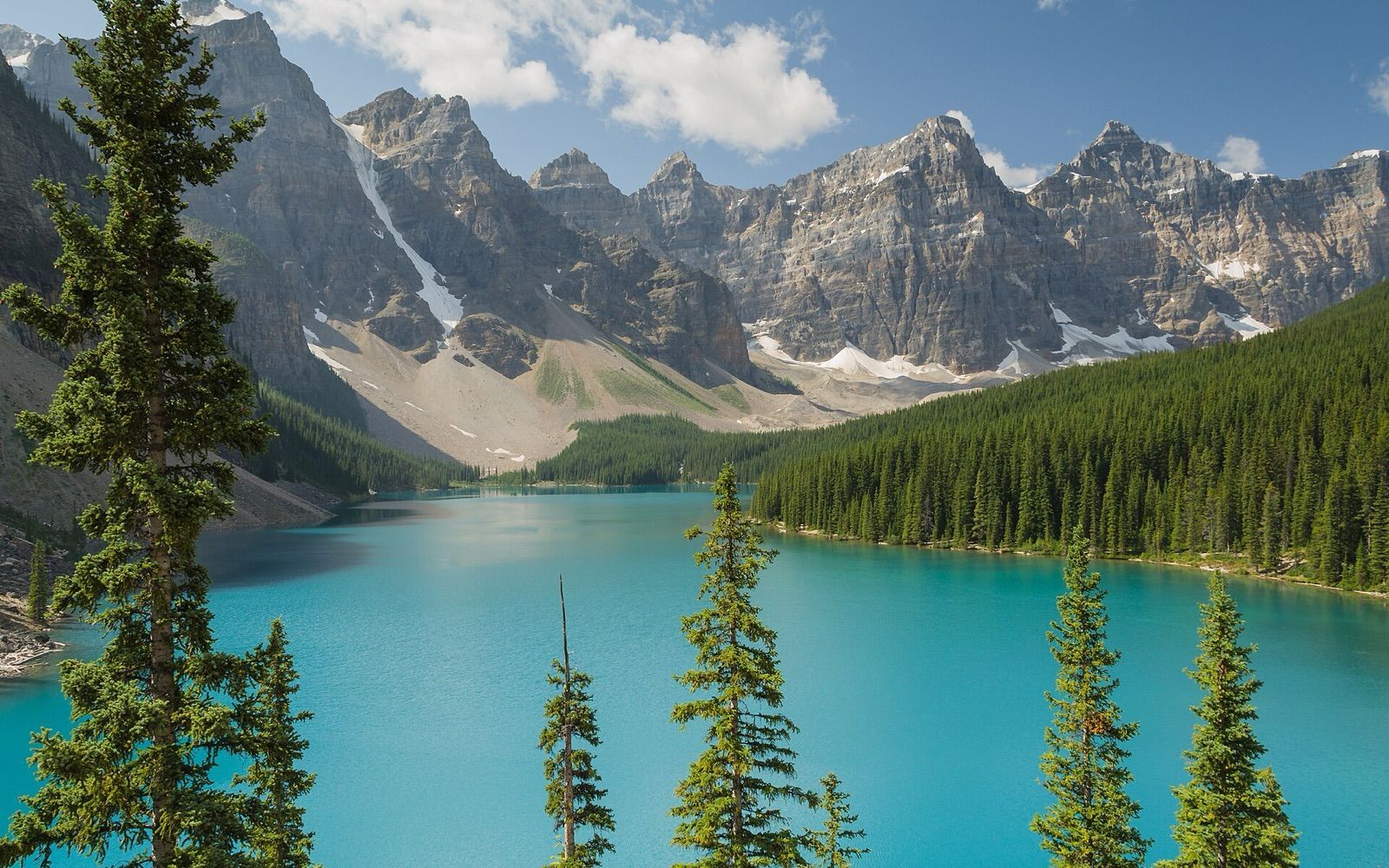
- Lake Louise and Moraine Lake: about 45 minutes to an hour west. Moraine Lake is closed to private cars, so plan on the Parks Canada shuttle or a tour. The Banff and Lake Louise where-to-stay guide compares the two bases, and the Icefields Parkway road trip continues north to Jasper.
Who it suits and when to go
The Banff Springs suits couples and families who want a landmark stay within reach of town, and travellers who like having trails, a golf course and the river right outside. It's less suited to anyone who wants to step straight out onto Banff Avenue each evening; a hotel in the town centre will be more convenient for that.
Summer (roughly July and August) is best for hiking and the busiest season. September brings golden larches higher up and slightly smaller crowds. Winter turns the turrets white and puts three ski areas within easy reach: Mount Norquay, Sunshine Village and Lake Louise.
Practical tips before you book
- Book early for summer. Banff's hotels fill months ahead for July and August.
- Check what's included. Ask about parking, resort fees and taxes, and check the current rate rather than relying on older quotes.
- Plan around wildlife. Elk and bears are sometimes seen near town; keep your distance and never feed animals.
- Allow for the altitude and weather. Banff sits at about 1,400 metres, and mountain weather can change within hours, even in summer.
Bloiq is reader-supported. Some links may earn us a commission; it never affects what we write. How we make money.
Cover photo: Dylannother, CC BY-SA 4.0, via Wikimedia Commons