Home / Travel / Canada · Where to stay
Banff and Lake Louise: where to stay and how to plan your visit
Banff town, Lake Louise or Canmore? Where to stay in the Canadian Rockies, plus park passes, seasons, getting there from Calgary, lake shuttles and wildlife safety.
This guide contains affiliate links, marked as such. If you book through them, Bloiq may earn a commission at no extra cost to you.
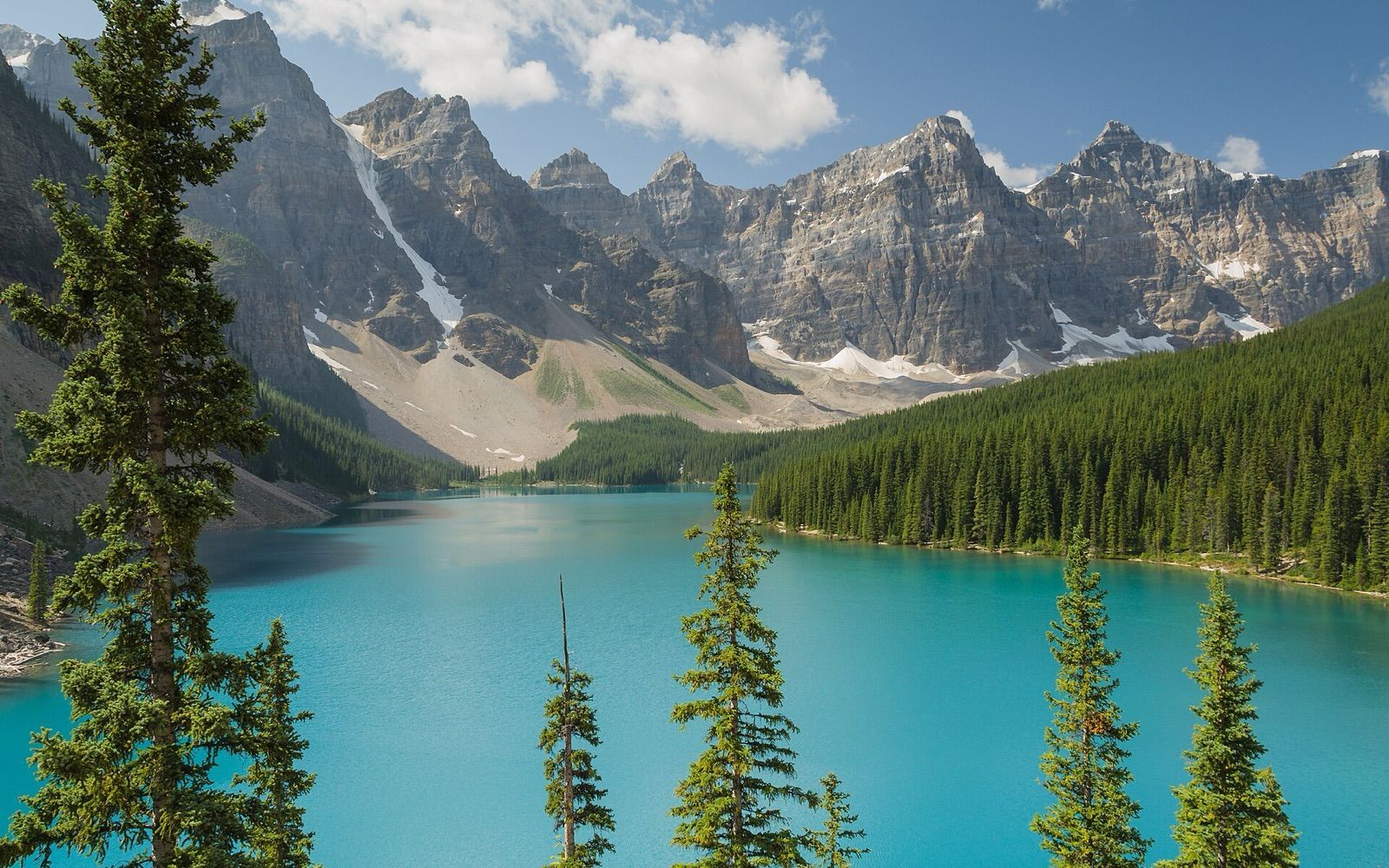
Banff National Park is Canada's oldest national park and one of its busiest, and the famous lakes are no longer places you can simply drive up to on a summer morning. Where you stay, when you go and how you plan to reach Lake Louise and Moraine Lake make a big difference to how the trip feels. This guide covers the main bases, the park rules worth knowing in advance and how to stay safe around wildlife.
The quick answer
- First visit, restaurants and the most choice: Banff town.
- Early starts at the lakes and quiet evenings: Lake Louise village.
- Better value, more space and kitchens: Canmore, just outside the park.
- Glaciers, fewer crowds and a longer trip: Jasper, as a separate stay.
Banff town: the natural base
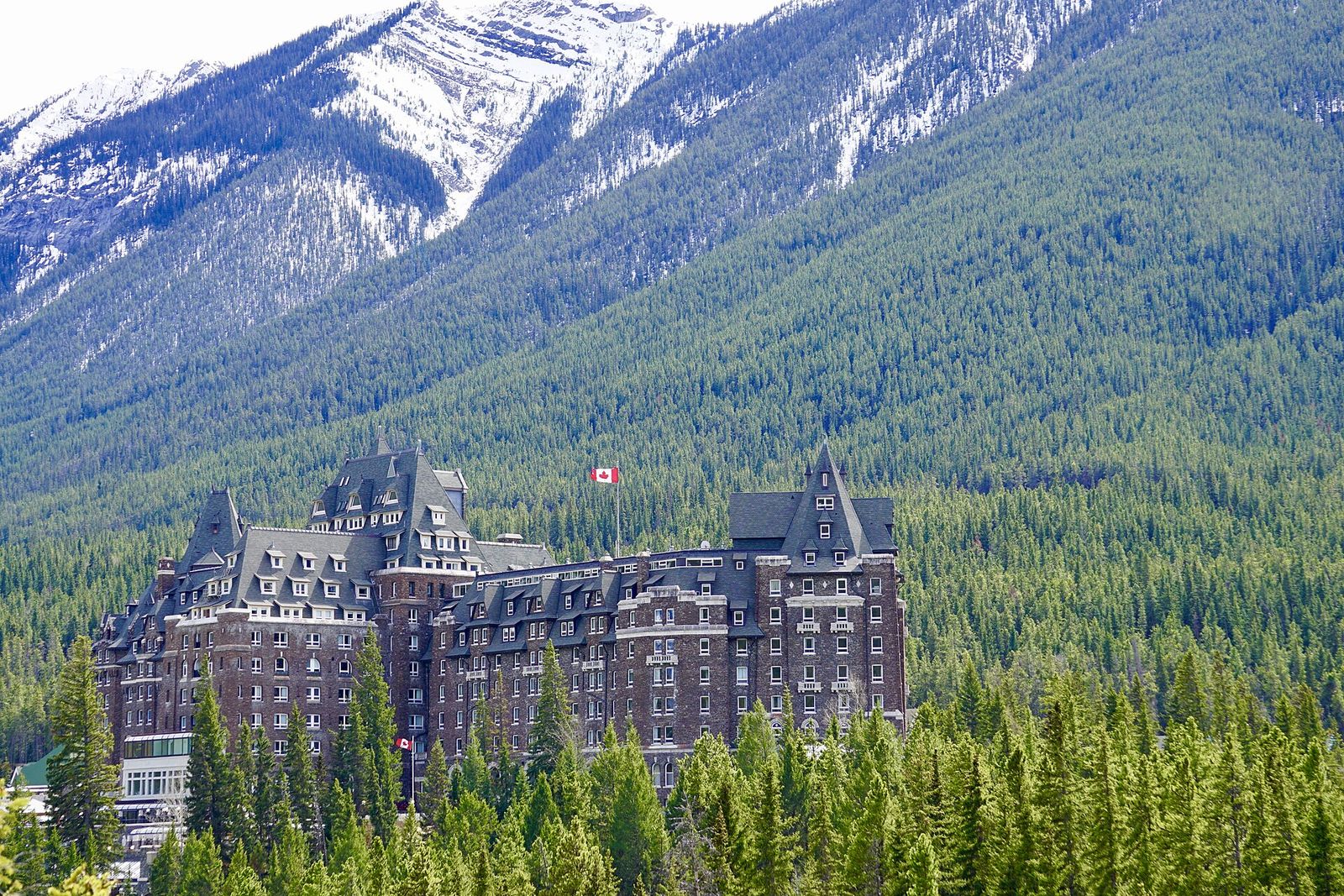
The town of Banff sits in the Bow Valley about 90 minutes' drive west of Calgary. Banff Avenue is lined with shops, restaurants and outfitters, and the town is surrounded by sights: the gondola up Sulphur Mountain, the hot springs pool, Bow Falls, the Cave and Basin National Historic Site and, a short drive away, Lake Minnewanka. There's accommodation at every level, from hostels and motels to large resort hotels.
Good for: first-time visitors, families and anyone without a car, since local buses serve most nearby sights. Consider: it's the busiest place in the park in summer, prices peak in July and August, and Lake Louise is roughly 45 minutes' drive away.
Lake Louise: close to the famous lakes
Lake Louise village is a small settlement just off the Trans-Canada Highway, about 58 km north-west of Banff. The lake itself is a few kilometres uphill, and Moraine Lake is further along a separate side road. The village has only a handful of hotels and lodges, a small shopping centre and limited dining.
Good for: hikers, photographers and anyone who wants to be at the lakes early or late in the day. It's also the starting point of the Icefields Parkway and close to Yoho National Park across the British Columbia border. Consider: there's little to do in the evening, rooms are limited and often expensive, and you'll need to book well ahead for summer.
Canmore: outside the park, more space
Canmore is a mountain town about 25 km south-east of Banff, just outside the national park boundary. It has a lively centre with restaurants and cafés, striking views of the Three Sisters peaks, and a large supply of condo-style apartments with kitchens and more space than typical hotel rooms.
Good for: families, longer stays, self-caterers and travellers watching their budget. Consider: you'll drive or take the bus into the park each day, adding about 20 minutes each way to Banff and an hour or so to Lake Louise. If you explore nearby Kananaskis Country, which is provincial parkland, a separate Alberta vehicle pass applies.
Jasper: a separate trip
Jasper National Park lies north of Banff, linked by the Icefields Parkway, a 230 km road through some of the most spectacular scenery in the Rockies, past Bow Lake, Peyto Lake and the Columbia Icefield. Jasper town is smaller and quieter than Banff, and the park is known for wildlife, Maligne Lake and dark night skies.
Good for: travellers with a week or more who want to see the wider Rockies. Consider: it isn't a day trip. Allow a full day for the drive with stops, and plan at least two nights in Jasper. A large wildfire in 2024 destroyed part of the town; visitors have returned, but check current accommodation availability. The parkway has long stretches with no fuel or phone signal, and in winter Parks Canada requires winter tires or chains on it.
Park passes
You need a valid Parks Canada pass whenever you stop in Banff National Park, including overnight stays in Banff town and Lake Louise. You can buy a daily pass or an annual pass that covers national parks and historic sites across Canada; the annual pass can work out cheaper for longer visits. Passes are sold online and at the park gates on the Trans-Canada Highway. Check current prices and rules with Parks Canada before you go.
When to go
- Summer (July and August): warmest weather, all trails and roads open, and the biggest crowds.
- Late spring (May and June): quieter, but many lakes stay frozen until late May or June and higher trails can hold snow into July.
- Early autumn (September): cooler, calmer and beautiful. Golden larch trees usually peak in mid-to-late September, which draws crowds to the larch hikes.
- Winter (December to March): skiing at three resorts in the park, frozen lakes and snowy scenery. Some roads and many trails close, and driving conditions can be difficult.
Getting there from Calgary
Calgary International Airport is the nearest major airport. The drive to Banff along the Trans-Canada Highway takes roughly 90 minutes to two hours in good conditions. Several companies run scheduled shuttles from the airport to Banff and Lake Louise, and regional buses connect Calgary with Banff in the busier seasons. Within the Bow Valley, the regional transit service links Canmore, Banff and Lake Louise, with local routes to sights around Banff. A car gives the most flexibility, but it's not essential if you're staying in Banff town.
Reaching Lake Louise and Moraine Lake
This is the part of the trip that needs the most planning.
- Moraine Lake: the road to Moraine Lake is closed to private vehicles. You can reach it by Parks Canada shuttle, licensed commercial tour or shuttle operators, public transit, bicycle or on foot. The road is usually open only from early June to mid-October, depending on snow.
- Parks Canada shuttle: runs from a park-and-ride lot near the Lake Louise ski area to both lakes, with a connector between them. Reservations open in spring and popular times sell out quickly; some seats are often released closer to the date.
- Lake Louise lakeshore: the parking lot is paid in the main season and often fills very early in the morning in summer, sometimes before sunrise. Once it's full, you'll be turned away.
Rule of thumb: in summer, book your lake shuttle as soon as you have your dates, before you finalise the rest of the itinerary. Shuttle, parking and road rules change from year to year, so always check Parks Canada's current information.
Wildlife safety
Bears, elk, wolves, bighorn sheep and cougars all live in the park, and some wander through the towns.
- Keep your distance. Parks Canada advises staying at least 100 metres from bears, wolves and cougars, and at least 30 metres from elk, deer, sheep, goats and moose.
- Never feed wildlife. It's illegal and puts animals at risk.
- Carry bear spray on trails, keep it within reach and learn how to use it. Hike in a group and make noise.
- Follow trail restrictions. Some trails near Lake Louise and Moraine Lake have mandatory group-size rules or closures when bears are active.
- Be careful around elk, particularly during calving season in late spring and the autumn rut, when they can be aggressive.
- Stay in your car when you see animals by the road, and pull over only where it's safe and legal.
Practical tips before you book
- Book early. Summer rooms in Banff and Lake Louise, and campsites through Parks Canada's reservation service, fill months ahead.
- Check what's included, such as parking, which some hotels charge for separately.
- Pack layers. Mountain weather changes quickly, and it can snow at higher elevations in any month.
- Drones are not permitted for recreational use in national parks.
- Plan early starts for the most popular sights, which are calmest in the first hours after sunrise.
Stay in Banff town for convenience, Lake Louise for the lakes and Canmore for space and value, and plan your shuttle and park pass before anything else.
Bloiq is reader-supported. Some links may earn us a commission; it never affects what we write. How we make money.
Cover photo: Florian Fuchs, CC BY 3.0, via Wikimedia Commons