Home / Travel / France · Day trips
Day trips from Paris: Versailles, Giverny, Reims and more compared
The best day trips from Paris compared by travel time and interest: Versailles, Monet's Giverny, Fontainebleau, Champagne in Reims, Chantilly and Chartres.
This guide contains affiliate links, marked as such. If you book through them, Bloiq may earn a commission at no extra cost to you.
Paris sits at the centre of a rail network that reaches royal palaces, painters' villages, Gothic cathedrals and the Champagne vineyards in an hour or less. That makes day trips easy to do and hard to choose between, and the most famous one, Versailles, is also the most crowded. This guide compares the main options by travel time and interest, and explains how long each one needs.
The quick comparison
- Versailles: about 30–45 minutes by suburban train. Best for royal history and formal gardens. A full day.
- Giverny: about an hour by train and shuttle. Best for Monet's garden and art lovers. Half a day to a full day; spring to autumn only.
- Fontainebleau: about 40 minutes by train, plus a short bus ride. Best for a less crowded château and forest walks. A full day.
- Reims: about 45 minutes by high-speed train. Best for a great cathedral and Champagne cellars. A full day.
- Chantilly: under 30 minutes by regional train. Best for a château, art collection and horses. Half a day to a full day.
- Chartres: a little over an hour by train. Best for medieval stained glass. Half a day to a full day.
Versailles: the palace and gardens
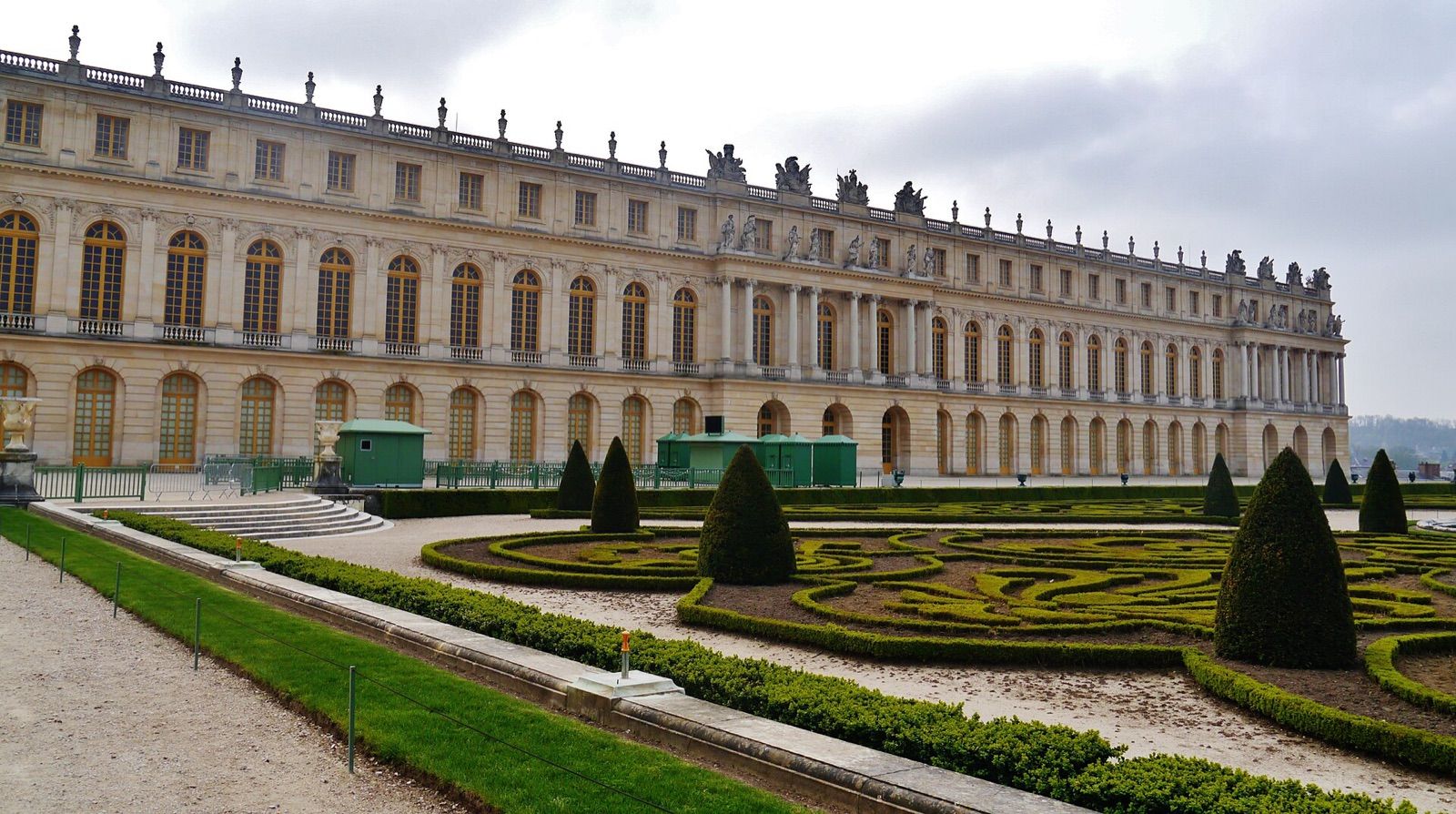
The former seat of Louis XIV and the French court until the Revolution, the Palace of Versailles is a UNESCO World Heritage Site and one of the most visited monuments in France.
Getting there: the RER C runs to Versailles Château Rive Gauche, the closest station to the palace. Regular trains also run from Saint-Lazare to Versailles Rive Droite and from Montparnasse to Versailles Chantiers, each a longer walk from the gates.
What to see: - The palace: the State Apartments, the King's and Queen's apartments and the Hall of Mirrors. - The gardens: vast formal gardens by André Le Nôtre, with fountains, the Grand Canal and groves. On certain days in season, the fountains run to music. - The Trianon estate: the Grand and Petit Trianon and Marie-Antoinette's hamlet, a rustic mock village, a long walk across the grounds (a small train and bicycle hire help).
How long: a full day. The palace interior takes two to three hours on a busy day; the gardens and Trianon easily fill the rest. The palace is closed on Mondays and busiest on Tuesdays, weekends and fountain-show days. Arrive for an early time slot, or visit the gardens and Trianon first and the palace later in the afternoon, when crowds thin.
Giverny: Monet's house and garden
Claude Monet lived in Giverny for more than 40 years and created the flower garden and water garden, with its Japanese bridge and water lilies, that he painted again and again.
Getting there: trains from Saint-Lazare go to Vernon-Giverny in under an hour; from Vernon, a seasonal shuttle bus, bicycle hire or a walk of around 5 km reaches the village.
What to see: Monet's pink house, his studio and collection of Japanese prints, the Clos Normand flower garden and the water garden across the road. The Musée des impressionnismes in the village has temporary exhibitions on Impressionism and its influence.
How long: half a day, or a full day with lunch and the museum. The house and garden open seasonally, typically from spring to autumn, and are closed in winter. Late spring is the most popular time; water lilies are at their best in summer. Timed tickets are recommended.
Fontainebleau: a château and a forest
Many French kings lived at Fontainebleau over seven centuries, and Napoleon bade farewell to his guard there before his first exile. The château is a UNESCO World Heritage Site, and it's generally calmer than Versailles.
Getting there: trains from Gare de Lyon reach Fontainebleau-Avon in about 40 minutes; a local bus connects the station with the château.
What to see: the Renaissance Gallery of François I, the ballroom, Napoleon's apartments and throne room, the horseshoe-shaped staircase in the main courtyard, and the gardens. The surrounding Forest of Fontainebleau is known for walking trails and sandstone boulders, a world-famous bouldering area.
How long: a full day with a forest walk. The château closes one day a week, usually Tuesday. With a car, you can add Vaux-le-Vicomte, the grand château that inspired Versailles, or the painters' village of Barbizon.
Reims: cathedral and Champagne
Reims is the largest city in the Champagne region, and its Gothic Notre-Dame cathedral is where French kings were traditionally crowned. The cathedral, the former archbishop's Palace of Tau and the Basilica of Saint-Remi together form a UNESCO World Heritage Site.
Getting there: high-speed trains from Gare de l'Est take about 45 minutes. Many Champagne houses in Reims are within walking distance or a short taxi ride of the centre.
What to see: the cathedral's sculpted façade, including the famous smiling angel, and its stained glass, including windows by Marc Chagall. Several Champagne houses offer cellar tours, some in deep chalk pits dug in the Roman era, followed by tastings; their hillsides, houses and cellars are part of a separate UNESCO listing.
How long: a full day. Cellar tours need booking ahead, especially at weekends. Épernay, with its Avenue de Champagne, is a short train ride farther on if you'd rather focus on wine.
Chantilly: château, art and horses
Chantilly is an easy half-day with a lot packed in: a fairy-tale château on a lake, the Musée Condé (one of France's finest collections of old master paintings outside the Louvre) and the monumental Great Stables, built in the 18th century, which now hold a museum of the horse. Chantilly is also a major centre of French horse racing.
Getting there: regional trains from Gare du Nord take under 30 minutes; the château is about a 25-minute walk or a short bus ride from the station.
Chartres and other options
- Chartres: the cathedral's medieval stained glass is among the most complete and celebrated in the world. Trains from Montparnasse take a little over an hour, and the cathedral and old town fill half a day to a full day.
- Auvers-sur-Oise: the village where Vincent van Gogh spent his last weeks, with his room at the inn and the church he painted. It's about an hour away by train, usually with a change.
- Mont-Saint-Michel: often sold as a day trip, but it's three or more hours each way. It's far better with an overnight stay in Normandy.
Practical tips for day trips from Paris
- Book timed tickets in advance for Versailles, Giverny and Champagne cellar tours. Check the official sites for current entry rules.
- Check weekly closures: Versailles is closed on Mondays and Fontainebleau usually on Tuesdays. Giverny is seasonal.
- Buy the right train ticket. Versailles and Fontainebleau are inside the Paris region and use regional transport fares, while Chantilly, Vernon (for Giverny), Reims and Chartres are outside it and need a separate ticket to that station. Check the official transport apps, and look for weekend engineering works on suburban lines.
- Start early, particularly at Versailles, and avoid weekends if you can.
- Choose your base with departures in mind: Saint-Lazare for Giverny, Gare de Lyon for Fontainebleau, Gare de l'Est for Reims. Our guide to where to stay in Paris covers the areas near these stations, and our three-day Paris itinerary shows how to fit a day trip into a short visit.
Bloiq is reader-supported. Some links may earn us a commission; it never affects what we write. How we make money.
Cover photo: Zairon, CC BY-SA 4.0, via Wikimedia Commons