Diode laser engravers: power ratings, materials and staying safe
Optical versus electrical power, what a hobby diode laser can and can't cut, which materials must never be lasered, and how to handle fumes, fire and eyes.
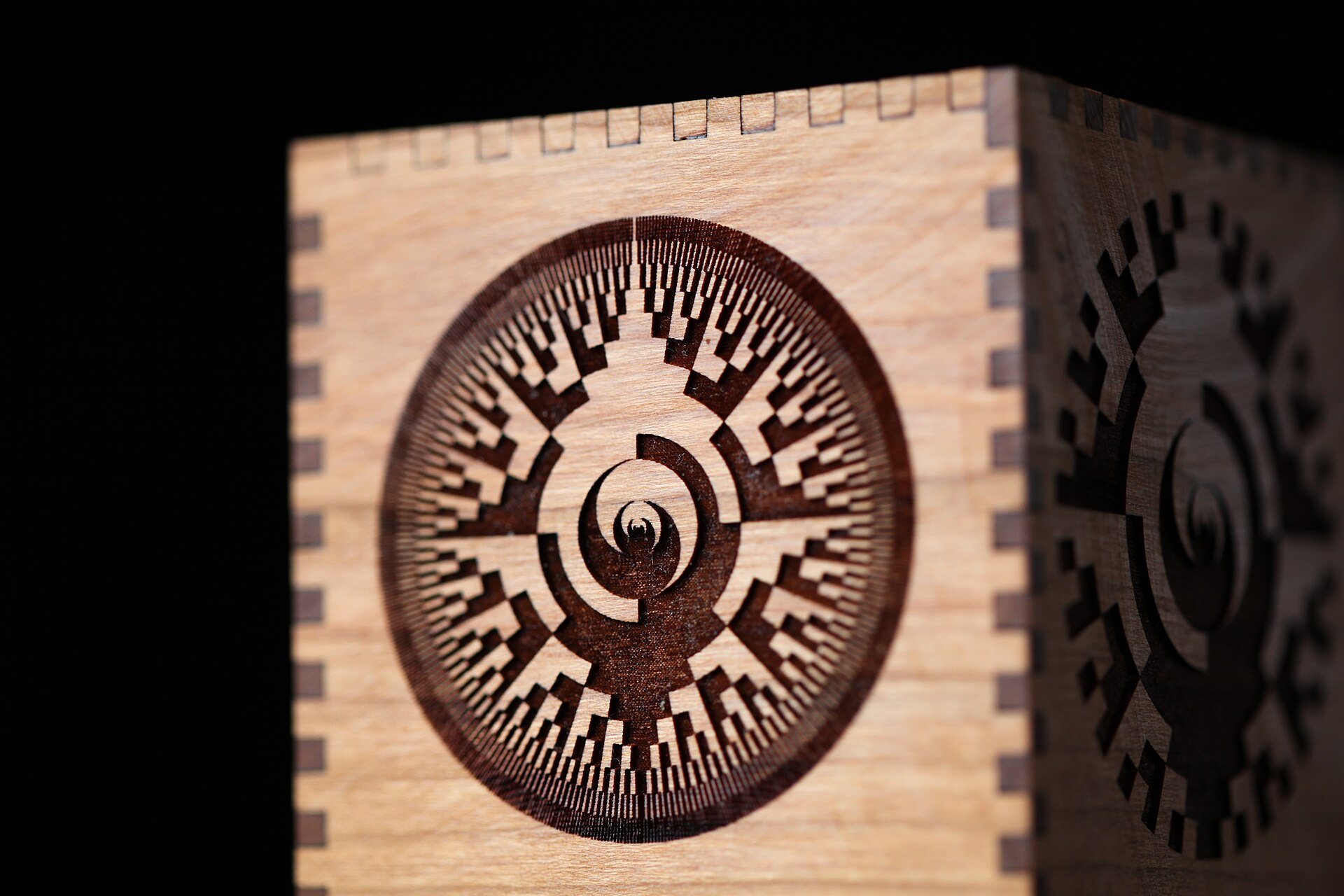
Diode laser engravers have become affordable enough for home workshops, and they can personalise wood, leather, slate and coated metal with impressive detail. They're also genuinely hazardous: a hobby laser can permanently damage eyesight, start fires and release toxic fumes from the wrong material. This guide explains how to read the power ratings, what these machines can realistically do and what you need to run one safely.
How diode lasers differ from CO2 and fibre lasers
Hobby laser engravers fall into three broad types:
- Diode lasers use semiconductor laser diodes, most commonly emitting blue light around 450 nm. They're compact, relatively cheap and usually built as an open gantry that moves the laser head over the work.
- CO2 lasers use a gas tube emitting far-infrared light. They're larger and costlier but cut wood and acrylic faster and can cut clear acrylic, which blue diodes can't.
- Fibre lasers emit near-infrared light suited to marking metals and some plastics, but cut very little organic material.
Some diode machines also offer an optional infrared diode module aimed at marking metal and dark plastics. Check which wavelength a machine uses, because it affects both materials and eye protection.
Optical power versus electrical power
This is the most important number, and the most abused. There are two very different figures:
- Optical (output) power is the laser light actually delivered to the material. This is what determines engraving and cutting ability.
- Electrical (input) power is what the module draws from the power supply. It's always much higher, because much of the energy becomes heat.
A machine marketed with a large wattage figure may deliver only a fraction of it as laser light. When comparing machines, look specifically for optical output power, and treat any listing that doesn't clearly state it with suspicion.
As a rough guide to optical power:
| Optical output | Typical use |
|---|---|
| Around 5 W | Engraving wood, leather, card and coated surfaces; thin cuts in card and veneer |
| Around 10 W | Faster engraving; cutting thin plywood and basswood, often in several passes |
| 20 W and above | Quicker cutting of thicker wood; more fire risk and fume output |
Power isn't everything. A small, well-focused spot size concentrates energy for finer detail and cleaner cuts, and air assist (a jet of air at the lens) improves cutting and reduces charring and flare-ups.
What a diode laser can engrave and cut
Materials that generally work well, with good ventilation:
- Wood and plywood, including basswood, birch plywood and hardwoods. Plywood glues vary, so results differ between sheets.
- Vegetable-tanned leather, cork, card, paper and natural fabrics such as cotton and felt.
- Slate, stone and ceramic tiles, often with a coating or marking compound for contrast.
- Anodised aluminium and painted or powder-coated metal, where the laser removes the surface layer.
- Stainless steel, which some higher-power modules can mark dark with slow settings, or with a marking spray.
- Opaque, dark-coloured cast acrylic, which blue diodes can cut in thin sheets; the fumes are irritating and need extraction.
What it can't do well
- Clear or blue acrylic and clear glass. Blue laser light passes straight through. Glass can be marked with a coating or paint layer, but not engraved directly with good results.
- Cutting metal. Hobby diode lasers can mark metal, not cut it.
- Bare, shiny metals such as polished aluminium or copper reflect much of the beam and are hard to mark without a coating.
- Thick material. Cutting ability drops quickly with thickness; many passes on thick wood increase charring and fire risk.
Materials that must never be lasered
Some common materials release toxic or corrosive gases when burned. Never laser:
- PVC and vinyl, including many signs, cable sheathing and self-adhesive films. PVC releases chlorine compounds that form hydrochloric acid, which is toxic to breathe and corrodes the machine.
- Artificial leather ("faux", "PU" or "leatherette"), which often contains PVC.
- Polycarbonate, which burns and discolours and gives off harmful fumes.
- ABS plastic, which releases hazardous fumes and melts rather than cuts cleanly.
- PTFE (Teflon) and other materials containing fluorine, chlorine or bromine.
- Polystyrene foam and HDPE, which melt and catch fire easily.
- Fibreglass and carbon-fibre composites, whose resins give off harmful fumes.
- Chrome-tanned leather, as it contains chromium compounds.
- Anything you can't identify. If you don't know what a material is made of, don't laser it.
Eye safety
Most hobby diode lasers are Class 4 lasers, the highest hazard class. The direct beam and even diffuse reflections from the work surface can cause permanent eye damage in an instant, without any sensation of pain.
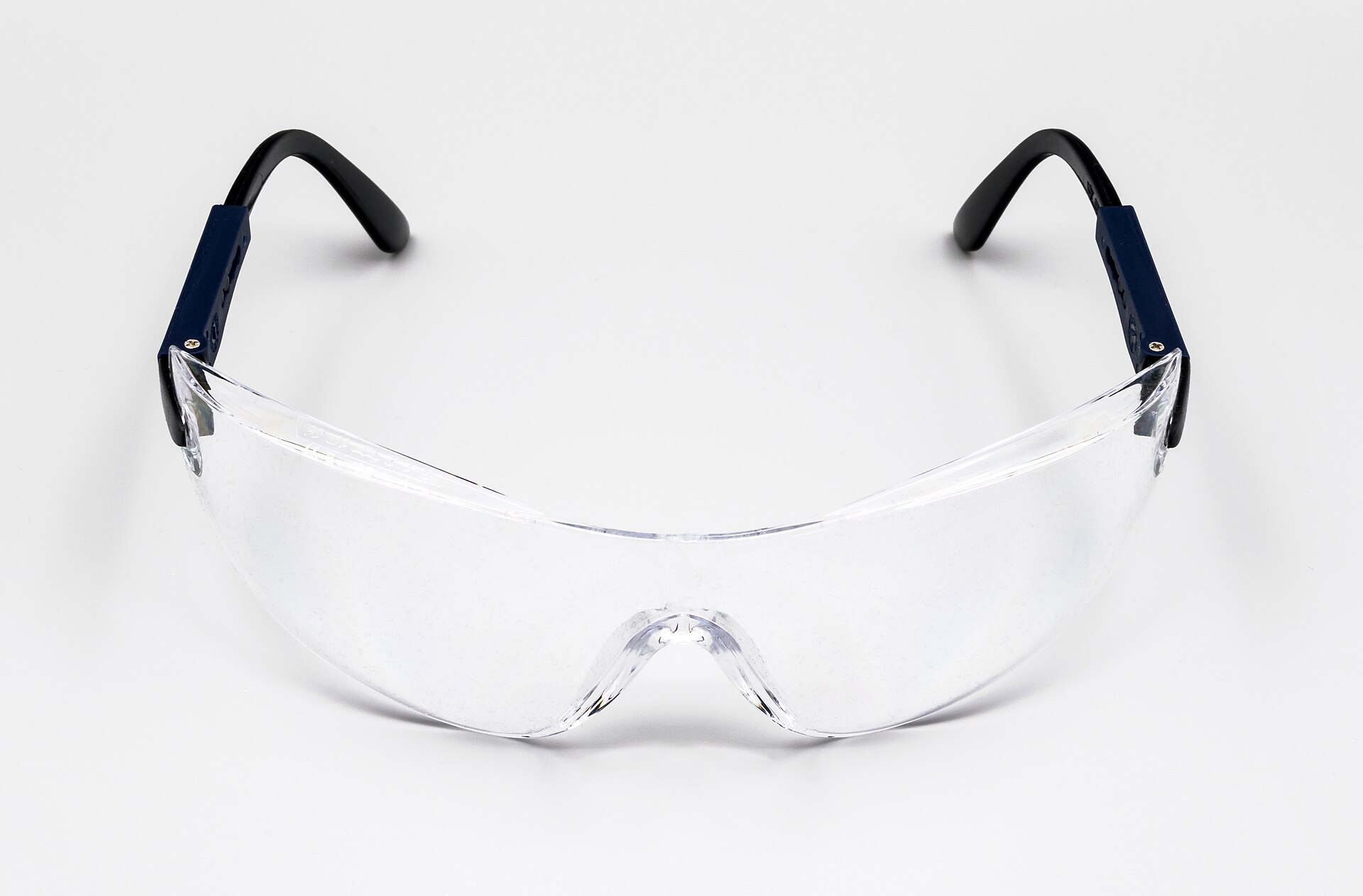
Rule of thumb: safety glasses must be certified for your laser's exact wavelength, with a suitable optical density (OD) at that wavelength. Tinted glasses without those markings are not protection.
- Look for glasses marked with the wavelength range and OD they cover, conforming to a recognised laser-safety standard.
- Glasses for blue lasers won't necessarily protect against an infrared module; check each wavelength you use.
- Everyone in the room needs protection, and keep children and pets away while the laser is running.
- Never look at the beam spot unprotected, and never defeat safety interlocks.
Enclosures, ventilation and fire
An enclosure turns an open-frame machine into something far safer to live with. A good one contains stray light, holds fumes for extraction and helps contain a small fire. Its viewing window must be rated to block the laser's wavelength. Some machines come fully enclosed with lid interlocks; others need an add-on enclosure.
Ventilation isn't optional, even for wood. Laser smoke contains fine particles and volatile organic compounds.
- The most effective set-up is an inline fan and duct venting outdoors, away from windows and neighbours.
- Filter units with particle and activated-carbon stages are an alternative where venting isn't possible, but their filters need regular replacement and are less effective than ducting outside.
Fire is the other major risk. Never leave a laser running unattended, even briefly. Keep a suitable fire extinguisher nearby, use air assist, clear debris from the bed regularly, and use a honeycomb or slat bed so heat and flames don't build up under the work.
Features worth paying for
- Safety features: flame detection, a tilt or movement sensor that stops the laser if the machine is knocked, an emergency stop and a key switch.
- Clear specifications: stated optical power, wavelength and laser class.
- Work area suited to your projects, and optional rotary attachments for cups and tumblers.
- Software support: check which programs the machine works with. Compatibility with widely used third-party design and control software, not just the maker's own app, gives you more options.
- Air assist included or easily added.
The short version
- Compare optical output power, not electrical input.
- Choose wavelength according to the materials you plan to use.
- Buy certified glasses for each wavelength, before the machine arrives.
- Plan ventilation to outdoors and an enclosure.
- Never laser PVC, vinyl, faux leather, polycarbonate, ABS or unknown materials.
- Never leave it running unattended, and keep an extinguisher within reach.
Bloiq is reader-supported. Some links may earn us a commission; it never affects what we write. How we make money.
Cover photo: Jared Tarbell, CC BY 2.0, via Wikimedia Commons