Home / Travel / Mexico · Where to stay
Where to stay in Mexico City: Roma, Condesa, Polanco and more
Mexico City is enormous, and a good base keeps traffic out of your days. How Roma Norte, Condesa, Polanco, Centro, Coyoacán and Juárez compare, plus altitude tips.
This guide contains affiliate links, marked as such. If you book through them, Bloiq may earn a commission at no extra cost to you.
Mexico City is one of the largest cities in the Americas, and its traffic can turn a short distance on the map into a long ride. Most visitors spend their time in a handful of central neighbourhoods, and choosing the right one means you can walk to dinner, reach the main museums easily and feel comfortable coming home at night. Here's how the main areas compare.
The quick answer
- First visit, walkable, great food: Roma Norte or Condesa.
- Upscale, polished and near the big museums: Polanco.
- History, architecture and sightseeing on foot: Centro Histórico.
- A slower, village-like pace: Coyoacán.
- Central, business-friendly and well connected: Juárez and Paseo de la Reforma.
Roma Norte: the food and café capital
Roma Norte is a grid of tree-lined streets and early 20th-century mansions, many now housing cafés, galleries, restaurants, bakeries and mezcal bars. The wide central strip of Avenida Álvaro Obregón is pleasant for walking, and the area has become one of the city's most popular bases for visitors.
Good for: food lovers, first-time visitors and anyone who likes to explore on foot. Consider: it's busy and, in places, noisy at night, especially near bars on the main streets. Its popularity means prices are higher than in other residential areas.
Condesa: leafy and relaxed
Next door to Roma, Condesa is known for its Art Deco apartment buildings and two much-loved parks, Parque México and Parque España. Avenida Ámsterdam, a tree-shaded oval that traces the route of a former horse-racing track, is a favourite walking and jogging loop.
Good for: couples, longer stays and travellers who want green space and a calm, residential feel. Consider: like Roma, it has a busy bar scene on some streets, so check the exact location. It's a taxi or Metrobús ride to the historic centre.
Polanco: upscale and polished
North of Chapultepec Park, Polanco is the city's most affluent district, with luxury shops along Avenida Presidente Masaryk, many of Mexico's most celebrated restaurants and large international hotels. The National Museum of Anthropology and the other museums of Chapultepec are within walking distance.
Good for: business trips, luxury stays and museum-focused visits. Consider: it's the most expensive area, feels less bohemian than Roma or Condesa, and is a longer ride from the Centro Histórico.
Centro Histórico: the heart of the city
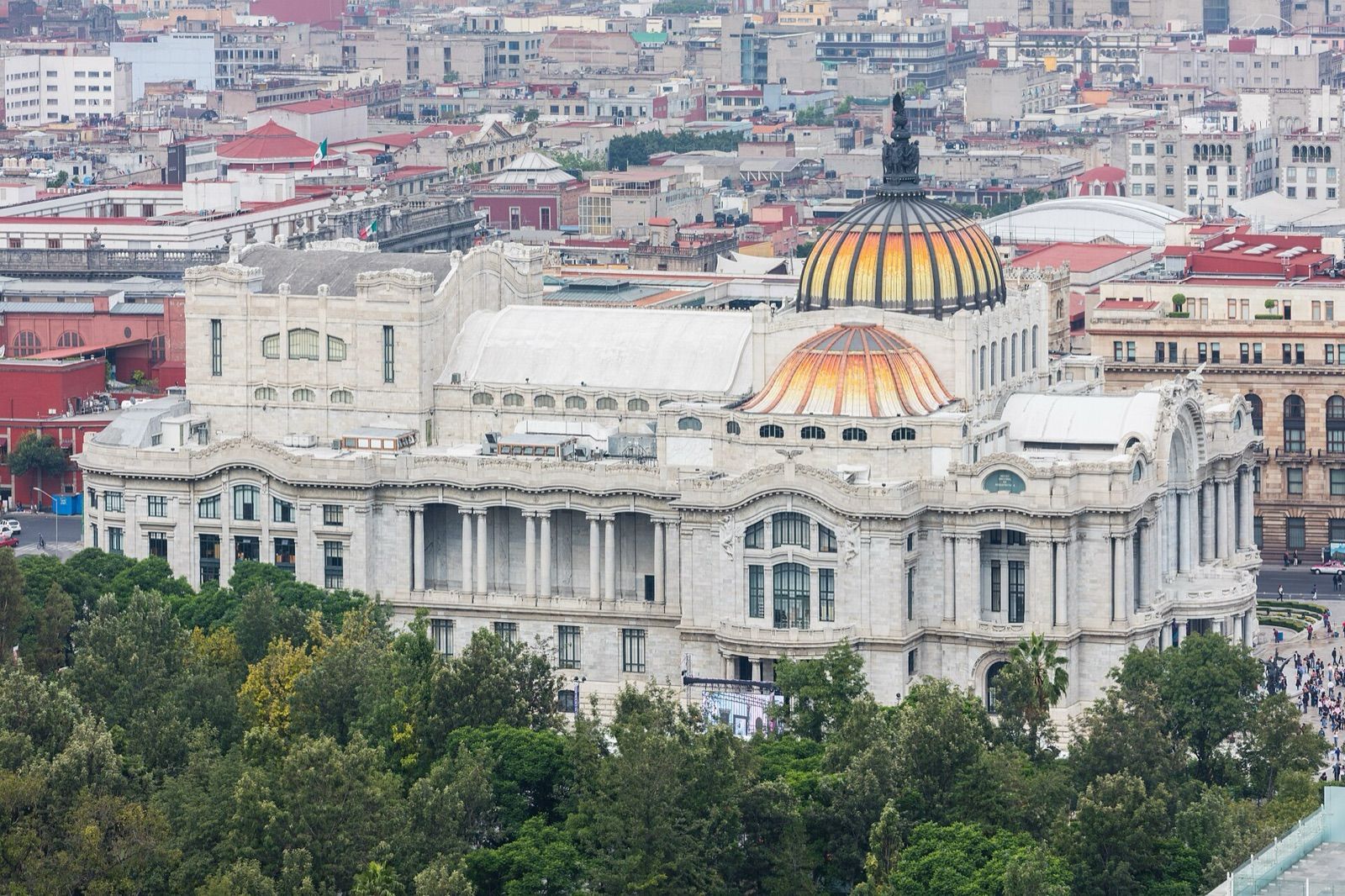
The historic centre is built around the Zócalo, one of the largest public squares in the world, with the Metropolitan Cathedral, the Templo Mayor ruins and the National Palace with its Diego Rivera murals. The pedestrian street Madero leads west to the Palacio de Bellas Artes and the Alameda Central park.
Good for: history and architecture lovers, and anyone who wants the major sights on foot. Consider: it's crowded and noisy by day, and some blocks empty out after shops close. Demonstrations and events regularly take over the Zócalo. Stay on well-lit main streets in the evening.
Coyoacán: colonial calm in the south
About 10 km south of the centre, Coyoacán is a former village with cobbled streets, colonial houses, two central plazas, a busy market and the Frida Kahlo Museum. It has a relaxed, bohemian feel, particularly on weekday evenings.
Good for: repeat visitors, families and travellers who want a quieter base with a strong local character. Consider: reaching the centre or Polanco can take 30 to 60 minutes depending on traffic, and there are fewer hotels. Book Frida Kahlo Museum tickets well ahead, as they often sell out.
Juárez and Paseo de la Reforma
Paseo de la Reforma is the city's grand boulevard, lined with office towers, monuments such as the Angel of Independence, and many large hotels. Colonia Juárez, just south of it, has become a lively neighbourhood of restaurants, bars and galleries. It sits between Roma, Polanco and the historic centre.
Good for: business travellers and first-time visitors who want a central location with good transport. Consider: Reforma itself is a busy thoroughfare, and parts of the adjacent Zona Rosa can be rowdy at night. On Sunday mornings part of Reforma is closed to cars for cyclists and walkers.
Getting around Mexico City
- Metro: an extensive and very inexpensive network with 12 lines. It's fast, but trains are extremely crowded at rush hour. Some carriages at the front are reserved for women and children at peak times. Keep bags in front of you and phones out of sight.
- Metrobús: a bus rapid transit system with dedicated lanes. Line 1 runs the length of Avenida Insurgentes, past Roma and Condesa, and another line links the airport terminals with the historic centre. You'll need a rechargeable transport card, which also works on the metro.
- Ride-hailing apps: widely used, reasonably priced and generally the most comfortable option for visitors, especially at night.
- Taxis: at the airport, use the authorised taxi booths inside the terminal, where you pay in advance. In the city, most travellers prefer ride-hailing or a taxi from an official taxi rank, known as a sitio, to hailing one on the street.
- Cycling: the city has a public bike-share system and a growing network of bike lanes.
Rule of thumb: in Mexico City, distance on the map means little. Twenty minutes on foot within your neighbourhood usually beats 45 minutes in traffic, so pick the area where you'll spend most of your time.
Altitude and air
Mexico City sits at about 2,240 metres (roughly 7,350 feet). Many visitors feel short of breath on stairs, tire more quickly or sleep poorly for the first day or two.
- Take it easy on your first day and drink plenty of water.
- Alcohol tends to have a stronger effect at altitude.
- The sun is intense, even when it feels mild, so use sunscreen.
- Air quality varies, and on some days the city issues pollution alerts. If you have heart or lung conditions, talk to your doctor before you travel.
Safety basics
Most visitors have trouble-free trips, and the neighbourhoods in this guide are among the most visited in the city. Standard big-city precautions apply:
- Use ride-hailing apps or authorised taxis rather than hailing cars on the street at night.
- Keep your phone and valuables out of sight on crowded transport and in busy markets.
- Use ATMs inside banks or shopping centres rather than on the street.
- Check your government's current travel advice before you go.
Practical tips before you book
- Drinking water: don't drink tap water. Hotels usually provide bottled or filtered water.
- Earthquakes: Mexico City is in an active seismic zone and has a public earthquake alert system. Take note of your hotel's evacuation information when you arrive.
- Seasons: the rainy season runs roughly from June to October, usually with afternoon or evening showers. November to April is drier; spring can be hot and hazy.
- Lodging tax: Mexico City charges a lodging tax on accommodation. Check whether it's included in the quoted price.
- Airports: most international flights use Benito Juárez International Airport, close to the centre on the east side of the city. Some flights use Felipe Ángeles International Airport, far to the north, so check which one you're flying into before planning transfers.
Choose Roma Norte or Condesa for walkable neighbourhood life, Polanco for polish, and the Centro Histórico for history, and you'll have Mexico City's best sights and food within easy reach.
Bloiq is reader-supported. Some links may earn us a commission; it never affects what we write. How we make money.
Cover photo: Diego Delso, CC BY-SA 4.0, via Wikimedia Commons