Home / Travel · Where to stay
Where to stay in Marrakech: Medina riads vs Gueliz and Hivernage
A riad in the old Medina or a hotel in Gueliz or Hivernage? How the areas of Marrakech compare, what staying in a riad is really like and who each base suits.
This guide contains affiliate links, marked as such. If you book through them, Bloiq may earn a commission at no extra cost to you.
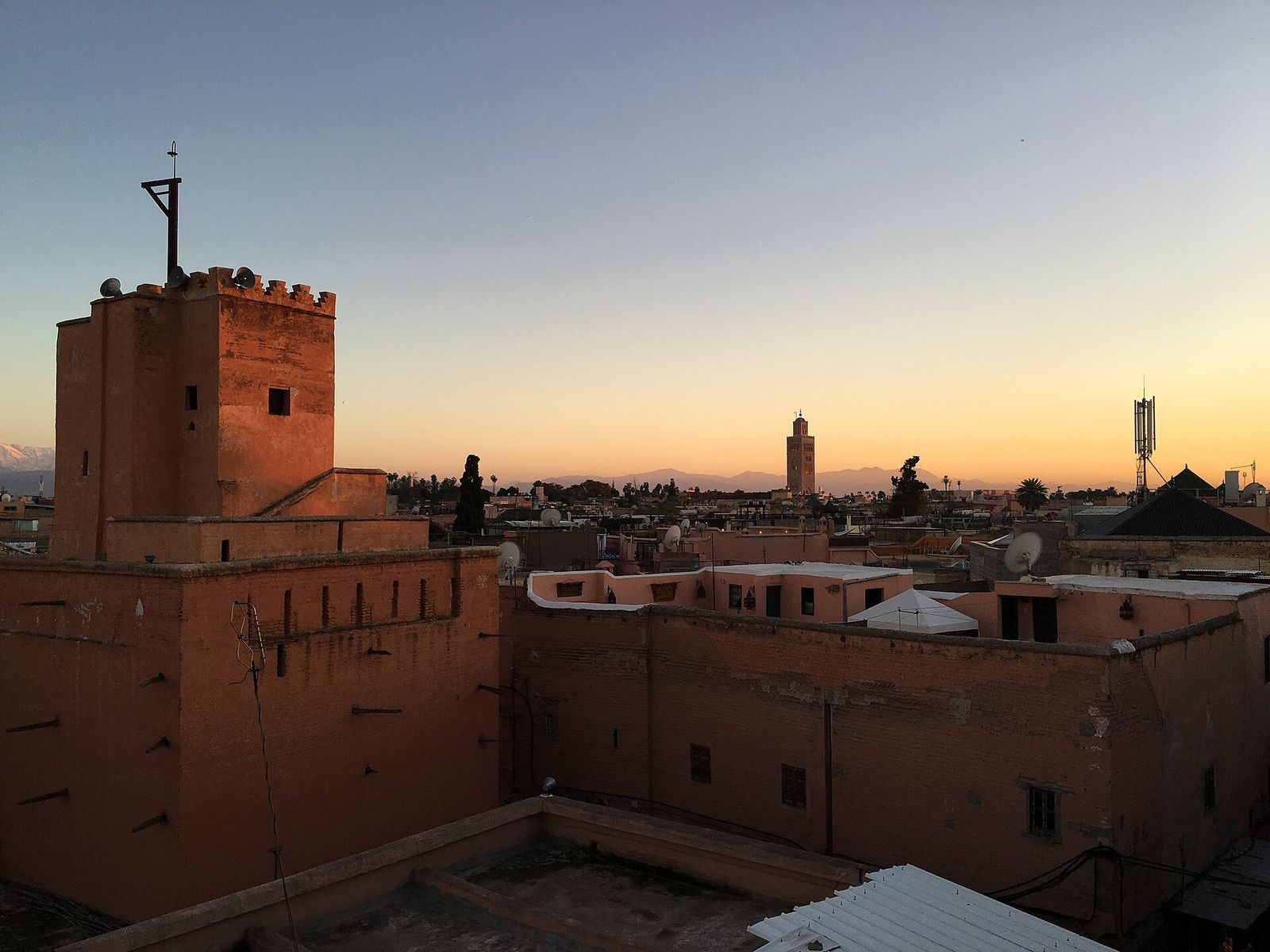
In Marrakech, choosing where to stay means choosing what kind of trip you want. Inside the walls of the Medina you can sleep in a riad, a traditional house built around a courtyard, a few minutes' walk from the souks. Outside them, Gueliz and Hivernage offer wide streets, modern hotels and a taxi at the door. This guide compares the areas and explains what staying in a riad actually involves.
The quick answer
- First visit, atmosphere, sights on foot: a riad in the Medina, within about 10 minutes' walk of Jemaa el-Fnaa.
- The Medina, but calmer: Mouassine or the northern Medina.
- The Medina with easier arrivals: Riad Zitoun or the Kasbah, in the south.
- Modern city life, cafés and galleries: Gueliz.
- Big hotels with pools, families and nightlife: Hivernage.
- A resort stay away from the bustle: the Palmeraie.
Many visitors split their stay: a few nights in a Medina riad, then a few by a pool outside the walls.
What a riad is, and why it matters
Strictly, a riad is a house built around an interior garden, while a dar has a simpler courtyard, but both names are used for the many old houses restored as guesthouses. Most have a handful of rooms, a courtyard with a fountain or small plunge pool, a roof terrace and staff who can arrange meals, guides and transfers.
What to expect:
- Rooms face inward. Windows usually open onto the courtyard, not the street. That keeps rooms cool and quiet but can make them dim; ask for an upper-floor room if daylight matters.
- Sound carries around an open courtyard, and you'll hear the call to prayer from nearby mosques, including before dawn.
- Stairs, not lifts. Most riads have steep, narrow staircases.
- Winter nights are cold. Thick walls keep riads cool in summer, but from December to February nights can be chilly, so check that rooms are heated.
- Cars can't reach most doors. Many riads are down narrow lanes (derbs). Riads usually meet guests at the nearest point a taxi can reach, and porters with handcarts take the luggage. Arrange this when you book; finding a riad alone at night is confusing.
The Medina around Jemaa el-Fnaa: the heart of it all
The walled Medina is a UNESCO World Heritage site, inscribed in 1985. Its main square, Jemaa el-Fnaa, fills from late afternoon with food stalls, musicians and storytellers, and the souks spread north from it. The minaret of the Koutoubia Mosque, the city's landmark, rises just to the west. Mosques in Morocco are generally open only to Muslims, but the Koutoubia's gardens are open to all.
Good for: first-time visitors who want to walk everywhere. Consider: the lanes closest to the square are the busiest, with scooters, carts and stallholders, and noise late into the evening. A riad 5–10 minutes' walk away gives you easy access with more calm.
Mouassine and the northern Medina: quieter lanes
North-west of the square, the Mouassine quarter has a historic fountain, Le Jardin Secret (a restored palace garden), craft workshops and many of the city's finest restored riads. Farther north, around the Ben Youssef Madrasa, a richly decorated former Quranic school, and the Marrakech Museum, the lanes become more residential.
Good for: couples, design lovers and return visitors. Consider: the lanes are a maze, taxi drop-off points can be a walk away, and the square is 10–20 minutes on foot.
Riad Zitoun and the Kasbah: the southern Medina
South-east of the square, the two Riad Zitoun streets lead towards the Bahia Palace and the Dar Si Said museum of carpets and weaving. Farther south, the Kasbah quarter holds the Saadian Tombs and the ruins of the El Badi Palace. Streets here are generally a little wider, so taxis can often get closer, and the Kasbah is handy for the airport.
Good for: travellers who want the Medina with simpler arrivals, and sightseeing among palaces and gardens. Consider: tour groups crowd the main monuments by day, and evenings are quieter than near the square.
Gueliz: the modern city
Gueliz is the new town laid out in the early 20th century, during the French protectorate, north-west of the Medina walls. It has wide avenues, apartment buildings, terrace cafés, contemporary galleries, shops and many of the city's international restaurants. The Jardin Majorelle and the Yves Saint Laurent Museum are on its north-eastern side, and the railway station is on its southern edge. Avenue Mohammed V runs straight from Gueliz to the Koutoubia.
Good for: longer stays, travellers who prefer modern hotels and apartments, and anyone who wants a break from the Medina's intensity. Consider: it's less atmospheric, and Jemaa el-Fnaa is around half an hour's walk or a short taxi ride away.
Hivernage: big hotels and gardens
Between Gueliz and the Medina's western walls, Hivernage is a district of wide, leafy avenues, large hotels with pools and spas, the conference centre and many of the city's lounges and nightclubs. The Koutoubia is roughly a 15–20 minute walk, and the Menara Gardens, with their large pool and olive groves, are a short taxi ride away.
Good for: families who want a big pool, groups, conference visitors and nightlife. Consider: it feels international rather than distinctly Moroccan, and you'll take taxis or walk to the Medina for most sightseeing.
The Palmeraie and beyond: resorts in the palm groves
North-east of the city, the Palmeraie is a large palm grove scattered with resorts, villas and golf courses, typically 20–30 minutes by road from the Medina. Farther out, camps in the stony Agafay desert and guesthouses in the Atlas foothills offer silence and big views.
Good for: rest, honeymoons and families focused on the pool. Consider: every trip into town depends on a taxi or hotel shuttle.
Getting around
- From the airport: Marrakech Menara Airport is only about 6 km from the Medina, usually 15–25 minutes by road. Taxis wait outside, a public bus serves the city centre, and many riads and hotels arrange pickups, which is the simplest option for a Medina riad.
- Petit taxis: the small beige taxis cover trips within the city and take up to three passengers. Ask for the meter or agree the fare before you set off.
- On foot: the Medina is a walking city. Lanes are narrow and shared with scooters and carts, so keep to the side. Download an offline map, as GPS can drift between high walls. People who offer to show you the way usually expect a tip; a polite "no, thank you" is fine.
- Trains and buses: trains run north to Casablanca, Rabat and beyond, and long-distance buses serve destinations such as Essaouira.
Practical tips before you book
- Pick your season. Spring (March to May) and autumn (September to November) are the most comfortable. Summer days often pass 35 °C, while winter days are mild and nights cold.
- Check Ramadan dates. They move earlier each year. Daily life shifts towards the evening, and some local cafés close during the day, though hotels and riads keep serving guests.
- Dress modestly in the Medina; covering shoulders and knees is respectful.
- Tourist tax: a per-person, per-night tourist tax is usually added and often paid at the riad or hotel. Check the current rate and whether your booking includes it.
- Ask the riad before you arrive: the exact meeting point, whether rooms have heating and air conditioning, whether breakfast is included and how many stairs there are.
- Carry some cash. It's still widely used in the souks and at smaller riads.
- Entry requirements: rules depend on your nationality. Check the current rules on an official government site before you go.
Choose a Medina riad for atmosphere, Gueliz for everyday convenience and Hivernage or the Palmeraie for a pool-and-rest holiday, and you'll have the version of Marrakech that suits you.
Bloiq is reader-supported. Some links may earn us a commission; it never affects what we write. How we make money.
Cover photo: Ty Terrasso from Houston, CC BY 2.0, via Wikimedia Commons
.jpg)