Home / Travel / Spain · Where to stay
Where to stay in Barcelona: the neighbourhoods compared
Gothic Quarter, El Born, Eixample, Gràcia, Barceloneta, Poble-sec and Poblenou: how Barcelona's main areas differ, who each suits, and how to get around.
This guide contains affiliate links, marked as such. If you book through them, Bloiq may earn a commission at no extra cost to you.
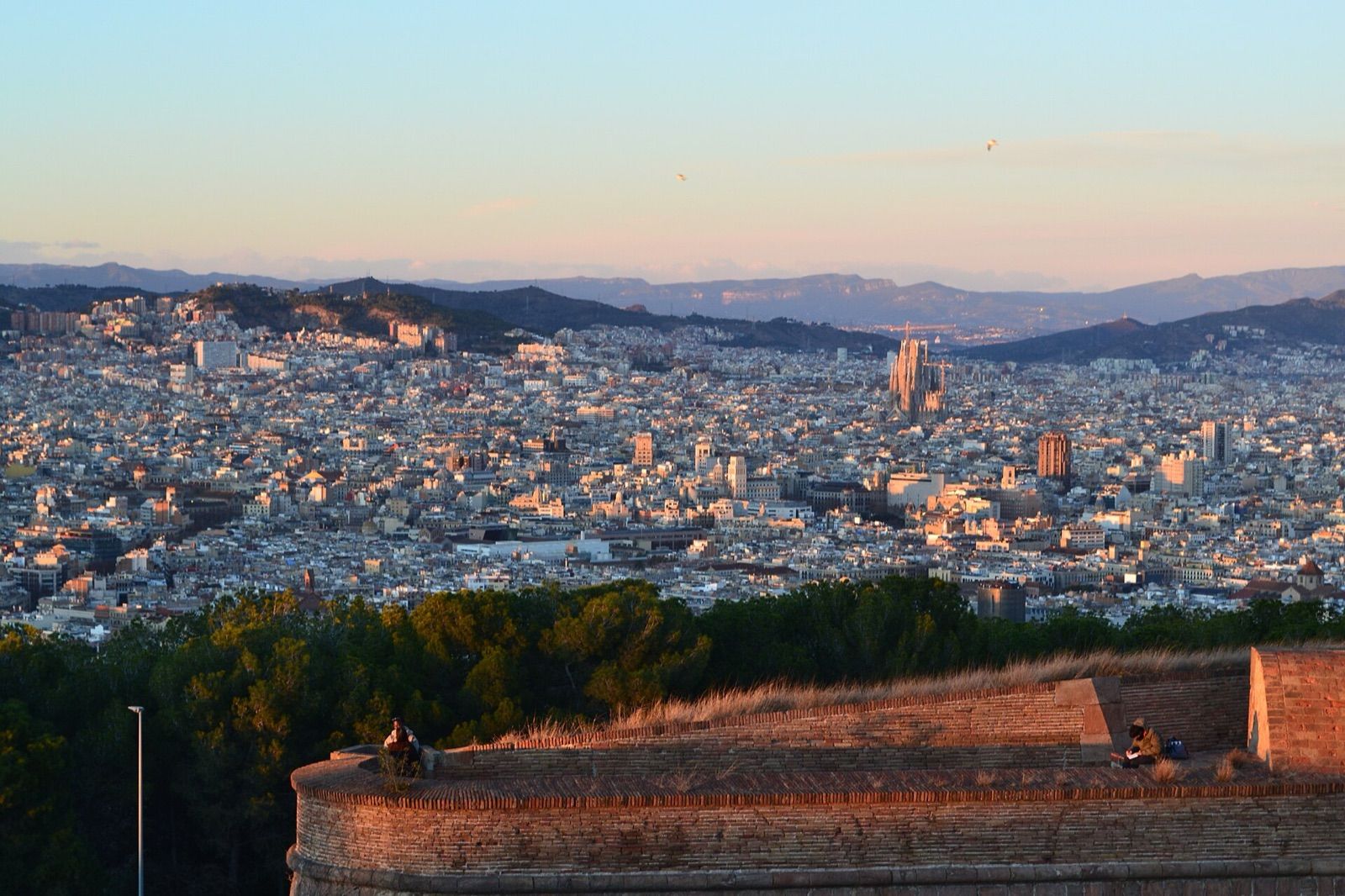
Barcelona packs a medieval old town, a grid of modernista architecture, city beaches and hillside parks into a fairly compact area, with a good metro linking them. That makes almost any central neighbourhood a workable base, but each has a very different feel after dark. Some areas never quite go to sleep; others empty out once the shops close. Here's how the main neighbourhoods compare.
The quick answer
- First visit, want the old town on your doorstep: the Gothic Quarter or El Born.
- Architecture, space and transport links: Eixample.
- Village atmosphere and local squares: Gràcia.
- Beach first: Barceloneta, or Poblenou for quieter sand.
- Good value and tapas bars: Poble-sec.
- Modern, calmer and near the sea: Poblenou.
The Gothic Quarter: medieval and central
The Barri Gòtic is the historic core, a maze of narrow stone lanes around the cathedral, with Roman remains, hidden squares and the arcaded Plaça Reial. La Rambla runs along its western edge, and the waterfront is a short walk south.
Good for: first-time visitors who want to walk everywhere. Consider: it's the most crowded part of the city, pickpocketing is common around La Rambla, some streets are noisy late at night, and rooms in old buildings can be small and dark. Streets a few blocks away from La Rambla are usually calmer.
El Born: stylish and lively
East of Via Laietana, El Born has the Gothic church of Santa Maria del Mar, the Picasso Museum and the Ciutadella Park on its edge. Its streets are full of boutiques, cocktail bars and restaurants, and it feels a little more local and design-minded than the Gothic Quarter.
Good for: couples and anyone who wants atmosphere, shopping and dinner close by. Consider: bar streets can be loud until late, especially at weekends.
Eixample: the grid and the modernistas
Laid out in the 19th century by Ildefons Cerdà, the Eixample is a vast grid of blocks with cut-off corners that create small plazas at every junction. It holds many of Barcelona's best-known modernista buildings, including Casa Batlló and La Pedrera on Passeig de Gràcia, and the Sagrada Família on its eastern side. The area is usually described in two halves, the Dreta (right) and Esquerra (left), either side of Passeig de Gràcia.
Good for: architecture lovers, families and anyone who wants larger rooms, good restaurants and easy metro access. Consider: the main avenues carry heavy traffic, so ask for a room facing the interior of the block. It's a 15–25 minute walk to the old town from much of the district.
Gràcia: a village in the city
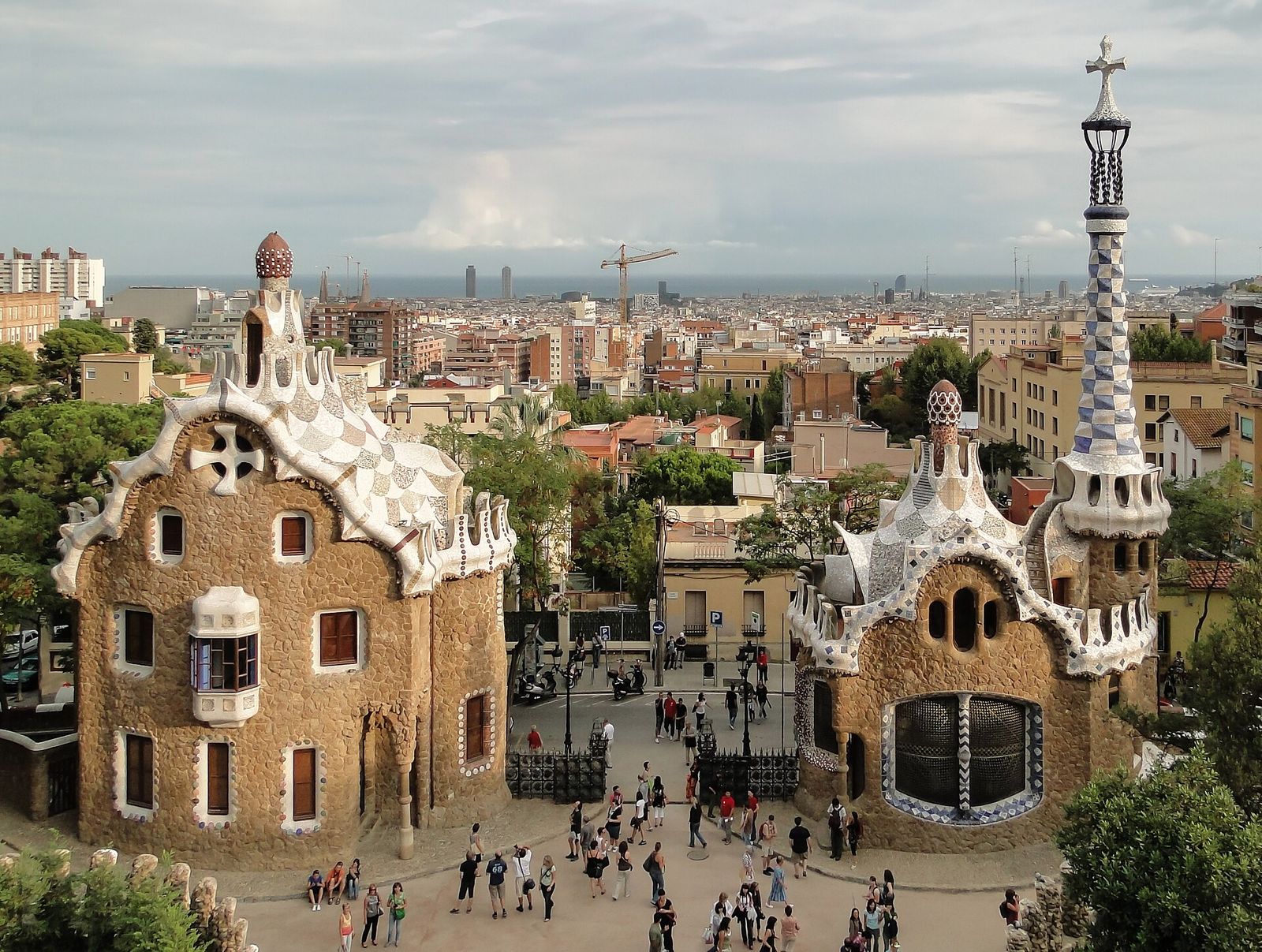
Once a separate town, Gràcia keeps a small-scale grid of streets and squares, such as Plaça del Sol and Plaça de la Vila de Gràcia, with independent shops, cafés and a strong local identity. Park Güell is uphill to the north.
Good for: repeat visitors, longer stays and travellers who want to live like a local. Consider: it's further from the beach and old town, though the metro (Fontana and Diagonal) and FGC trains are close. During the Festa Major de Gràcia in August, the streets are decorated and very busy, with music late into the night.
Barceloneta: by the beach
Built on a triangle of reclaimed land in the 18th century, Barceloneta was the fishermen's quarter. Its long, narrow blocks lead straight to the city's best-known beach, and it's full of seafood restaurants.
Good for: beach holidays and summer trips. Consider: it's crowded and can be noisy in summer, many flats are very small, and there's less choice of hotels in the historic part. Watch belongings closely on the beach.
Poble-sec and Montjuïc: good value below the hill
Poble-sec lies between the Avinguda del Paral·lel and the slopes of Montjuïc. Carrer de Blai is lined with pintxos bars, and the neighbourhood has an unpretentious, residential feel. Above it, Montjuïc has gardens, the castle, the National Art Museum of Catalonia (MNAC), the Fundació Joan Miró and the 1992 Olympic venues.
Good for: travellers on a budget, food lovers and people who like green space. Consider: streets climb steeply towards Montjuïc, and the old town is a 15–20 minute walk or a short metro ride away (Paral·lel and Poble Sec stations).
Poblenou: modern and relaxed
Once the industrial heart of the city, Poblenou now mixes converted factories, new offices and apartment blocks with the pleasant, pedestrian Rambla del Poblenou. The beaches here, such as Bogatell and Mar Bella, tend to be less crowded than Barceloneta's.
Good for: families, longer stays, business trips and beach-lovers who want calm. Consider: it's a metro ride (line L4) from the old town and the main sights, and parts of the district feel more like a work zone than a holiday neighbourhood.
Getting around
- Metro: clean, frequent and easy to use, with lines L1 to L5 covering most of the central areas. Multi-journey and multi-day travel cards are usually better value than single tickets; check the current options.
- From the airport: the Aerobús express bus runs to Plaça de Catalunya, and metro line L9 Sud connects both terminals with the network (it requires a specific airport ticket). The R2 Nord train runs from Terminal 2 to Sants and Passeig de Gràcia.
- Trains: Sants is the main station for high-speed and regional trains. FGC trains are handy for Gràcia and the upper parts of the city.
- Walking: the old town, El Born and the waterfront are best on foot. Eixample's grid is flat and easy to navigate.
- Cycling: the public Bicing scheme is for residents, but private bike rental is widely available and the city has an extensive network of bike lanes.
Practical tips before you book
- Pickpockets are a real problem on La Rambla, the metro and the beaches. Use a zipped bag and keep phones out of back pockets.
- Street noise: balconies facing narrow old-town streets or busy avenues can be loud. Interior rooms are quieter.
- Tourist tax: Catalonia charges a per-person, per-night tax that varies with the accommodation category, and Barcelona adds a municipal surcharge. It's usually paid at the property; check the current rate.
- Holiday apartments: Barcelona tightly regulates tourist flats and has announced plans to phase out tourist-apartment licences by 2028. Legal listings show a registration number.
- Air conditioning is worth having from June to September, when it can be hot and humid.
- Late meals: locals often eat dinner after 9 pm, and many restaurants fill up later than in northern Europe.
- Book ahead for timed entry to the Sagrada Família, Park Güell and the modernista houses.
- Language: Catalan and Spanish are both official, and signs are usually in Catalan first.
Choose the Gothic Quarter or El Born to be in the thick of it, Eixample for comfort and connections, and Gràcia or Poblenou for a calmer base.
Bloiq is reader-supported. Some links may earn us a commission; it never affects what we write. How we make money.