Home / Travel / Canada · Campus tours
UBC campus tour: Main Mall, the Rose Garden and the Point Grey cliffs
Plan a visit to UBC's Vancouver campus: Main Mall, the Rose Garden, the Museum of Anthropology, Nitobe Garden, the beaches, getting there and where to stay.
Few universities have a setting like the University of British Columbia's. Its Vancouver campus covers the tip of the Point Grey peninsula, surrounded on three sides by ocean and cliffs and on the fourth by the forest of Pacific Spirit Regional Park, with the mountains of the North Shore across the water. The campus sits on the traditional, ancestral and unceded territory of the Musqueam people. It's large and spread out, more like a small town than a single campus, so a visit works best with a plan. This guide covers the main sights, how student life works, and how to make the trip practical.
Main Mall, the spine of the campus
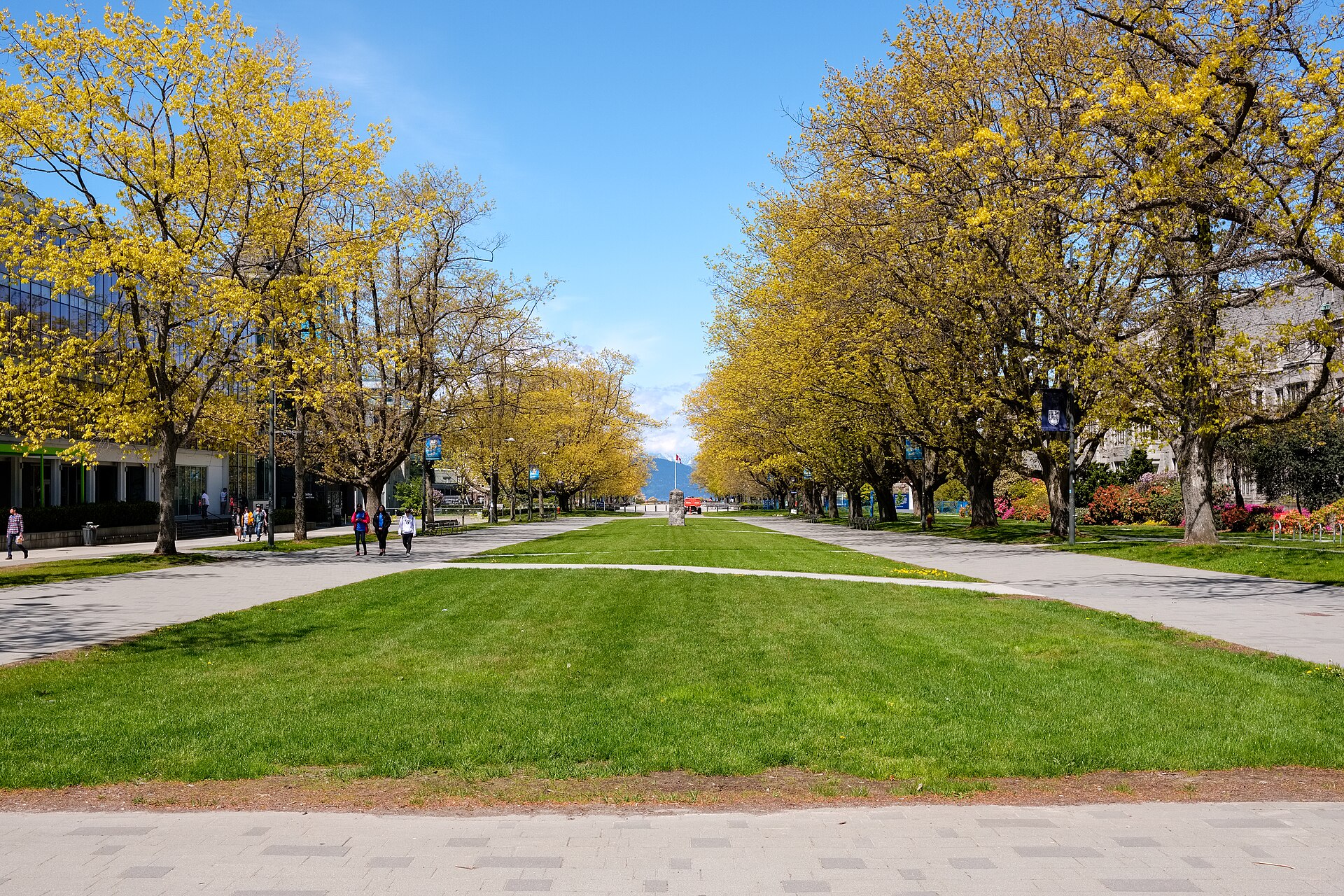
Main Mall runs north–south through the academic core, a long, straight, tree-lined boulevard with lawns in the middle and faculty buildings on both sides. At its northern end it points towards the sea and the mountains, one of the best views on campus. Along it you'll pass the clock tower, the Irving K. Barber Learning Centre, which wraps a modern building around the original main library, and several of the older stone buildings from the campus's early years.
Most visitors orient themselves by Main Mall: once you know where you are along it, everything else falls into place.
The Rose Garden and the view north
At the northern end of Main Mall, the Rose Garden sits on a terrace overlooking Howe Sound and the North Shore mountains. In late spring and summer the beds are in bloom, and on a clear day the view across the water is spectacular. It's a natural place to pause and take photographs.
The Museum of Anthropology
A short walk from the Rose Garden, the Museum of Anthropology is one of the campus's most celebrated buildings. Designed by the Canadian architect Arthur Erickson, its concrete and glass Great Hall frames towering carved poles and other works by First Nations artists of the Northwest Coast, with views out to the sea behind. Its collections range across the world, but the Northwest Coast galleries are the highlight for most visitors. Plan at least an hour or two, and check opening days before you go.
Gardens and museums across campus
- Nitobe Memorial Garden: a traditional Japanese garden near the Museum of Anthropology, calm and carefully tended; it's worth slowing down here.
- UBC Botanical Garden: on the south side of campus, with themed gardens and forest areas; its treetop walkway is a favourite when open.
- Beaty Biodiversity Museum: natural history collections, with a blue whale skeleton suspended in the atrium.
- Chan Centre for the Performing Arts: a concert venue near the Rose Garden that hosts performances through the year.
Beaches and cliffs
Below the cliffs on the western side of campus, long stairways lead down to beaches on the Strait of Georgia. Wreck Beach is the best known and is a clothing-optional beach, so families may prefer to enjoy the view from the top. The trails of Pacific Spirit Regional Park, on the eastern side of campus, offer quiet walking through tall forest, a reminder of how close the wild is to campus life.
Student life on Point Grey
Because the campus is some distance from downtown Vancouver, a lot of life happens on site. Many first-year students live in residence, and there's also a growing residential community on campus, with shops, cafés and services. The Nest, the student union building, is the main hub for food, clubs and events. Athletic facilities, pools and playing fields are spread around the southern part of campus. When students head off campus, Kitsilano and the West Point Grey village are the usual destinations, with cafés, shops and beaches along the way.
UBC also has a second campus in Kelowna, in the Okanagan Valley, several hours' drive inland.
Visiting and tours
UBC typically offers student-led walking tours and information for prospective students, along with self-guided options. Registration is usually needed, and times change through the year, so check the university's official visitor pages before you travel. Given the size of the campus, arrive early and give yourself time to find the meeting point.
Travel logistics
- From the airport: Vancouver International is roughly 30 minutes by car, depending on traffic.
- By bus: frequent express and local buses link UBC's bus loop with downtown, Broadway and other SkyTrain stations. There is no SkyTrain to the campus itself.
- By car: visitor parking is available in campus parkades; follow the signs.
- On campus: walking and cycling are the easiest ways to get around. Distances are longer than they look on a map.
Staying overnight
- Kitsilano: a relaxed neighbourhood between downtown and the university, close to beaches and restaurants.
- Downtown Vancouver: the widest choice of accommodation, with bus links to campus.
- On or near campus: the university offers some visitor accommodation; check availability on its official site.
- West Point Grey: a quiet residential area close to campus, with limited accommodation, so look early.
The where to stay in Vancouver guide compares these areas in more detail.
Practical tips
- Vancouver is rainy from autumn to spring; bring a waterproof jacket and layers.
- Allow a full day if you want to see the museums, gardens and cliffs as well as the academic core.
- Check the official visitor pages again shortly before your trip.
Bloiq is reader-supported. Some links may earn us a commission; it never affects what we write. How we make money.
Cover photo: Xicotencatl, CC BY-SA 4.0, via Wikimedia Commons