Home / Travel / United States · Campus tours
MIT campus tour: the Great Dome, Stata Center and what else to see
Planning a visit to MIT in Cambridge? The Great Dome, the Infinite Corridor, the Stata Center, Saarinen's chapel, student life and how tours work.
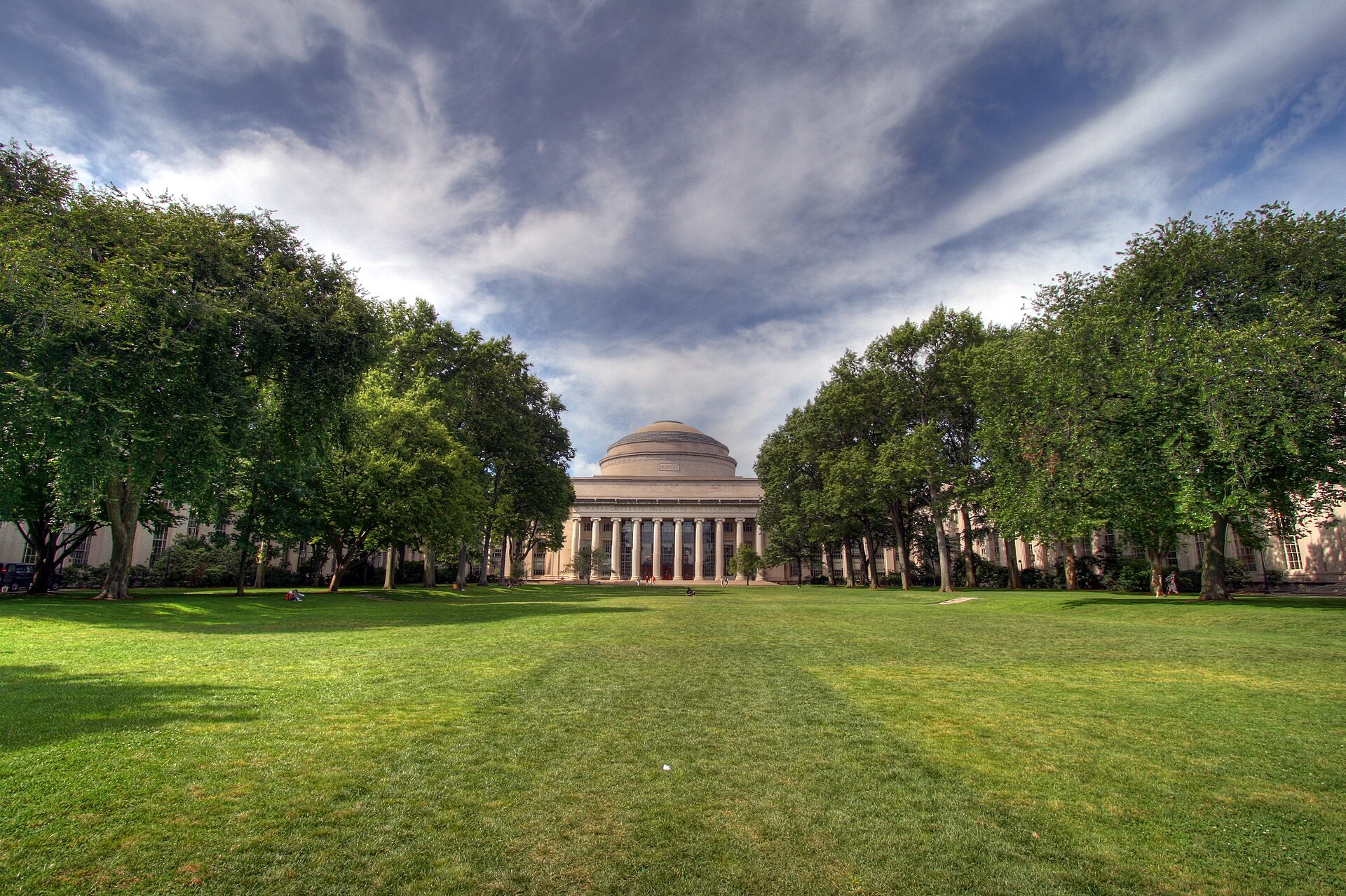
The Massachusetts Institute of Technology stretches for roughly a mile along the Cambridge bank of the Charles River, facing Boston's Back Bay across the water. Unlike an older campus built around a single green, MIT is a dense, connected city of numbered buildings, with some of the most adventurous modern architecture on any American campus. Here's how to make sense of it on a first visit, what student life looks like, and the practical side of planning the trip.
How the campus is laid out
MIT moved from Boston to this site in 1916, and the original core was designed as one great interlinked complex. That's why buildings go by numbers rather than names: Building 10 sits under the Great Dome, Building 7 is the main entrance on Massachusetts Avenue, and students refer to their majors by course numbers too (Course 6 for electrical engineering and computer science, for example).
Massachusetts Avenue splits the campus in two. East of it lie the main academic buildings, Killian Court and, further east, Kendall Square. West of it are the student centre, the athletic facilities, the chapel, Kresge Auditorium and most of the undergraduate residence halls.
The Great Dome and Killian Court
The Great Dome is the symbol of MIT. It rises over Killian Court, a formal lawn framed by limestone columns and open to the river, where Commencement is held each spring. The names of great scientists and thinkers are carved in the stone around it. Stand at the river end of the court for the classic view.
Walking the Infinite Corridor
Enter at 77 Massachusetts Avenue, through the domed lobby known as Lobby 7, and you're in the Infinite Corridor, the long hallway that links the main buildings. It's the quickest way across campus in winter and a good place to see posters for clubs, talks and competitions. Twice a year, in late autumn and mid-winter, the setting sun lines up exactly with the corridor's length and lights it end to end. Students call it MIThenge and gather to watch.
The Stata Center and modern MIT
A short walk north-east, Frank Gehry's Ray and Maria Stata Center is all tilting walls, bright colours and shiny metal. It's home to computer science and artificial intelligence research and is one of the most photographed buildings in Cambridge. Nearby, look out for other contemporary buildings and the large outdoor sculptures scattered across campus, including works by Alexander Calder and Henry Moore.
Beyond Stata, Kendall Square has become one of the world's best-known clusters of technology and biotech companies, and the MIT Museum now sits there, with exhibits on robotics, holography and the university's inventions.
Saarinen's chapel and Kresge Auditorium
Cross Massachusetts Avenue to the west side for a pair of buildings by the architect Eero Saarinen from the 1950s. The MIT Chapel is a windowless brick cylinder surrounded by a shallow moat; inside, light reflected off the water ripples on the walls, and a shimmering metal screen by Harry Bertoia hangs above the altar. Kresge Auditorium, across the lawn, is a thin curved shell resting on three points. Both are usually easy to see from outside, even on a quick visit.
Student life: residence halls and hacks
First-year students live on campus, in residence halls that each have a strong personality. Students often describe the choice of dorm as choosing a culture, from quiet to wildly creative. Most halls are on the west side of campus, near the river and the athletic facilities.
MIT is also famous for hacks: elaborate, harmless pranks that show off engineering skill. The best known put a replica police car on top of the Great Dome and another turned the dome into a giant R2-D2. Rowing, sailing from the pavilion on the Charles and a long list of clubs and maker spaces fill the rest of the calendar.
How to get there
| From | How | Roughly how long |
|---|---|---|
| Boston Logan Airport | Silver Line to South Station, then Red Line to Kendall/MIT; or a taxi | 30–50 minutes |
| South Station (intercity trains) | Red Line to Kendall/MIT | about 10 minutes |
| Harvard Square | Red Line (two stops), bus along Massachusetts Avenue, or walk | 10–35 minutes |
| Back Bay, Boston | Walk across the Harvard Bridge on Massachusetts Avenue | about 20 minutes |
The Red Line is the key: Kendall/MIT station sits at the east end of campus, and the next stop, Charles/MGH, is already across the river in Boston. Driving into Cambridge and parking near campus is rarely worth it for a short visit.
How visits work
MIT's admissions office generally offers information sessions followed by student-led campus tours on weekdays during much of the year. They typically require registration in advance, and some periods (exams, holidays, summer) have fewer slots. Tour routes stay mostly outdoors and in public corridors, so dress for the weather. Always check the official MIT admissions and visitor pages for current times and rules before you travel.
Where families usually stay
- Kendall Square: right next to campus, with newer hotels and plenty of restaurants. Very convenient for an early information session.
- Central Square: between MIT and Harvard, livelier and a little more varied.
- Back Bay, Boston: across the river, walkable to the west end of campus via the Harvard Bridge, and a good base for seeing Boston too.
- Harvard Square: handy if you're visiting Harvard as well, which many families do on the same trip.
Tips for the day
- Pick up a campus map or use the official one online: the numbering system makes sense quickly once you have it in hand.
- Walk the Infinite Corridor in both directions, then go outside to Killian Court for the view of the dome.
- Leave time for the riverside path: the view back to the Boston skyline is one of the best in the city.
- Weekdays during term show campus at its busiest; summer is quieter but tours may be scheduled differently.
Bloiq is reader-supported. Some links may earn us a commission; it never affects what we write. How we make money.
Cover photo: Madcoverboy (talk), CC BY-SA 3.0, via Wikimedia Commons