Home / Travel / Austria · Hotels
Hotel Sacher, Vienna: history, the Sachertorte and what's nearby
A guide to the Hotel Sacher behind Vienna's State Opera: its history, the famous cake, how to get there and the sights within a short walk of the door.
This guide contains affiliate links, marked as such. If you book through them, Bloiq may earn a commission at no extra cost to you.
The Hotel Sacher is Vienna's most famous traditional hotel. It stands on Philharmonikerstrasse, directly behind the State Opera, in the heart of the old town, and its name is known worldwide thanks to a chocolate cake. This guide covers the hotel's history, the story of the Sachertorte, how to get there, what you can reach on foot and who the hotel suits.
A family hotel behind the Opera
Eduard Sacher opened the hotel in 1876, a few years after the new Court Opera was completed across the street. After his death in 1892, his widow Anna Sacher ran it for nearly four decades. Known for her strong personality and ever-present cigar, she made the hotel a meeting place for Vienna's aristocracy, diplomats and artists, and its private dining rooms were famous for their discretion.
The hotel is still privately owned and keeps a deliberately traditional, 19th-century style. A sister hotel with the same name stands on the river in Salzburg.
The Sachertorte
The name is also a cake. Eduard's father, Franz Sacher, created the Sachertorte in 1832 as a young apprentice in the kitchen of Prince Metternich. It's a dense chocolate sponge with a thin layer of apricot jam and a dark chocolate icing, traditionally served with unsweetened whipped cream.
You can try it at the Café Sacher in the hotel, which usually has a queue outside at busy times; going early in the day or late in the afternoon helps. Several other Viennese cafés and confectioners serve their own versions, and comparing them is a popular pastime.
Where it is and how to get there
The hotel is in the Innere Stadt, Vienna's first district, just inside the Ringstrasse.
- By underground: Karlsplatz station, served by three U-Bahn lines, is a couple of minutes' walk away, and trams run around the Ringstrasse.
- From the airport: Vienna Airport is linked to the centre by express train, regular S-Bahn trains and railjets to the main station, all taking roughly 15–25 minutes; taxis take longer in traffic.
- By train: Wien Hauptbahnhof, the main station, is about 2 km south, a short U-Bahn or tram ride away.
The historic centre is compact, and nearly everything below is within a 10-minute walk.
The State Opera
The Vienna State Opera is across the street. Standing-room places are sold for most performances at low cost, which makes an evening at the opera accessible even on a short trip; check the current sales system, as it has changed over the years. Guided tours show the building by day when rehearsals allow. The season usually runs from September to June. Even if you don't see a performance, the building's grand staircase and foyers are worth the tour.
The Albertina
Around the corner, the Albertina holds one of the world's great collections of drawings and prints, in a former Habsburg palace. Its terrace overlooks the Opera, and alongside the graphic art it shows major exhibitions and a collection of modern paintings. The restored state rooms give a glimpse of palace life.
St Stephen's Cathedral and the Hofburg
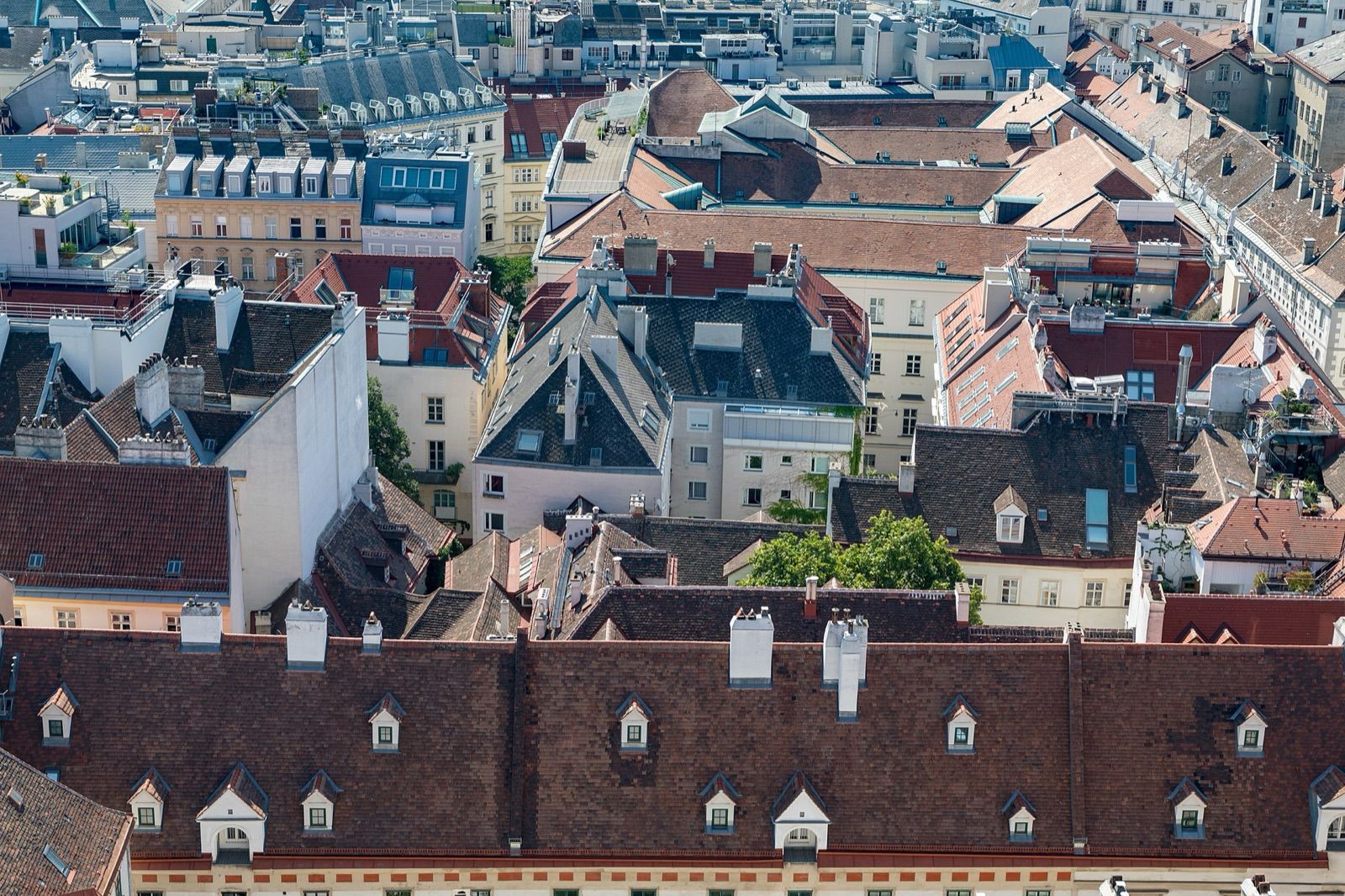
Walk up the Kärntner Strasse pedestrian street to St Stephen's Cathedral (Stephansdom) and its patterned tile roof in about ten minutes. You can climb the south tower or take a lift up the north tower for views over the rooftops.
The Hofburg, the old imperial palace, is just as close in the other direction. It houses the Imperial Apartments, the Sisi Museum, the Treasury and the Spanish Riding School, and its courtyards lead on to the Burggarten and Volksgarten parks.
A little farther
- Karlskirche and the Musikverein: the baroque church and the concert hall are a few minutes south-east across Karlsplatz.
- The Naschmarkt: Vienna's long food market, a short walk south-west.
- Schönbrunn Palace: the Habsburgs' summer residence, easily reached by U-Bahn.
Who it suits and when to go
The Sacher suits travellers who want classic Viennese style and the opera on their doorstep, music lovers, and first-time visitors who want to walk everywhere. It's less suited to anyone looking for a modern, design-led hotel or the quieter, more local feel of districts outside the Ring.
Spring and early autumn are ideal for walking. Summer is warm and the opera is closed, although other concerts continue. Advent, from late November to Christmas, brings the Christmas markets, and the ball season in January and February fills the city's grand hotels. The where to stay in Vienna guide compares the city's neighbourhoods if you'd like a different base.
Practical tips before you book
- Ask about the room's outlook. Some rooms face the Opera, others the side streets.
- Book early for the ball season and Advent, when central hotels fill up.
- Vienna charges an accommodation tax per night. Check the current rate when you book.
- Plan opera tickets separately: a hotel stay doesn't include performances, and popular dates sell out.
Bloiq is reader-supported. Some links may earn us a commission; it never affects what we write. How we make money.
Cover photo: Tobias Kleinlercher / Wikipedia, CC BY-SA 4.0, via Wikimedia Commons