Home / Travel / United States · Campus tours
Duke campus tour: Duke Chapel, the Gardens and East and West Campus
A guide to visiting Duke University in Durham: the Chapel and West Campus, Duke Gardens, the first-year East Campus, Cameron Indoor Stadium and practical planning.
Duke University began as Trinity College, a small Methodist college that moved to Durham, North Carolina, in 1892. In 1924 a large endowment from the tobacco and power magnate James B. Duke transformed it into Duke University, and a grand new Gothic campus rose in the pine forest west of town. Today the university spans two main campuses linked by a frequent bus, with gardens, forest and a famous basketball arena in between. This guide explains how the pieces fit together and how to plan a visit.
Two campuses, one bus ride apart
The first thing to understand is the split:
- East Campus is the original Trinity College site, closer to downtown Durham. All first-year students live here together.
- West Campus, about 2.5 km away, is the Gothic campus built after 1924, with Duke Chapel, the main libraries, most academic buildings and the upper-year residence halls.
A university bus runs frequently between the two, and there's a pleasant walking and running path, too. Tours generally focus on West Campus, but it's worth seeing both.
Duke Chapel
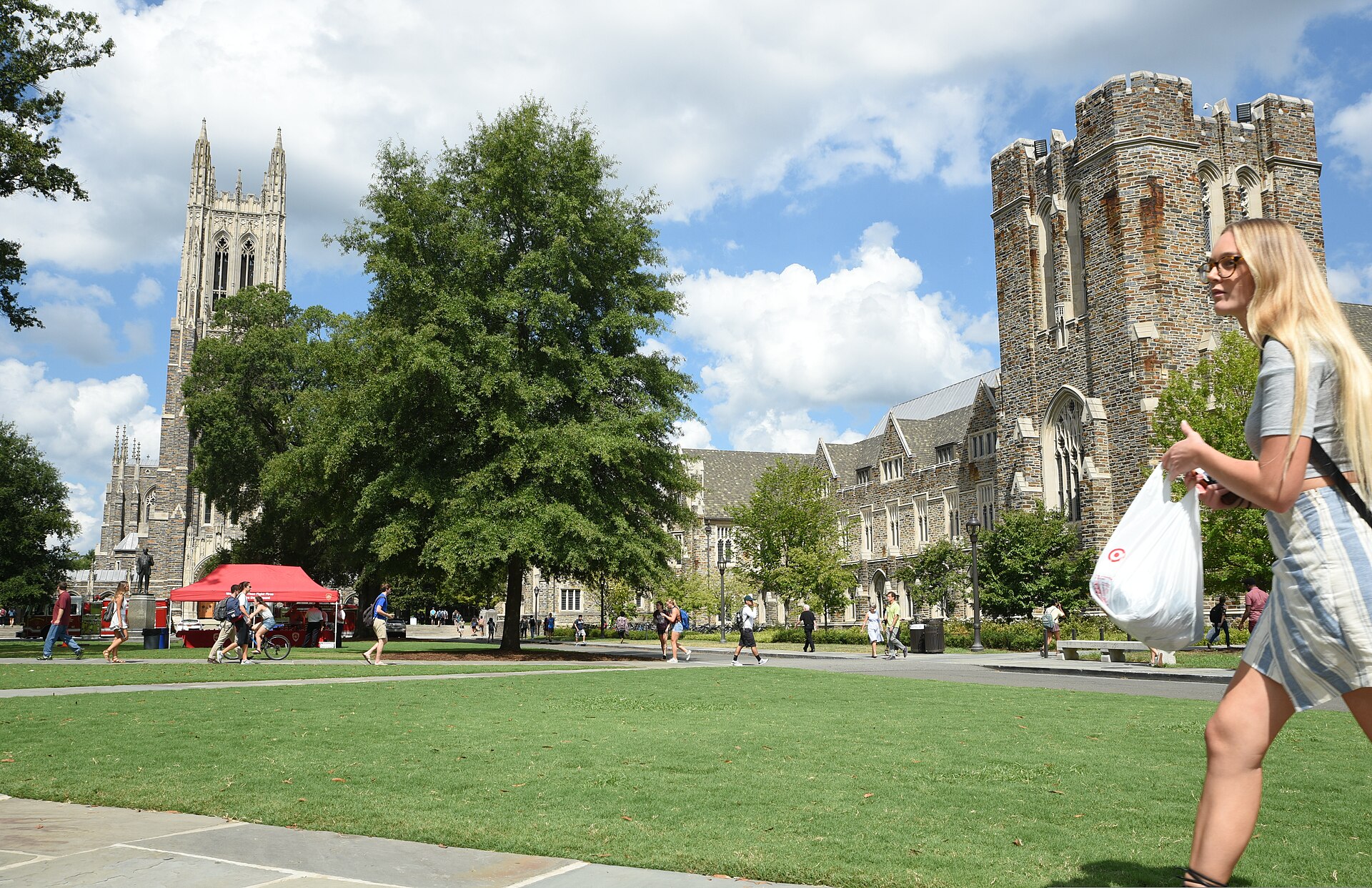
Duke Chapel is the university's best-known image and the heart of West Campus. Its Gothic tower, visible from far across the treetops, holds a carillon that is played on most weekdays. Inside are soaring stone arches, extensive stained glass and several organs, and the chapel hosts services, concerts and many weddings. It's usually open to visitors outside services; check current hours on the university's site.
West Campus: stone quads and the Gothic core
Around the chapel, West Campus is built of grey-brown local stone in the Collegiate Gothic style, with quadrangles, archways and cloisters. The main lawn in front of the chapel is Abele Quad, named for Julian Abele, the African American architect who played a central role in designing the campus.
Along the quads you'll find Perkins Library and the Rubenstein Library, which holds special collections, as well as West Union, a busy food hall and student hub, and the Bryan Center next door. Upper-year students live in residence halls grouped around the quads, and many campus events happen here.
Sarah P. Duke Gardens
A short walk from the chapel, the Sarah P. Duke Gardens cover more than 20 hectares. The Terraces descend in tiers of seasonal planting to a fish pond, crowned by a wisteria-covered pergola, and further areas include an Asian arboretum and a garden of native plants. Students walk, study and picnic here, and it's a favourite spot for photos. It's open to the public, and spring is especially lovely.
East Campus: where first year begins
East Campus has a different character: Georgian red-brick buildings around a long, open lawn shaded by old trees. Because all first-year students live here together, it becomes the centre of the first-year community, with its own dining hall and gathering places. Ninth Street, a short walk away, has cafés, bookshops and casual restaurants.
Basketball and the Cameron Crazies
Duke's basketball tradition is a big part of campus life. At Cameron Indoor Stadium, a relatively small, intensely loud arena on West Campus, the student fans known as the Cameron Crazies fill the stands. Before the biggest games, students camp in tents for weeks in the area outside known as Krzyzewskiville to secure tickets. Tours usually pass the arena; seeing a game requires tickets well in advance.
Art and the wider city
The Nasher Museum of Art, on the edge of campus, shows a changing programme of modern and contemporary work. Downtown Durham, a few minutes' drive away, has transformed old tobacco warehouses into restaurants, offices and venues, and a minor-league baseball stadium draws crowds in summer. Beyond campus, the Duke Forest offers trails, and the wider Research Triangle includes Chapel Hill and Raleigh.
Getting there
- By air: Raleigh-Durham International Airport (RDU) is roughly 20 to 30 minutes from campus by car or taxi.
- By train: Durham's station, downtown, is served by trains on the routes between Charlotte, Raleigh and the Northeast.
- By car: Interstate highways connect Durham with Raleigh, Chapel Hill and the rest of the state. Follow the university's visitor parking instructions on campus.
- Around campus: the East–West bus is the easiest way to link the two campuses.
Tours and information sessions
Duke's undergraduate admissions office generally runs information sessions and student-led tours on many weekdays and at some other times during the year. Registration ahead is usually required. Schedules vary in summer and around holidays, so check the official admissions and visitor pages for current times before you travel.
Where families usually stay
- Near West Campus and the medical centre: several hotels are a short drive or shuttle ride away.
- Ninth Street and near East Campus: handy for walking to shops and restaurants.
- Downtown Durham: more choice of hotels and plenty of places to eat.
- Research Triangle Park and near the airport: convenient if you're also visiting universities in Chapel Hill or Raleigh.
Tips for the day
- Allow time for the Gardens after the tour; they're the best-kept secret of a Duke visit.
- Summers are hot and humid, so bring water and plan outdoor walking for the morning.
- Spring, with azaleas and dogwoods in bloom, and autumn are the most pleasant seasons.
- Ride the bus between campuses to see how students actually move around.
Bloiq is reader-supported. Some links may earn us a commission; it never affects what we write. How we make money.
Cover photo: Dennis Ludlow - Sharkshock, CC BY-SA 4.0, via Wikimedia Commons