Home / Travel / Netherlands · Day trips
Day trips from Amsterdam: Haarlem, Zaanse Schans, Utrecht and more
The Netherlands is small and its trains are fast. How to reach Haarlem, Zaanse Schans, Utrecht, Keukenhof, Delft, Rotterdam and the old fishing towns, and what to see.
This guide contains affiliate links, marked as such. If you book through them, Bloiq may earn a commission at no extra cost to you.
Amsterdam is busy, and a day out of the city is often the best part of a trip to the Netherlands. The country is compact, the rail network is dense and frequent, and many of the classic sights (windmills, flower fields, medieval canal towns) are under an hour from Amsterdam Centraal. Here's how the main options compare, and how to fit each into a day.
The quick comparison
| Trip | Typical travel time | Best for |
|---|---|---|
| Haarlem | 15–20 minutes by train | A relaxed, smaller Amsterdam with great art |
| Zaanse Schans | 20–40 minutes by train or bus | Windmills and wooden houses |
| Utrecht | About 30 minutes by train | Canals with a student-city buzz |
| Keukenhof (spring only) | 45–75 minutes by bus | Tulips and bulb fields |
| Delft and The Hague | About 1 hour by train | Delftware, Vermeer and Dutch politics |
| Rotterdam and Kinderdijk | 40–75 minutes by train | Modern architecture and a windmill landscape |
| Volendam, Marken and Edam | 30–45 minutes by bus | Old fishing villages and cheese |
Haarlem: the easy first choice
Haarlem is the closest proper city to Amsterdam, and it is often described as a quieter, smaller version of the capital. The centre is walkable from the station in about ten minutes.
What to see: the Grote Markt with the great Gothic church of St Bavo, whose organ is one of the most famous in Europe; the Frans Hals Museum, devoted to the Golden Age portrait painter; and Teylers Museum, opened in the 18th century and regarded as the oldest museum in the Netherlands. The Adriaan windmill stands on the Spaarne river, and hidden almshouse courtyards (hofjes) dot the old town. Some hofjes are still homes, so visit quietly and respect posted hours.
How long to allow: half a day to a full day. Haarlem is also a short bus or train ride from the dunes and the beach at Zandvoort, so the two combine well in summer.
Zaanse Schans: windmills close to the city
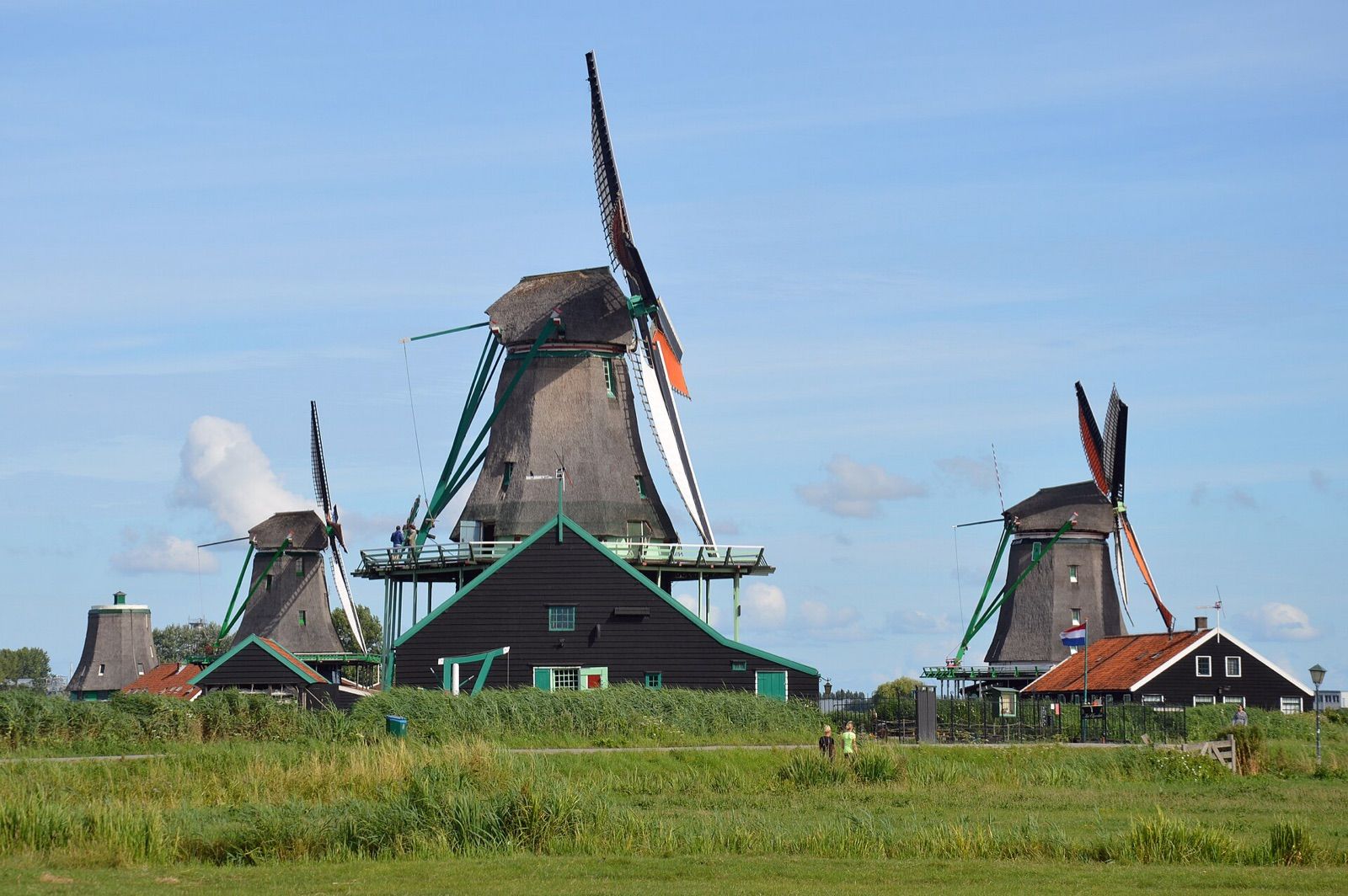
Zaanse Schans is a collection of historic windmills, green wooden houses and workshops gathered on the bank of the Zaan river, north-west of Amsterdam. Several mills still work, grinding pigments, pressing oil or sawing timber, and some can be visited inside.
How to get there: take a local train towards Uitgeest and get off at Koog-Zaandijk, then walk about 15 minutes across the river bridge. Buses also run from Amsterdam.
What to know: it's one of the most visited sights in the country, and tour coaches arrive by mid-morning. Go early or late in the day for a calmer visit. Individual mills and museums charge admission, and the site has been changing how it manages visitor numbers and charges, so check the official site before you go.
How long to allow: two to four hours. Pair it with a walk through Zaandam or an afternoon in Haarlem.
Utrecht: canals with a lower level
Utrecht is the Netherlands' fourth-largest city and a major university town. Its signature feature is the Oudegracht, a canal with wharves at water level: the old cellars below the street now hold cafés and terraces right beside the water.
What to see: the Dom Tower, the tallest church tower in the country, climbed on guided tours (book ahead in busy periods); the Centraal Museum; the museum devoted to Miffy, the rabbit created by Utrecht illustrator Dick Bruna; and the Rietveld Schröder House, a UNESCO World Heritage modernist house that can only be seen on booked visits.
How long to allow: a full day. Utrecht Centraal is a huge station with a shopping centre attached, so allow a few extra minutes to find your platform on the way back.
Keukenhof: a spring-only garden
Keukenhof, near Lisse, is a vast park planted with millions of bulbs, and it opens for only about eight weeks each year, roughly from late March to mid-May. Around it lie the working bulb fields of the Bollenstreek, which flower in stripes of colour from about late March to early May, depending on the weather.
How to get there: there's no train station at the park. Seasonal buses run from Schiphol airport and from Leiden Centraal, and combined transport-and-entry tickets are often sold. Driving or cycling from a nearby town is also possible.
What to know: entry is by timed ticket bought in advance, and weekends and Easter are the busiest. Arrive at opening or in the late afternoon. Tulips peak at different times each year, so if flowers are the point of your trip, aim for mid-April and check the bloom reports.
How long to allow: half a day in the park; a full day if you rent a bike to ride through the surrounding fields.
Delft and The Hague
These two cities sit next to each other, about an hour from Amsterdam, and make a good pairing.
Delft is a small, beautiful canal town known for its blue-and-white pottery and as the home of the painter Johannes Vermeer. See the Markt between the town hall and the Nieuwe Kerk, where members of the House of Orange are buried, and the Oude Kerk with its leaning tower. A historic Delftware factory offers tours.
The Hague is the seat of the Dutch government and home to the Mauritshuis, a jewel of a museum whose collection includes Vermeer's Girl with a Pearl Earring. A tram runs from the centre to the beach and pier at Scheveningen.
How long to allow: a full day for both, or a relaxed day in one.
Rotterdam and the windmills of Kinderdijk
Rotterdam was largely rebuilt after the Second World War and is now the country's showcase of modern architecture. The fastest trains take about 40 minutes; some high-speed services require a supplement on part of the route, so check when you buy.
What to see: the arched Markthal food hall, the tilted Cube Houses, the Erasmus Bridge and the waterfront. Harbour boat tours show the scale of one of Europe's largest ports.
Kinderdijk, a UNESCO World Heritage site south-east of the city, has a row of 19 18th-century windmills standing along its polders. It's reached by waterbus from Rotterdam in the warmer months, or by bus.
How long to allow: a full day for Rotterdam alone; add Kinderdijk if you start early.
Volendam, Marken and Edam
North of Amsterdam, the former fishing towns on the old Zuiderzee coast are reached by bus from the stops behind Centraal Station. Volendam is the busiest, with a harbour promenade and fish stalls. Marken, once an island, is quieter, with wooden houses on mounds. A seasonal ferry links the two. Edam is a small, peaceful canal town that gave its name to the cheese.
Cheese fans can also consider Alkmaar, about 35 minutes by train, where a traditional cheese market is staged on set mornings in spring and summer. Check the dates before planning around it.
How long to allow: a full day to see two or three of these places.
Practical tips for day trips
- Paying for trains: you can buy tickets from machines or the rail operator's app, or on most routes tap a contactless bank card on the card readers at the station. Always tap in and out; forgetting to tap out usually means a higher charge.
- Check for engineering works: track work is often scheduled at weekends, and replacement buses can add a lot of time. The journey planner shows disruptions.
- Travel outside the rush hours if you can; trains around Amsterdam are crowded on weekday mornings and evenings.
- Book ahead for Keukenhof, the Dom Tower, the Rietveld Schröder House and busy museums such as the Mauritshuis.
- Bikes: renting a bike at your destination is often the best way to explore, especially around Keukenhof and Haarlem. Taking your own bike on trains needs a separate ticket and isn't allowed at peak times.
- Base yourself near the station: if you plan several day trips, staying within easy reach of Centraal or Amsterdam Zuid saves time. Our guide to where to stay in Amsterdam compares the neighbourhoods.
- Weather: bring a waterproof layer; Dutch showers are frequent and the countryside is windy.
Pick Haarlem for an easy half day, Utrecht for a full city day, and Keukenhof only in spring, and you'll see a side of the Netherlands that most visitors to Amsterdam miss.
Bloiq is reader-supported. Some links may earn us a commission; it never affects what we write. How we make money.