Home / Tools & DIY · Product overviews / Material Handling Products / Electric Hoists · More from VEVOR
VEVOR AYX400-1 880 lb Electric Hoist: features, specs and uses
A 110V, 850W electric hoist rated at 440 lb on a single line or 880 lb on a double line, with a 14 ft wired remote. What the specs mean and what to check.
This page contains an affiliate link, marked as such. If you buy through it, Bloiq may earn a commission at no extra cost to you.
The VEVOR AYX400-1 is a mains-powered electric hoist for lifting loads in a garage, workshop or warehouse. It hangs from a ceiling or beam, winds a steel cable on a drum and is controlled from a wired handset. Its two lifting modes trade capacity for speed, so it helps to understand the figures before choosing where to mount it.
Single line or double line
The hoist can be used in two ways, as VEVOR gives them:
- Single line: 440 lb at 32 ft/min, with a maximum lifting height of 39.4 ft.
- Double line: 880 lb at 16 ft/min, with a maximum height of 19.7 ft.
With a double line, the cable runs down to a pulley block and back up, which typically halves the speed and the height while doubling the load. The headline 880 lb figure applies only to that set-up.
Motor and cooling
VEVOR lists an 850W copper motor, with a large cooling fan to keep the machine from overheating. Running on 110V mains, it suits a normal workshop outlet. As with any hoist, it is meant for intermittent lifting rather than continuous running, so follow the duty guidance in the manual.
Cable, hook and body
The cable is a braided, 19-strand steel wire rope, and the body is steel. A metal hook is included. Steel cable is the usual choice for hoists because it tolerates repeated bending around the drum. Inspect it regularly for kinks, broken strands or wear, and replace it if it is damaged.
Remote and built-in safeguards
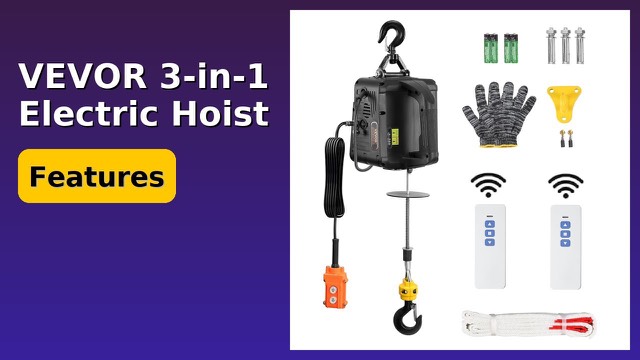
The handset has a 14 ft cord, so you can stand clear of the load while operating it. VEVOR lists four features: an emergency stop button, a limit switch that stops travel at the ends, an auto brake that holds the load when you release the button, and an anti-spin rope. These features do not replace safe practice. Never stand under a raised load, and do not exceed the rated capacity.
Mounting
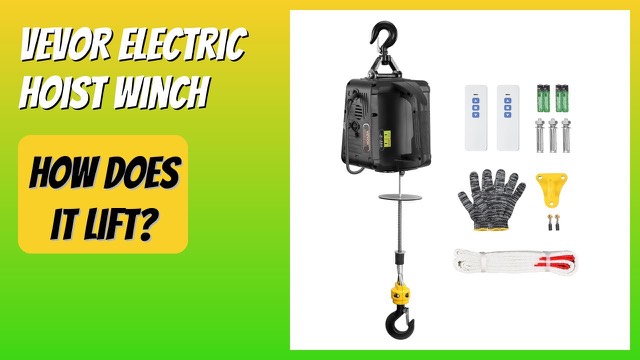
You hang the hoist from a ceiling or beam on mounting brackets, and VEVOR describes the installation as two steps. A 13 ft lifting sling strap and a 3.2 ft shaft belt with a metal ring are included. The structure holding it matters as much as the hoist: it must be rated for the load and its dynamic forces. Follow the manual and local codes, and consider asking a qualified person to check the mounting point.
Size and weight
It measures about 13.8 x 5.3 x 6.3 in and weighs 33 lb (about 15 kg). That is compact, but it is heavy to lift into place, so plan help for installation.
Who it suits
VEVOR lists garages, factories and warehouses, for professionals and amateurs alike. Typical jobs are lifting engines or equipment, moving materials to a loft or mezzanine, or working in a home workshop.
What to check before you buy
- Load and height: compare your heaviest load and the lift height with the single and double line figures.
- Mounting point: confirm that the beam or ceiling can take the load, and plan for the brackets.
- Power: check the 110V outlet and circuit near the work area.
- Cord length: make sure the 14 ft handset lets you stand clear of the load.
- Upkeep: plan regular checks of the cable, hook and brake as the manual describes.
- What is in the box: the sling strap and shaft belt are listed, but check for other fittings.
The short version
- A 110V, 850W electric hoist, model AYX400-1.
- 440 lb at 32 ft/min on a single line, up to 39.4 ft.
- 880 lb at 16 ft/min on a double line, up to 19.7 ft.
- 14 ft wired remote, emergency stop, limit switch, auto brake and anti-spin rope.
- About 33 lb; mounts to a ceiling or beam.
Bloiq is reader-supported. Some links may earn us a commission; it never affects what we write. How we make money.