Home / Tools & DIY · Product overviews / Material Handling Products / Electric Hoists · More from VEVOR
VEVOR 3-in-1 Electric Hoist: 1100 lb, 1500W, wired and wireless control
A VEVOR portable electric hoist rated at 1100 lb with a 1500W motor, 22.9 ft lift, and manual, wired and wireless remote control. What the specs mean.
This page contains an affiliate link, marked as such. If you buy through it, Bloiq may earn a commission at no extra cost to you.
The VEVOR 3-in-1 Electric Hoist is a portable winch-style hoist for lifting loads vertically. VEVOR rates it at 1100 lb (about 499 kg) with a 1500W motor and a lifting height of 22.9 ft (7 m). It's aimed at garages, workshops, farms and warehouses, where lifting by hand is slow or isn't safe.
Three ways to control it
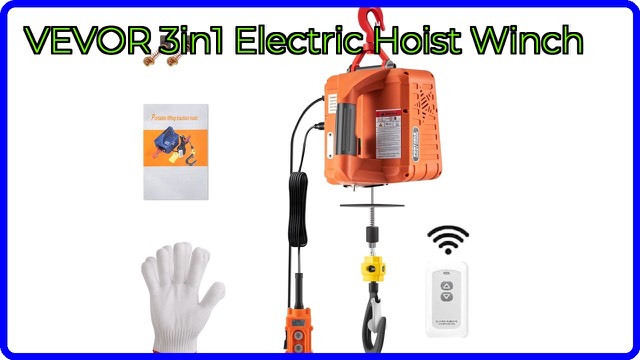
The "3-in-1" refers to the control options. There's manual control on the unit for short, nearby lifts, a 19 ft wired remote for when you stand near the load, and a wireless remote that VEVOR says works at up to 200 ft. Two remotes are included, and VEVOR says up to three more can be added, which can help when a team is working.
VEVOR's own tip is not to run the hoist unloaded on first use, so read the manual's break-in notes before the first lift.
Motor, speed and height
The rated power is 1500W, which VEVOR says balances strength and speed. Lifting speed averages 13 ft/min or more (at least 4 m/min). At that pace, a full 22.9 ft lift takes a couple of minutes, since the hoist favours controlled movement over speed. VEVOR says the gearbox runs cool, for steadier use over longer jobs. It runs on 110V/120V household power, so check the outlet and circuit capacity where you plan to use it.
Wire rope and hook
The hoist uses galvanized steel wire rope that VEVOR describes as aerospace grade, with a tensile strength of up to 1520 MPa. Tensile strength is how much pulling stress the material takes before it breaks, and it differs from the working load limit. The 1100 lb figure is the rated capacity, and you shouldn't exceed it.
The hook rotates 360° and has a safety latch, which keeps the load from slipping off and lets it turn without twisting the rope. The listing also mentions overload protection.
Size and what's in the box
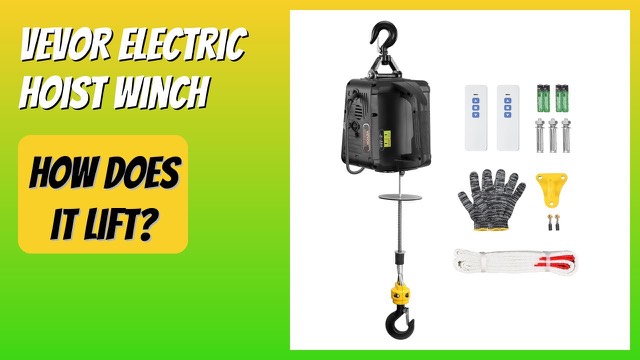
The hoist's product weight is 23.14 lb (10.5 kg) per the specifications, and the shipping dimensions are larger. The specification lists a product size of 7.87 x 8.66 x 7.87 inches (20 x 22 x 20 cm). The package includes:
- 1 electric hoist
- 1 bracket
- 1 strap
- 1 pair of gloves
- 2 carbon brushes (spares for the motor)
- 1 user manual
Who it suits
It suits home workshops and small businesses that lift engines, equipment or stock with a fixed overhead anchor point, and those who value remote operation from a safe distance. It isn't meant for lifting people, and a hoist like this isn't a substitute for a certified lifting system where regulations require one.
What to check before you buy
- Load and anchor: confirm your heaviest load is well within 1100 lb and that the overhead structure can safely carry it.
- Lifting height: check that 22.9 ft covers your space.
- Power supply: check your outlet, extension cord capacity and circuit for a 1500W motor.
- Remote range: the 200 ft figure is VEVOR's, and obstacles can shorten it.
- Rules: some workplaces and jurisdictions have inspection and certification requirements for lifting equipment, so check local rules.
- Upkeep: the carbon brushes wear over time, so look at the maintenance steps in the manual.
Follow the manual and local safety regulations, and never stand under a suspended load.
The short version
- A portable electric hoist rated at 1100 lb with a 1500W motor.
- Lifts to 22.9 ft at 13 ft/min or more.
- Manual, 19 ft wired and 200 ft wireless control, with two remotes included.
- Galvanized steel wire rope, 360° rotating hook with a safety latch, and overload protection.
- Weighs about 23 lb and runs on 110V/120V.
Bloiq is reader-supported. Some links may earn us a commission; it never affects what we write. How we make money.