Home / Tools & DIY · Product overviews / Material Handling Products / Electric Hoists · More from VEVOR
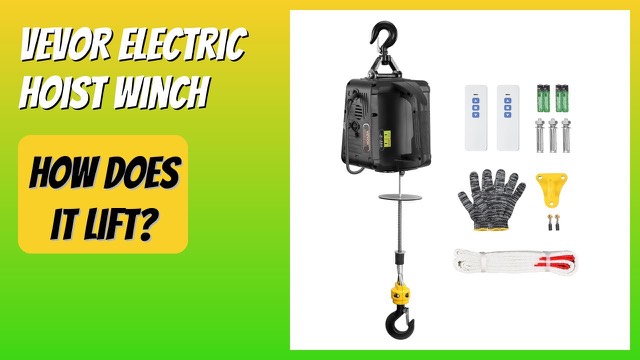
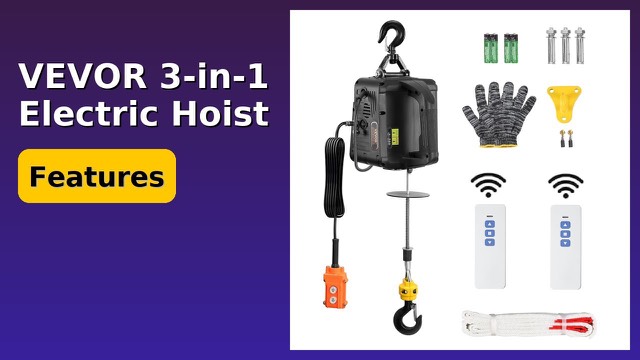
VEVOR 500-D2 3-in-1 Electric Hoist Winch: features, specs and uses
The VEVOR 500-D2 is a 1500W portable electric hoist and winch rated for 1100 lbs, with 30 ft of lift, a wired remote and a 330 ft wireless remote.
This page contains an affiliate link, marked as such. If you buy through it, Bloiq may earn a commission at no extra cost to you.
The VEVOR 500-D2 is a portable electric hoist that can also be used as a winch for pulling. It is built for garages, workshops, small warehouses and farms, where lifting heavy items by hand is slow or awkward. Here is what the specs mean and what to plan for before using any hoist.
Capacity, power and speed
VEVOR rates the 500-D2 for loads of 1100 lbs (about 500 kg) with a 1500W motor, a lifting height of 30 ft and a speed of up to 16 ft/min. In general, speed on a hoist is a trade-off with load: heavier loads move more slowly, and the rated figures describe the best case. The rated capacity is a maximum, so never exceed it, and allow a margin for rigging weight and jerky movements.
The body is made from high-strength carbon steel and cast aluminium. The unit weighs 23 lb (about 10.4 kg) and measures roughly 7.9 x 8.7 x 7.9 in, small enough to carry to a job and hang from a beam or other strong anchor.
What "3-in-1" means
VEVOR describes three modes of operation:
- A button on the handle for manual, short-distance horizontal pulling.
- A 27 ft wired controller for precise close-range work, which suits a workshop or warehouse.
- A wireless remote with a range of up to 330 ft, for jobs where you need to stand clear or work at height.
Wireless range figures are measured in open conditions, and walls and metal structures can reduce them in practice.
The wire rope and hooks
The hoist uses galvanized steel wire rope with a diameter of 6 mm and a maximum tensile strength of 1520 MPa, according to VEVOR. The double hook design has a 2.2 in opening, which the brand says suits a wider range of hanging points and improves stability. Inspect rope and hooks before every use. Frayed strands, kinks or bent hooks mean the part should be replaced before use.
Cooling and the limit switch
A fan cooling system helps the motor run steadily over longer periods, and VEVOR lists a limit switch. Limit switches typically stop the hook travelling too far at the top of its range, protecting the rope and the mechanism. They are a back-up, so operators should still stop at a sensible height themselves.
Where it suits
VEVOR names home garages, construction sites, small loading and unloading jobs and farm work. Typical uses include lifting an engine part, a generator or building materials, or pulling a load across a flat surface. The listing gives no certification or duty-cycle details, so check the manual for run times and rest periods.
Using it with care
A hoist is only as secure as the anchor point above it. Use a beam or support rated for the load, keep people clear from under a raised load, and follow the manual. Do not use it to lift people, and consult local rules for lifting equipment in a workplace.
What to check before you buy
- Load: confirm that the heaviest item, plus slings and hooks, is below 1100 lbs.
- Height: check the 30 ft lifting height against your space.
- Power: confirm that your outlet or generator can supply a 1500W motor and that the voltage matches.
- Anchor: make sure your beam or frame can carry the full load.
- Controls: decide whether the 27 ft wired controller or the wireless remote suits your layout.
- Upkeep: check how to inspect, lubricate and replace the rope and hooks.
The short version
- The VEVOR 500-D2 is a 1500W portable electric hoist and winch rated for 1100 lbs.
- It lifts to 30 ft at up to 16 ft/min.
- It offers handle, wired and wireless controls.
- It has a 6 mm galvanized steel rope, double hooks, fan cooling and a limit switch.
- It suits garages, workshops and farms that need powered lifting and pulling.
Bloiq is reader-supported. Some links may earn us a commission; it never affects what we write. How we make money.