Home / Tools & DIY · Product overviews / Office Electronics / Printer Cutters · More from VEVOR
VEVOR 28 Inch Vinyl Cutter with Floor Stand: features, specs and who it suits
A VEVOR 28-inch vinyl cutter and plotter with a floor stand, adjustable force and speed, USB and COM interfaces and 20 blades. What the specs mean.
This page contains an affiliate link, marked as such. If you buy through it, Bloiq may earn a commission at no extra cost to you.
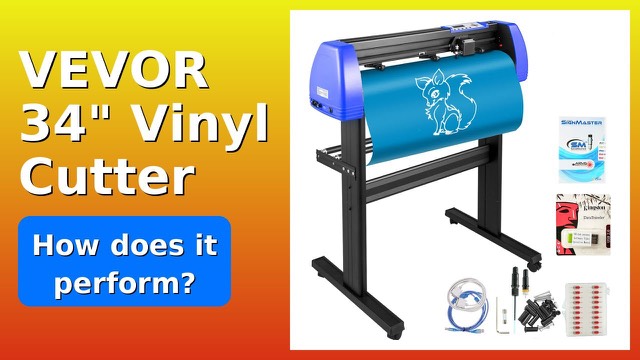
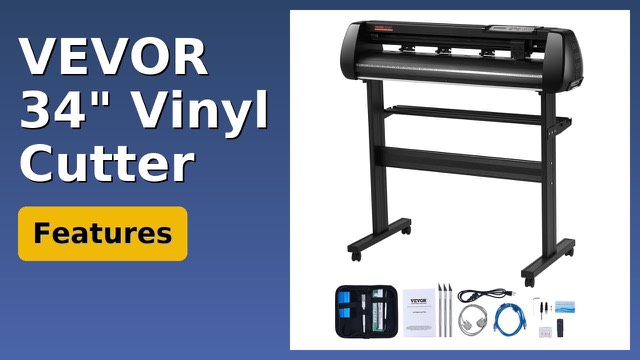
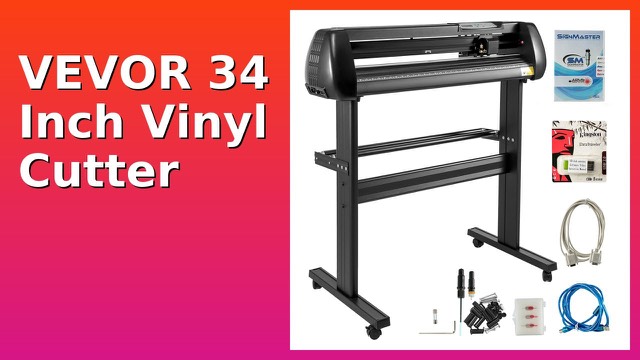
The VEVOR 28 inch vinyl cutter is a plotter that cuts shapes, letters and designs out of vinyl and similar sheet material. It is aimed at sign making, decals, labels, heat transfer supplies and other craft and advertising work. It sits on a floor stand and connects to a Windows computer, which sends the design to the machine.
How a vinyl cutter works
A vinyl cutter holds a small blade in a carriage that moves across the material while the rollers feed the sheet forward and back. Software on the computer converts your artwork into cutting paths, and the machine follows them. Because the blade cuts through the vinyl but not its backing, you can peel away the unwanted parts, a step usually called weeding, and apply the remaining design.
Cutting width and feed
VEVOR gives a maximum paper feed of 720 mm (28.3 inches) and a maximum cutting width of 630 mm (24.8 inches). The cutting precision is listed as ±0.01 mm. For feed length, the listing says 3 m (118 inches) of paper feed precision. In practice, the cutting width is the real limit on the widest design, while the feed width is how wide a roll or sheet the machine can hold. Keep a margin on each side for the rollers.
Stability and feed
The listing describes a D-type motherboard with 128K-2M high-speed cache memory. A buffer of this kind helps the machine take in a job from the computer without stalling. Two double-spring pinch rollers and an aluminium knurled roller grip the material, and VEVOR says this keeps the feed straight over long distances. Straight feeding matters for long banners or signs where small drift would add up.
Force and speed controls
An illuminated LCD and a large control panel set the cutting pressure (adjustable from 10 to 500 g) and the speed (10 to 800 mm/s). Thin, soft vinyl typically needs light pressure, while thicker material, such as reflective film, needs more. Slower speeds usually help with fine detail and small text. Test cuts on a scrap strip are a sensible habit.
Connections and software
The machine offers COMPIM and USB interfaces, and supports DM/PL and HP/GL languages. VEVOR says it needs a Pentium-based PC or compatible running Windows XP, Vista, 7, 8 or 10 (32 and 64 bit), and that it is not compatible with the Mac system. Check what design software you plan to use and whether it can drive a plotter through these languages or a supplied driver.
Size and weight
The listing gives 35 x 15 x 12 inches (about 89 x 38 x 30 cm) and a weight of 1.1 lb. That weight looks unlikely for a machine with a floor stand, so check the product page or the box contents for the real shipping weight before planning where it will go.
Who it suits
The cutter suits small sign makers, crafters, and shops making decals, labels and heat transfer vinyl. A 24.8 inch cutting width covers most standard rolls of craft and sign vinyl.
What to check before you buy
- Computer: you need a Windows PC; Mac isn't supported.
- Software: confirm your design software works with the machine.
- Material width: check your roll or sheet against the 28.3 inch feed width.
- Blades: the listing mentions 20 blades; check the type fits your materials.
- Space: allow room for the stand and for the material to feed through.
- Learning curve: pressure, speed and blade depth take some trial and error.
The short version
- A 28 inch vinyl cutter with a floor stand, 24.8 inch maximum cutting width.
- Adjustable force of 10-500 g and speed of 10-800 mm/s.
- USB and COMPIM connections; supports DM/PL and HP/GL.
- Works with Windows computers only, not Mac.
- Used for signs, decals, labels and heat transfer supplies.
Bloiq is reader-supported. Some links may earn us a commission; it never affects what we write. How we make money.