Home / Tools & DIY · Product overviews / Plumbing / Water Heaters & Parts · More from VEVOR
VEVOR 18kW Electric Tankless Water Heater: specs and installation needs
A wall-mounted 18kW electric tankless water heater with a digital display, touch controls and over-temperature protection. What the specs mean and what to plan for.
This page contains an affiliate link, marked as such. If you buy through it, Bloiq may earn a commission at no extra cost to you.
The VEVOR 18kW electric tankless water heater heats water as it flows through, instead of keeping a tank of hot water ready. It is compact, wall-mounted and aimed at kitchens, bathrooms, showers and small commercial spaces. Because it is a high-power electrical appliance, the installation requirements matter as much as the specs.
How tankless heating works
A storage heater keeps tens of gallons hot all day. A tankless heater switches on when a tap opens, passes the water over a heating element and sends it out hot. VEVOR says this removes the need to preheat and gives hot water for as long as the water keeps flowing, which is what its "24-hour water supply" wording refers to. The unit measures 11.1 x 11.1 x 4.0 in and weighs 11.5 lb, far less than a tank.
What 18kW means
Power in kilowatts decides how much water can be heated, and by how much. VEVOR lists 18kW and an output temperature range of 86–140°F (30–60°C) or higher. Generally, the higher the incoming water is below the target and the faster the flow, the more power is needed. A cold inlet in winter makes a given heater deliver a lower flow at the same temperature than in summer. The listing gives no flow rate, so check the manual for what the unit can deliver at your inlet temperature.
Heating element and controls
VEVOR describes a cast aluminum heater that keeps water and electricity separate and resists scale and corrosion. Scale from hard water can build up on any heater, so ask about local water hardness and the maintenance the manual describes.
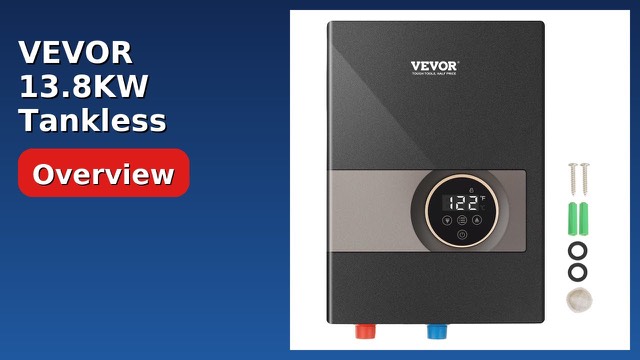
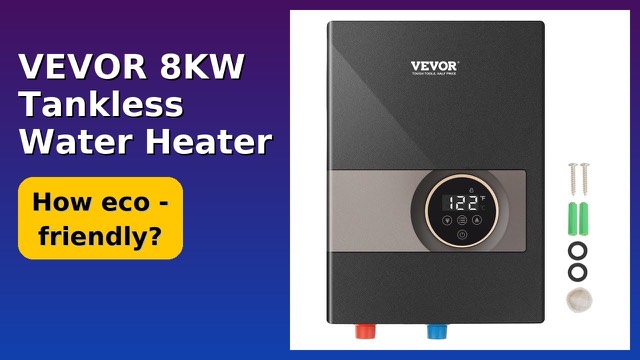
The unit has an LED display and touch controls, so you set a temperature digitally. A thermostat function and over-temperature protection are listed to keep the output from swinging too far.
Installation requirements
This is the most important section. The listing says installation needs two 40A circuit breakers and two 8 AWG power cables, and it recommends professional help. The water connections are NPT 3/4 in inlet and outlet, and the heater mounts on a wall.
An 18kW heater draws far more current than most household appliances. Whether your electrical panel and wiring can carry it depends on your building, so have a licensed electrician or plumber assess it. Follow local codes and the manual.
Where it fits
VEVOR positions it for large families, busy households and commercial settings such as salons. It might serve a whole small apartment, an extension or a single high-demand point of use, depending on flow needs, and your electrical capacity decides whether that is realistic.
What to check before you buy
- Electrical capacity: confirm that your panel has room for two 40A breakers and that wiring meets the listing's requirements.
- Flow needs: add up the taps and showers that might run at once, and compare with the heater's rated flow in the manual.
- Inlet water temperature: colder water means a lower flow at the target temperature.
- Plumbing: check that 3/4 in NPT connections match your pipework.
- Wall space: it must be mounted on a suitable wall with clearances as per the manual.
- Local rules: a permit or licensed installer may be required.
- Upkeep: ask about scale in hard-water areas and any maintenance schedule.
The short version
- An 18kW wall-mounted electric tankless water heater, 11.5 lb.
- Output range 86–140°F or higher, with a digital display and touch controls.
- Thermostat function and over-temperature protection.
- Needs two 40A breakers, two 8 AWG cables and 3/4 in NPT connections.
- Professional installation recommended; follow local codes and the manual.
Bloiq is reader-supported. Some links may earn us a commission; it never affects what we write. How we make money.