Home / Tools & DIY · Product overviews / Welding & Soldering / TIG Welding Equipment · More from ARCCAPTAIN
ARCCAPTAIN TIG200PACDC AC/DC Pulse TIG Welder: specs and who it suits
A 200A multi-process AC/DC TIG welder with pulse, square and triangular waves, stick mode and a large LED display. Here is what the features mean.
This page contains an affiliate link, marked as such. If you buy through it, Bloiq may earn a commission at no extra cost to you.
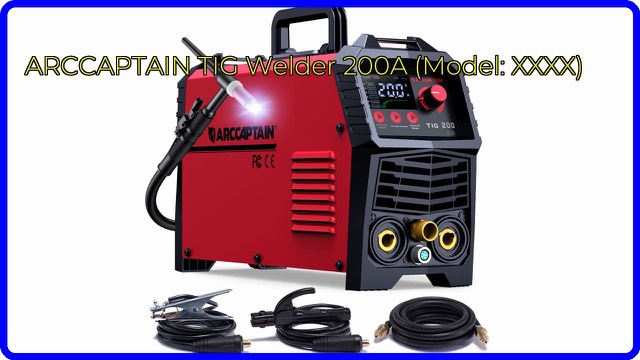
The ARCCAPTAIN TIG200PACDC is a 200-amp AC/DC TIG welder that also does stick welding. It's built for welding aluminum as well as steel, which needs AC output, and it runs on 110V or 220V. At 42.7 lb (about 19 kg) in the listing, it is portable enough to move around a garage or workshop.
AC and DC: why both matter
DC TIG is the usual choice for steel, stainless steel and copper. It gives a stable, focused arc and good control of heat. AC TIG alternates the current direction, and that is what lets the arc break up the tough oxide layer on aluminum and magnesium. Having both in one machine means one welder can cover ferrous and non-ferrous metals.
The waveforms: square, triangular and pulse
ARCCAPTAIN lists several AC and DC modes, including pulse, square wave and triangular wave.
- Square wave switches polarity quickly. The brand says this gives a stable weld pool and good cleaning of the aluminum oxide film.
- Triangular wave is described as reducing heat input, which helps on thin metal.
- Pulse alternates between a high peak and a lower base current. This is typically used to limit heat and reduce distortion.
Adjustable parameters
A digital control system lets you set pre-flow, initial current, up-slope, peak current, base current, down-slope, crater current, post-flow, pulse duty, AC frequency, AC balance and pulse frequency. These let you shape how the arc starts, runs and ends, which matters most on thin or heat-sensitive material. The torch trigger can run in 2T, 4T or spot mode, and the listing says a foot pedal can be used (not included).
Thickness range
The brand gives a range of 0.5 to 5 mm (about 1/5 inch to 1.97 inches as printed) for aluminum and 0.5 to 10 mm for other metals. Treat these as the brand's figures and check the manual for the current needed at each thickness.
The display and size
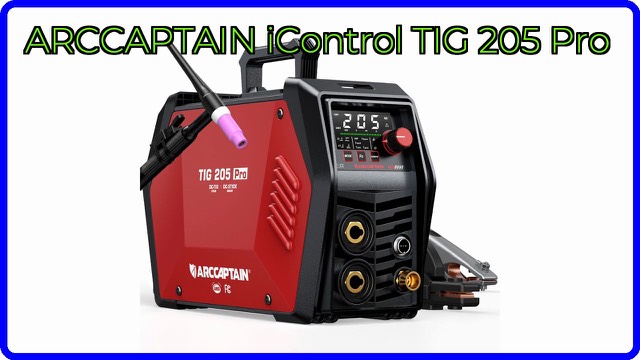
A large LED screen shows the welding parameters and settings. The unit weighs about 12 kg (26.5 lb) according to one line in the listing, while the item weight is given as 42.7 lb. Check which applies to the welder itself. The listing also warns not to power on again until the screen turns off and the fan stops.
Who it suits
It suits hobbyists and fabricators who want to weld aluminum and steel with one machine, and people who value fine control of the arc. TIG welding takes practice, and shielding gas, a torch, tungsten and protective gear are needed. Follow the manual.
What to check before you buy
- Power supply: confirm your outlet and circuit for 110V or 220V operation.
- Accessories: check what's in the box. A foot pedal is listed as not included.
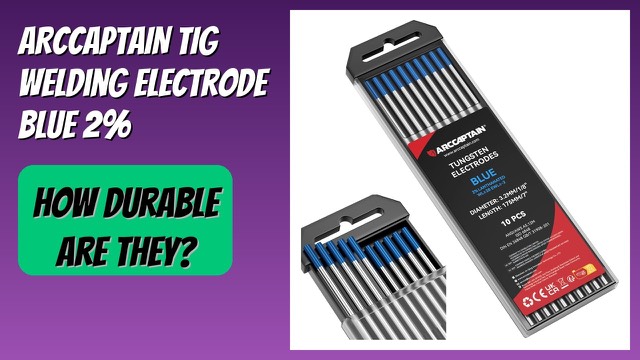
- Gas and consumables: TIG needs an argon supply and tungsten electrodes.
- Thickness: compare the metals you weld with the stated ranges.
- Weight: check the weight of the welder and how you'll move it.
The short version
- A 200A AC/DC TIG welder with pulse, square and triangular waves.
- Also welds with stick and spot modes.
- Runs on 110V or 220V.
- Digital parameter control with a large LED display.
- Foot pedal not included.
Bloiq is reader-supported. Some links may earn us a commission; it never affects what we write. How we make money.