Home / Tech · Product overviews / Computers & Accessories / Graphics Cards · More from MSI
MSI GeForce RTX 3050 Ventus 2X XS 8G OC Graphics Card: specs explained
An 8GB GDDR6 NVIDIA GeForce RTX 3050 graphics card from MSI with twin Torx fans and a 1807 MHz boost clock. What the specs mean and what to check.
This page contains an affiliate link, marked as such. If you buy through it, Bloiq may earn a commission at no extra cost to you.
The MSI GeForce RTX 3050 Ventus 2X XS 8G OC is a graphics card built on NVIDIA's Ampere architecture. It has 8GB of GDDR6 memory and two fans, and it is designed to add graphics power to a desktop PC for gaming and other graphics work.
The chip and its architecture
The card uses an NVIDIA GeForce RTX 3050. NVIDIA describes the Ampere architecture as including second-generation RT Cores, which handle ray tracing (realistic lighting and reflections), third-generation Tensor Cores, which are used for AI-based features such as upscaling, and new streaming multiprocessors, the units that do most of the general graphics work. Whether a given game uses ray tracing or upscaling depends on the game.
Memory
The card carries 8GB of GDDR6 memory on a 128-bit interface. Video memory holds textures and other graphics data, so the amount affects how detailed a game can be at a given resolution. The interface width affects how quickly data moves in and out of that memory.
Clock speed and the "OC" label
MSI lists a boost clock of 1807 MHz. The "OC" in the name typically means the card is factory overclocked, so it is set to run faster than NVIDIA's baseline reference speed. The boost clock is the speed the card can reach under load, and real-world speeds depend on temperature and power.
Cooling and design
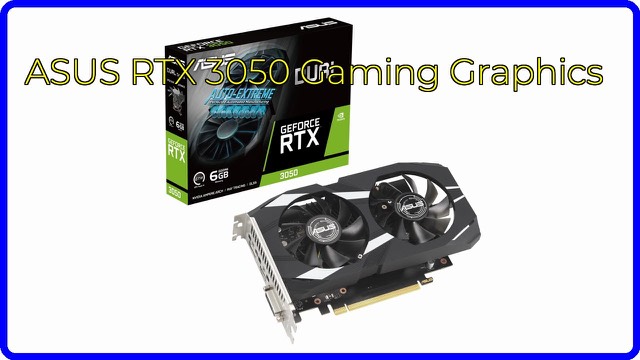
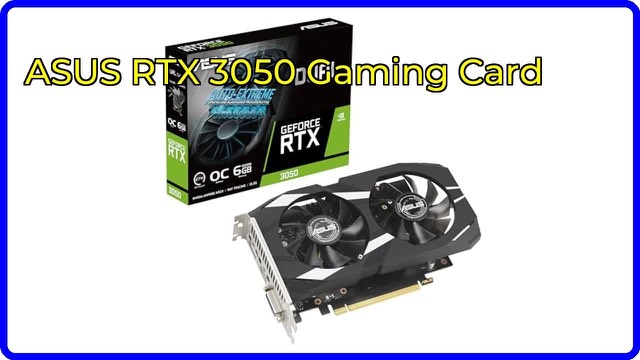
"Ventus 2X" refers to MSI's twin-fan design, and the name also mentions Torx fans, which MSI designs to move air efficiently across the heatsink. The card measures about 8.1 x 1.8 x 4.4 inches (roughly 206 x 46 x 112 mm) and weighs about 1.3 lb, which is compact for a graphics card. A shorter card suits small cases.
Ports
The outputs are one DisplayPort 1.4a, one HDMI 2.1 and one dual-link DVI-D. That allows up to three screens, and the DVI-D port is useful if you have an older monitor. Check that your monitors' cables match these ports.
Connection to the PC
The card uses a PCIe 4 interface, and it normally works in older PCIe slots too, at lower bandwidth. The details given don't state the power connector or recommended power supply, so look at MSI's product page or the box for these before buying.
Who it suits
It suits people building or upgrading a desktop PC who want an RTX-generation card with 8GB of memory, particularly in a compact case. It is a desktop component, not something for laptops.
What to check before you buy
- Power supply: confirm that your power supply has the right connector and enough wattage for the card.
- Case space: measure the length, height and the two-slot width available.
- Monitor ports: check that your displays can connect via DisplayPort, HDMI or DVI-D.
- Slot: you need a free PCIe x16 slot on your motherboard.
- Software: download current drivers from NVIDIA, and check any game's recommended specifications.
The short version
- MSI GeForce RTX 3050 Ventus 2X XS 8G OC with 8GB GDDR6 and a 128-bit interface.
- Boost clock of 1807 MHz, factory overclocked.
- Twin Torx fans in a compact body.
- DisplayPort 1.4a, HDMI 2.1 and dual-link DVI-D outputs.
- Based on the NVIDIA Ampere architecture with RT and Tensor Cores.
Bloiq is reader-supported. Some links may earn us a commission; it never affects what we write. How we make money.