Home / Tech · Product overviews / Computers & Accessories / Graphics Cards · More from ASUS
ASUS Dual GeForce RTX 4060 EVO OC 8GB: features, specs and who it suits
A dual-fan RTX 4060 graphics card with 8GB GDDR6, DLSS 3, a 2535 MHz OC boost clock, 0dB fan mode and dual BIOS. What the specs mean for a PC build.
This page contains an affiliate link, marked as such. If you buy through it, Bloiq may earn a commission at no extra cost to you.
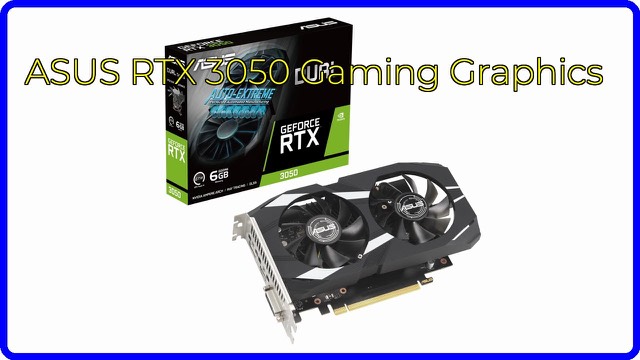
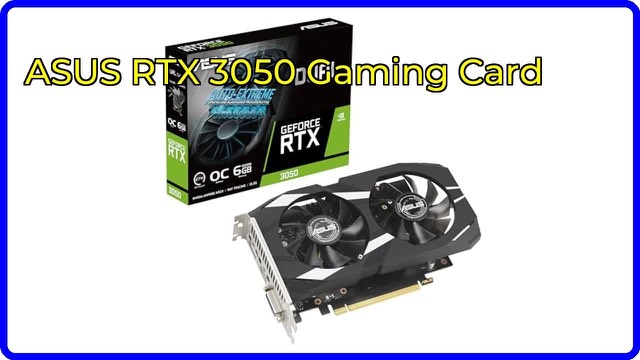
The ASUS Dual GeForce RTX 4060 EVO OC Edition is a graphics card for desktop PCs, built around NVIDIA's RTX 4060 chip with 8GB of GDDR6 memory. It has two fans, a slim design, and a factory overclock. ASUS positions it as a way into modern gaming with DLSS and ray tracing.
What the RTX 4060 brings
The card uses NVIDIA's Ada Lovelace architecture. ASUS lists 4th-generation Tensor Cores, which NVIDIA says give up to 4x the performance with DLSS 3 compared with brute-force rendering, and 3rd-generation RT Cores, rated at up to 2x the ray tracing performance. Those are NVIDIA's figures, and real results vary by game and settings.
DLSS is a technique that renders a game at lower resolution and uses AI to upscale it, and DLSS 3 can also generate extra frames. Ray tracing simulates how light behaves for more realistic reflections and shadows, but it's demanding, which is why upscaling matters. Only games that support these features benefit from them.
Clock speeds and the OC label
"OC Edition" means the card ships with a higher clock speed than the reference design. ASUS lists a boost clock of 2535 MHz in OC Mode and 2505 MHz in Default Mode. The difference is small, so the practical gain is modest. The mode is usually selected in ASUS software.
Cooling and noise
ASUS uses an Axial-tech fan design, with a smaller hub that allows longer blades and a barrier ring that increases downward air pressure. The two fans use dual ball bearings, which ASUS says can last up to twice as long as sleeve bearings.
0dB technology means the fans stop completely under light loads, such as browsing or light gaming, and spin up when the card gets warm. In a quiet room, that can make a noticeable difference.
Dual BIOS and protection
A Dual BIOS switch on the card lets you toggle between Quiet and Performance profiles without software. It also provides a fallback if you need it. A protective backplate secures components in transit and during installation, and ASUS says Auto-Extreme Technology uses automated manufacturing to improve reliability.
Ports and connection
The card connects over PCIe 4.0 and has HDMI 2.1a and DisplayPort 1.4a outputs. In general, PCIe cards work in slower slots too, with some loss of bandwidth, so an older board with a PCIe 3.0 slot is usually fine, though you should check your motherboard manual. The card is about 8.9 inches (roughly 22.6 cm) long and 1.4 lb (about 0.6 kg).
Who it suits
It suits people building or upgrading a desktop for gaming at common resolutions, particularly those who want DLSS 3 and ray tracing support and a quiet card. As with any 8GB card, very demanding settings in new games can use a lot of video memory, so think about the games and resolution you play.
What to check before you buy
- Case clearance: confirm that the card's length and slot width fit your case.
- Power: check your power supply's wattage and the card's power connector against the manufacturer's recommendations.
- Motherboard slot: you need a free PCIe x16 slot.
- Monitor ports: make sure your display uses HDMI or DisplayPort.
- Games: check that the games you play support DLSS 3 and the features you want.
- Cooling: leave airflow around the fans in the case.
The short version
- RTX 4060 graphics card with 8GB GDDR6 on PCIe 4.0.
- 2535 MHz boost in OC Mode, 2505 MHz in Default Mode.
- DLSS 3 support, 4th-generation Tensor Cores and 3rd-generation RT Cores.
- Axial-tech dual fans with 0dB mode and dual ball bearings.
- Dual BIOS switch, HDMI 2.1a and DisplayPort 1.4a outputs.
Bloiq is reader-supported. Some links may earn us a commission; it never affects what we write. How we make money.