Home / Tech · Product overviews / Computers & Accessories / Computer Cases · More from ASUS
ASUS A21 White Micro-ATX Case: features, specs and who it suits
A compact white micro-ATX PC case with a mesh front panel, room for 380 mm graphics cards and 360 mm radiators, and support for BTF hidden-connector boards.
This page contains an affiliate link, marked as such. If you buy through it, Bloiq may earn a commission at no extra cost to you.
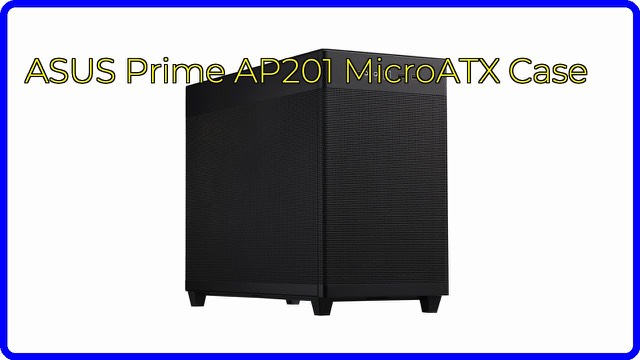
The ASUS A21 White Edition is a micro-ATX computer case built for compact desktop PCs that still carry serious hardware. It pairs a mesh front panel with space for long graphics cards and large coolers, and it supports ASUS's BTF hidden-connector design for a cleaner interior. This page explains what those specs mean for a build.
A small case that fits large parts
Micro-ATX is a smaller motherboard format than standard ATX, so a micro-ATX case is typically shorter and takes up less desk space. ASUS says the A21 still accepts graphics cards up to 380 mm long, CPU air coolers up to 165 mm tall and radiators up to 360 mm. A 360 mm radiator is the size of three 120 mm fans in a row, which is a common choice for liquid coolers on high-power processors.
It also accepts standard ATX power supplies, so you aren't limited to the smaller SFX units that many compact cases require. Standard units are generally easier to find in a wider range of wattages.
What BTF hidden connectors change
BTF stands for "Back-To-the-Future" in ASUS's naming, and it refers to motherboards that move most power and data connectors to the back of the board. Instead of routing cables across the front of the motherboard, you plug them in behind it. ASUS says the A21 is compatible with these boards, which maximizes clean cable management.
The case is not limited to BTF boards. A standard micro-ATX motherboard should fit too, but you would then route cables the usual way. The hidden-connector approach only comes into play if you pair the case with a compatible BTF motherboard.
Mesh front panel and airflow
ASUS describes the front panel mesh as 40% porous, and says this balances airflow, dust filtering and the visibility of RGB lighting. In general, a mesh front lets fans draw in cool air with little restriction, while the fine holes keep out larger dust. The more open a panel is, the better the airflow tends to be, though a mesh also needs occasional cleaning to stay effective.
Space behind the motherboard
The compartment behind the motherboard tray is 33 mm wide, according to ASUS. That gap holds the cable bundle from the power supply and front-panel connectors, so the main chamber stays tidy. A wider gap usually makes it easier to close the side panel without pinching cables.
Colour-matched internal cables
The A21 comes with internal I/O cables in black or white to match the build theme, per ASUS. On a white-themed build, matching cables are a small but visible detail, especially behind a glass or mesh panel.
What to check before you buy
- Motherboard size: confirm your board is micro-ATX or smaller, and whether it is a BTF model if you want hidden connectors.
- Graphics card length: measure the card or check its listed length against the 380 mm limit.
- Cooler height and radiator size: check that an air cooler stays under 165 mm, or that your liquid cooler's radiator is 360 mm or less.
- Power supply: make sure it is a standard ATX unit and check its length against the case manual.
- Fans and storage: check the manual for how many fans are included and how many drives the case holds.
- Dust upkeep: a mesh front panel needs occasional cleaning.
The short version
- A white micro-ATX case from ASUS with a mesh front panel rated by ASUS at 40% porous.
- Supports graphics cards up to 380 mm, CPU air coolers up to 165 mm and radiators up to 360 mm.
- Compatible with BTF hidden-connector motherboards for tidier cabling.
- A 33 mm cable compartment behind the motherboard and black or white internal I/O cables are included.
- Accepts standard ATX power supplies.
Bloiq is reader-supported. Some links may earn us a commission; it never affects what we write. How we make money.