Microwave types explained: solo, grill, combination and over-the-range
How solo, grill, combination, over-the-range and built-in microwaves differ, what the wattage figure really means, and when an inverter model is worth having.
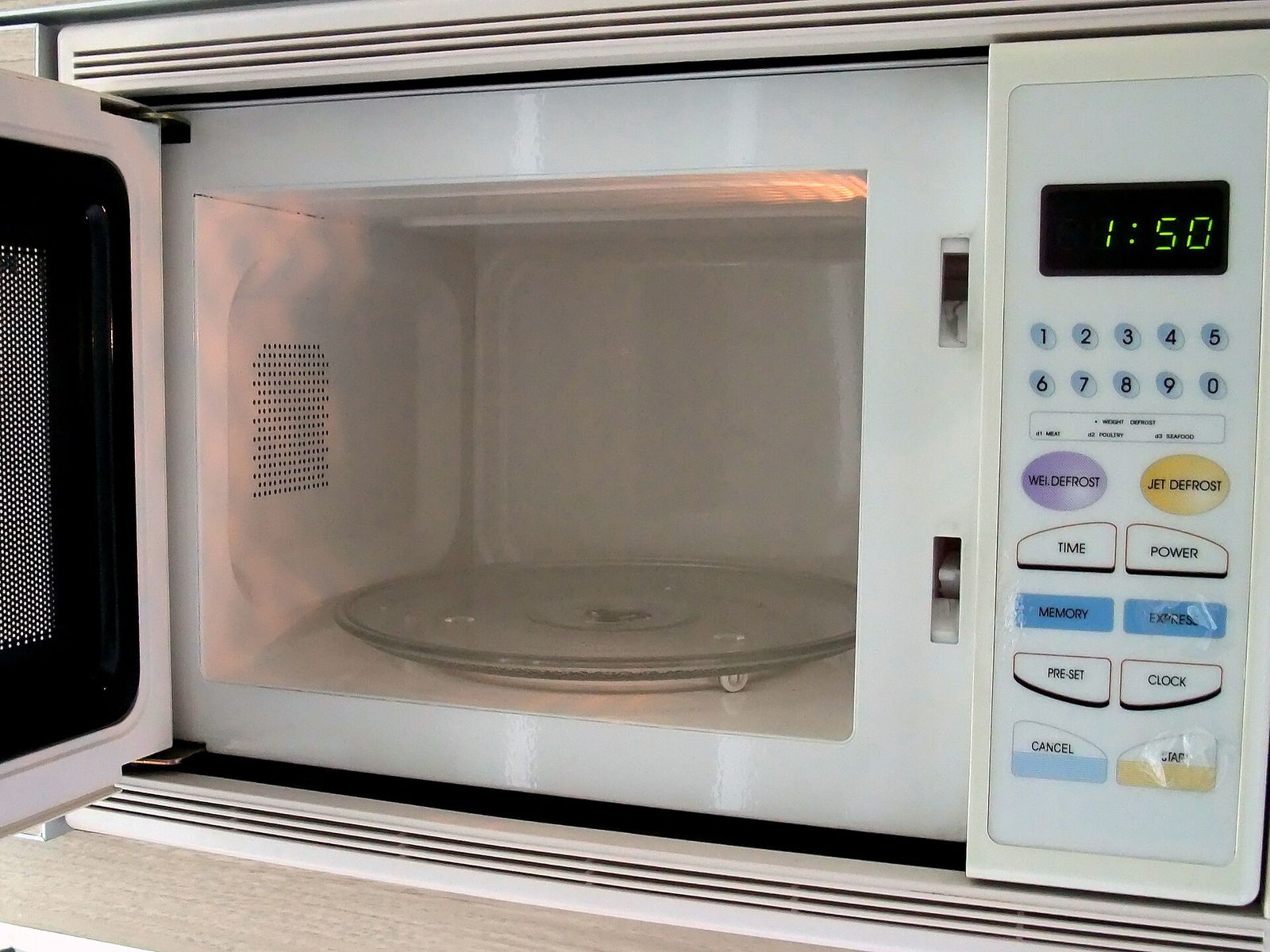
A microwave looks like a simple box, but the choice is wider than it seems: plain "solo" models, grill and combination ovens that can brown and bake, over-the-range units that double as a cooktop vent, and built-in and drawer designs. Wattage, capacity and inverter technology then decide how quickly and evenly it heats. This guide explains the differences so you can match the type to the way you actually cook.
How a microwave heats food
A microwave oven uses a magnetron to produce microwaves at about 2.45 GHz. They make the water molecules in food oscillate rapidly, which produces heat. Microwaves penetrate only a couple of centimetres, so the centre of thicker food heats by conduction from the outer layers. That's why instructions call for stirring and standing time. It's also why a plain microwave can't brown or crisp: the surface stays moist and close to the boiling point of water, which is too cool for browning.
The main types
| Type | What it does | Best for | Watch out for |
|---|---|---|---|
| Solo | Microwave only | Reheating, defrosting, simple cooking | Can't brown or crisp |
| Grill | Microwave plus a grill (broil) element | Melting cheese, browning tops, gratins | The grill doesn't replace an oven |
| Combination | Microwave, grill and a fan oven, alone or together | Small kitchens; roasting and baking as well as reheating | Larger, more to learn, more to clean |
| Over-the-range | Microwave with a vent fan and lights, mounted above the cooktop | Kitchens short on counter space | Installation, reach height, modest ventilation |
| Built-in and drawer | Fitted into cabinets or under the counter | Streamlined kitchens; easy access (drawers) | Installation, fewer models to choose from |
Solo and grill microwaves
The solo microwave is the simplest and most common type. It reheats, defrosts, steams vegetables and cooks porridge or popcorn, and many models add sensor or auto-cook settings. If you have a conventional oven and mostly reheat, a good solo model is all you need. Compact models of around 17–20 litres suit small kitchens and offices; larger ones fit bigger plates and dishes.
A grill microwave adds a heating element, often a quartz tube, in the roof of the cavity. The grill (called broil in North America) colours and crisps the top of food: melted cheese, a gratin, the top of a pie. Many models combine grill and microwave power so the inside cooks while the top browns. Use only the rack and dishes the manual allows in grill mode, as they get very hot.
Combination (convection) microwaves
A combination microwave, usually called a convection microwave in North America, adds a heating element and fan, so it also works as a small fan oven. You can roast and bake, use the oven and microwave together to cut cooking times, and on many newer models use an air-fry setting. In a small apartment, a cottage or a kitchen with only a cooktop, it can stand in for an oven for everyday meals.
Check the interior size (a cavity of 30 litres or more fits a small chicken or a cake tin), the maximum oven temperature and whether a round turntable limits the dishes you can use. Combination models get hot on the outside, so follow the clearances in the manual. If crisping matters most, compare the options in our guides to air fryer types and toaster ovens and countertop ovens.
Over-the-range, built-in and drawer models
Over-the-range microwaves, common in North America, mount above the cooktop, with a vent fan and lights underneath. They're usually about 76 cm (30 in) wide to match a standard range, and they free up counter space, but:
- the fan, often in the range of 300–400 CFM, is usually weaker than a dedicated range hood and sits close to the back burners, so it suits lighter cooking; ducting outside works better than recirculating through a charcoal filter;
- installation instructions set a minimum gap between the cooktop and the cabinet above, often about 76 cm (30 in), so measure before you buy;
- they're mounted high, which makes lifting hot liquids down over the cooktop awkward for shorter adults and unsuitable for children.
Built-in microwaves fit a cabinet or wall-oven column, either as dedicated built-in models or as countertop models with a matching trim kit. Follow the maker's ventilation requirements: a countertop model shouldn't be boxed in unless it's approved for that. Drawer microwaves slide out from under the counter or an island, which makes them easy to reach for children and wheelchair users. Both need careful installation and, often, a dedicated circuit.
Wattage: output, input and cooking times
The headline figure is usually output power, the microwave energy delivered to the food: typically about 600–800 W for compact models and 900–1,200 W for full-size ones. Input power, drawn from the wall, is higher, often 1,200–1,800 W, which matters for circuits and for running a microwave from a generator or portable power station.
Higher output heats faster and copes better with thick or frozen food. Packaged-food instructions are written for a stated wattage, so it helps to know yours:
Rule of thumb: new time ≈ stated time × (stated wattage ÷ your wattage). Four minutes at 800 W becomes about 3 minutes 12 seconds at 1,000 W. Check, stir and add time in short bursts.
Inverter vs conventional power control
In a conventional microwave, lower power settings don't actually lower the power: the magnetron switches between full power and off in cycles, so 50% power means full power about half the time. An inverter microwave adjusts its power supply to deliver a steady, lower output instead. In practice:
- defrosting is more even, with fewer cooked edges on frozen food;
- gentle jobs such as melting butter or chocolate, poaching eggs or reheating delicate dishes are easier to control;
- inverter models are often lighter for their size, because they don't need a heavy transformer.
At full power, an inverter model and a conventional one with the same output heat at a similar rate. If you mostly reheat drinks and leftovers, an inverter is a nice extra; if you often defrost or cook in the microwave, it's worth having.
Capacity, turntables and features
- Capacity is quoted in litres or cubic feet (1 cu ft ≈ 28 litres). The figure includes space you can't use, so the turntable diameter or usable floor width is a better guide. Measure your largest plate or dish.
- Flatbed models have no turntable; a rotating antenna under the floor spreads the energy instead. The flat floor fits rectangular dishes and is easy to wipe.
- Sensor cooking measures the steam food gives off and adjusts the time automatically.
- Everyday extras: a mute option, a child lock, a quick-start button, an easy-clean enamel or stainless steel interior, and a door that opens the right way for your layout.
- Space: check the clearance the manual requires around the vents, top and back.
Safety basics
- Never run a microwave empty, and use containers labelled microwave-safe. No metal, unless the manual allows it (such as the rack supplied with a grill or combination model).
- Water heated in a smooth container can superheat and boil up suddenly when moved. Heat it in short bursts and let it stand briefly.
- Don't heat eggs in their shells or food in sealed containers.
- If the door, hinges or seals are damaged, stop using the microwave. Never open the casing: internal parts can hold a dangerous electrical charge even when it's unplugged.
- Plug a microwave directly into a wall socket rather than an extension cord, and follow the circuit requirements in the manual. Look for a recognised safety certification mark.
The short version
- Solo for reheating and defrosting; grill if you want browned tops; combination if it must double as an oven.
- Over-the-range saves counter space but ventilates less than a hood and sits high; drawer models are the easiest to reach.
- Compare output wattage: around 900–1,200 W heats quickly in a full-size model.
- Choose an inverter model if you often defrost or cook gently.
- Judge size by the turntable or floor width, not litres alone, and leave the clearance the manual asks for.
Bloiq is reader-supported. Some links may earn us a commission; it never affects what we write. How we make money.
Cover photo: Mk2010, CC BY-SA 3.0, via Wikimedia Commons


.jpg)