Home / Travel / Universities / Canada
University of Alberta campus tour: the Arts Building, HUB and the river
A guide to the University of Alberta in Edmonton: the Arts Building, Rutherford Library, HUB Mall, science and engineering, Lister, the Butterdome and Whyte Avenue.
This guide contains affiliate links, marked as such. If you book through them, Bloiq may earn a commission at no extra cost to you.
The University of Alberta was founded in Edmonton in 1908, just three years after Alberta became a province, by its first premier, Alexander Rutherford, and its first president, Henry Marshall Tory. Its main campus, known as North Campus, sits on the high south bank of the North Saskatchewan River, looking across the valley to the towers of downtown. It is a large, busy, mostly modern campus with a handsome historic core, and it has been designed with a northern winter firmly in mind. This guide covers the landmarks, the layout and the neighbourhoods students use.
The shape of North Campus
North Campus is a dense grid of about fifty city blocks, bounded by the river valley to the north and west and by the Garneau neighbourhood to the east.
- The Main Quad and the Arts Building form the historic centre.
- The north end has science and engineering.
- The east side is lined by HUB Mall, the humanities buildings and the fine arts.
- The south side is taken up by the university hospital and the health sciences.
- The south-west corner has the Lister Centre residences and the athletics buildings.
Many buildings are joined by enclosed walkways, called pedways, so in January it is possible to cross much of the campus without going outside. The university also has a separate South Campus with playing fields and research farms, a French-language faculty at Campus Saint-Jean elsewhere in the city, and a small campus in the town of Camrose.
The Arts Building and the Main Quad
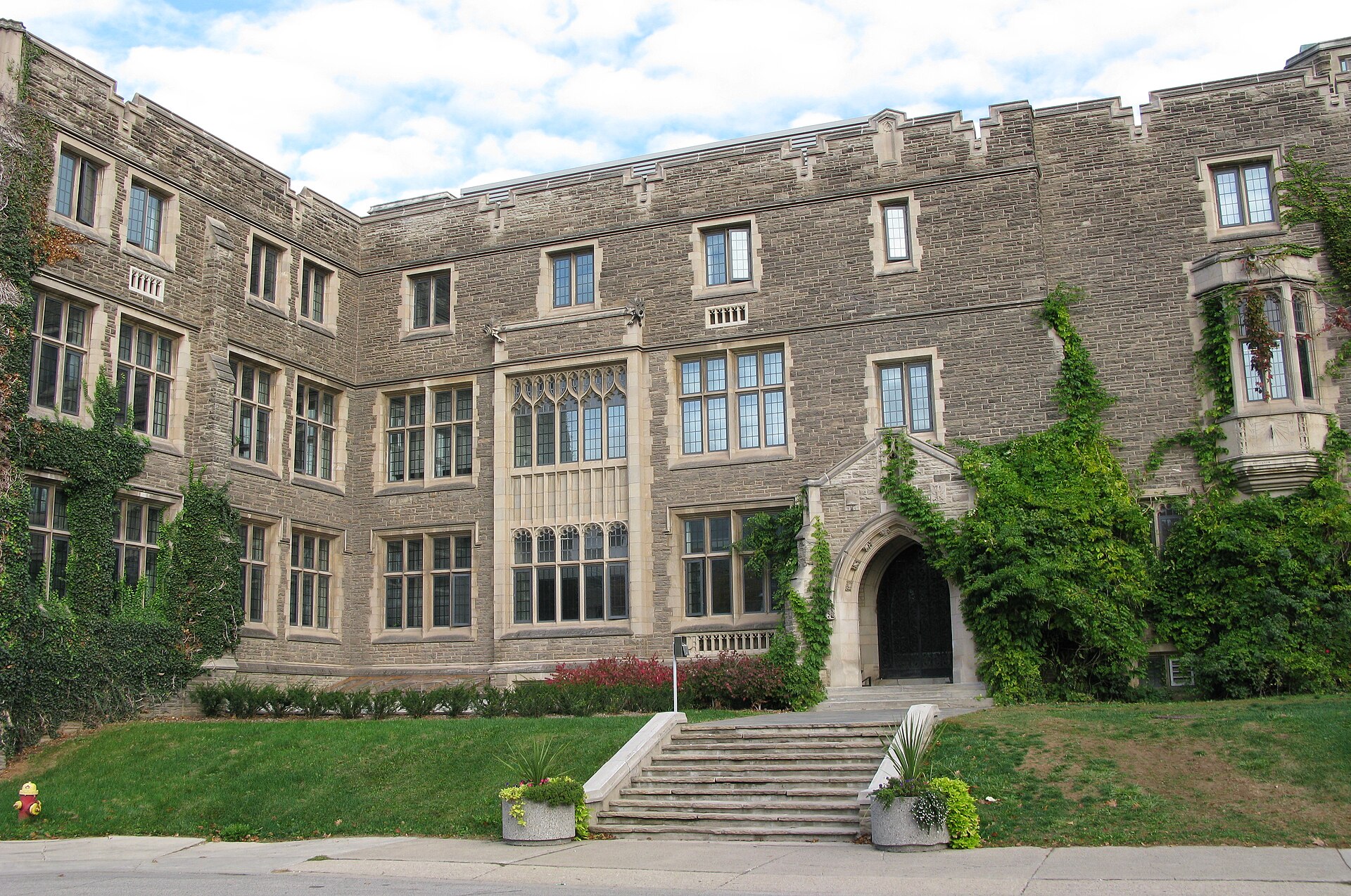
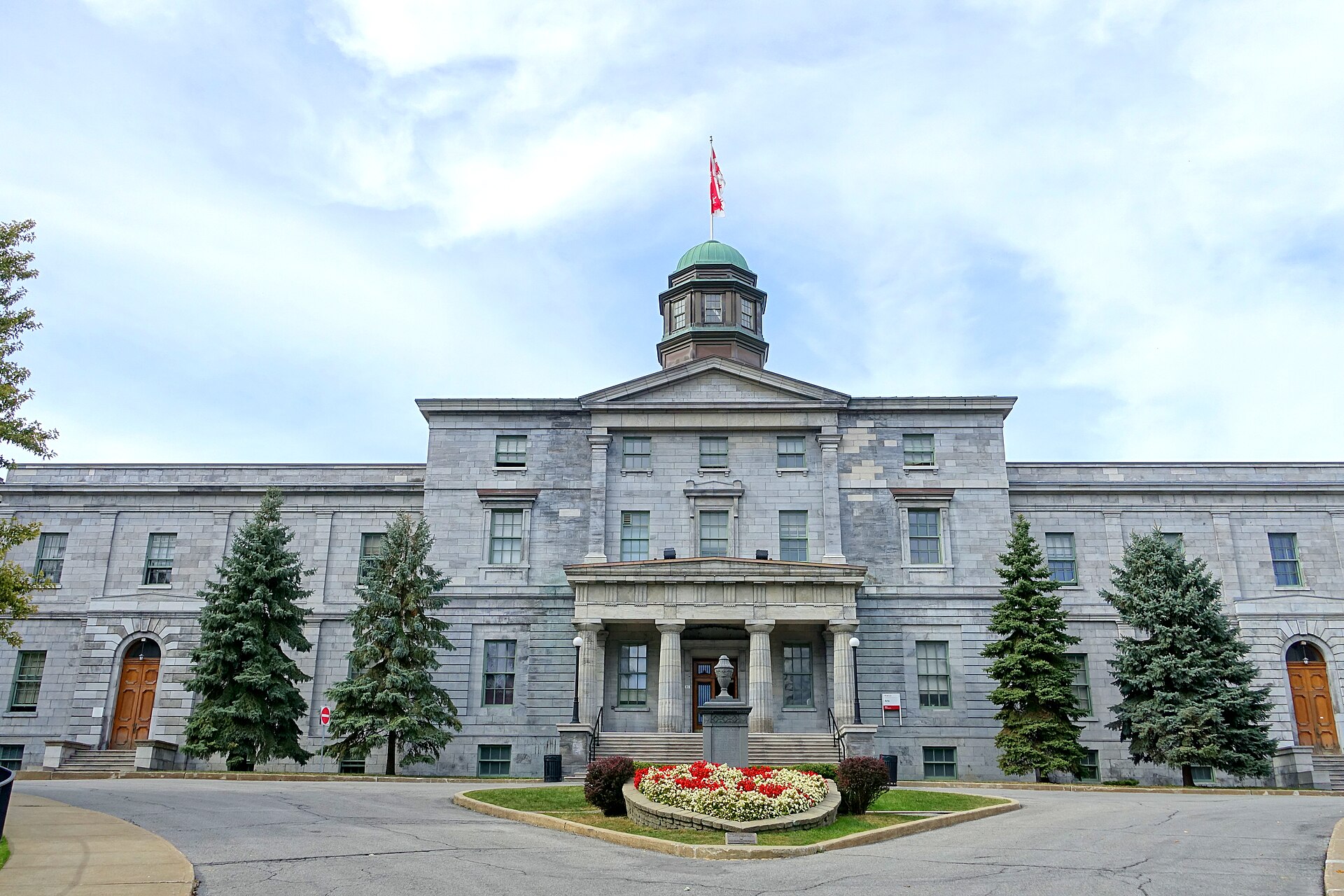
The Arts Building, opened in 1915, is the image most people have of the university: a long red-brick and stone hall, covered in ivy that turns scarlet in September. Inside is Convocation Hall, a concert and ceremony space with a large pipe organ.
In front of it lies the Main Quad, the big central lawn. On its edge stand the three oldest buildings on campus, Athabasca, Assiniboia and Pembina Halls, built as residences between 1911 and 1914 and now used for teaching and offices.
Rutherford Library and Rutherford House
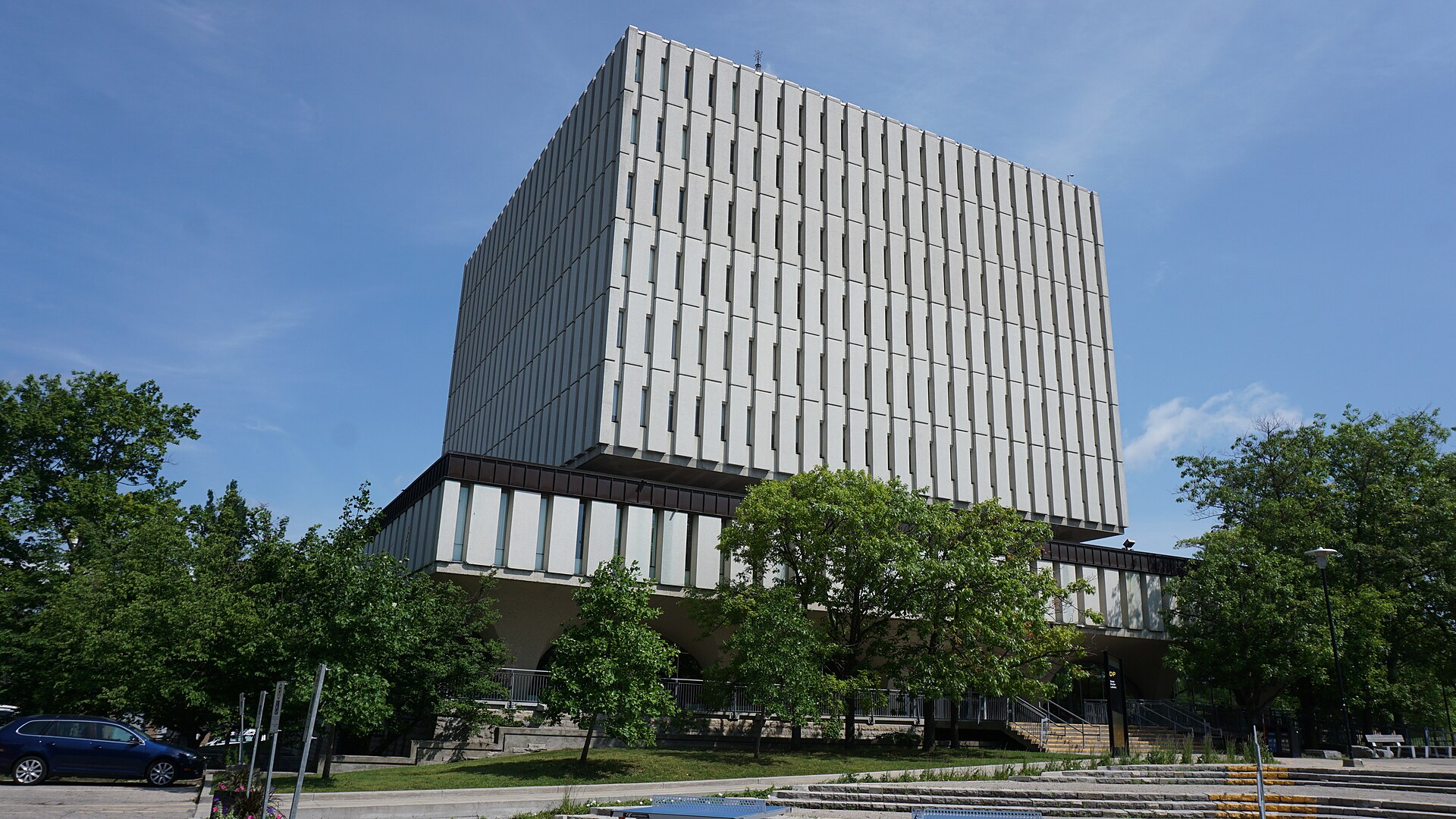
The Rutherford Library, the main library for the humanities and social sciences, is named for the founder. It is really two buildings: a dignified 1950s original with a traditional reading room, and a larger 1970s addition, joined by a glass-roofed atrium.
A few minutes east, on Saskatchewan Drive, Rutherford House is the premier's own Edwardian brick home, preserved as a historic site and museum. It is a pleasant short stop and explains a good deal about the early city.
HUB Mall and the Students' Union Building
HUB Mall is the campus's most unusual building. Opened in the early 1970s, it is an indoor street nearly 300 metres long, with shops and inexpensive places to eat at ground level and student apartments above, their windows looking down onto the mall. It is warm, busy all year, and connected directly to the light rail station.
The Students' Union Building, known as SUB, is the other hub, with a food court, the bookstore, a theatre and student services.
Science, engineering and medicine
The Centennial Centre for Interdisciplinary Science, completed in 2011 beside the Main Quad, brought several science departments together under one roof and is the newest landmark in the centre of campus. Engineering occupies a cluster of linked buildings in the north-east corner.
The university has a long record in energy research and in artificial intelligence, and its medical school and hospital are at the southern end of campus. The Edmonton Protocol, a method of transplanting insulin-producing cells to treat type 1 diabetes, was developed here around 2000. The university also keeps a number of museum collections, including dinosaur fossils, some of which are open to visitors.
Lister Centre, the Butterdome and student life
Many first-year students live at Lister Centre, a group of residence towers with a shared dining hall in the south-west corner of campus. Other residences are scattered through the east side, including the apartments in HUB.
Close to Lister is the building no visitor misses: the Universiade Pavilion, a windowless fieldhouse clad in bright yellow panels and known to everyone as the Butterdome. It was built for the World University Games of 1983 and holds an indoor track and courts. The university's teams are the Golden Bears (men) and the Pandas (women), in green and gold, and the hockey arena and pools are next door.
The river valley, Whyte Avenue and downtown
- The river valley: Edmonton's valley is one of the largest stretches of urban parkland in North America. Stairs and paths lead down from campus to trails, picnic grounds and, in winter, cross-country ski tracks.
- Whyte Avenue: the main street of Old Strathcona, about 20 minutes' walk to the south-east, with cafés, pubs, independent shops and theatres. It hosts a large fringe theatre festival every August.
- Garneau: the leafy residential streets immediately east of campus, with a cinema and a handful of restaurants.
- Downtown: across the High Level Bridge, a steel landmark of 1913, or a few minutes by train.
Visiting the campus
The grounds are open, and the Quad, the Arts Building exterior, HUB and the viewpoints over the valley can be seen in an hour or two. The university typically offers tours for prospective students; what is available changes through the year, so check its official visitor page for current arrangements.
Getting there and around
- By light rail: two stations serve the campus, one beside HUB and one at the hospital. Trains cross the river to downtown in a few minutes.
- By air: Edmonton International Airport is south of the city, usually 30 to 45 minutes away by road.
- By car: visitor parking is in several multi-storey car parks; follow the signs from 87 Avenue or 114 Street.
- In winter: dress for real cold between November and March, and use the pedways.
Where families usually base themselves
- Near campus and Garneau: limited choice but walkable.
- Whyte Avenue and Old Strathcona: lively, with plenty of places to eat.
- Downtown: the widest choice of hotels, a short train ride away.
Edmonton is also a gateway to the Rockies: Jasper is about four hours' drive west. If you are extending the trip, see our guides to the Icefields Parkway and to where to stay in Banff and Lake Louise.
Bloiq is reader-supported. Some links may earn us a commission; it never affects what we write. How we make money.
Cover photo: IQRemix, CC BY-SA 2.0, via Wikimedia Commons