Home / Travel / Singapore · Campus tours
NTU Singapore campus tour: The Hive, Yunnan Garden and hall life
Visiting Nanyang Technological University in Singapore: The Hive, the green-roofed art school, Yunnan Garden and its history, hall life, transport and where to stay.
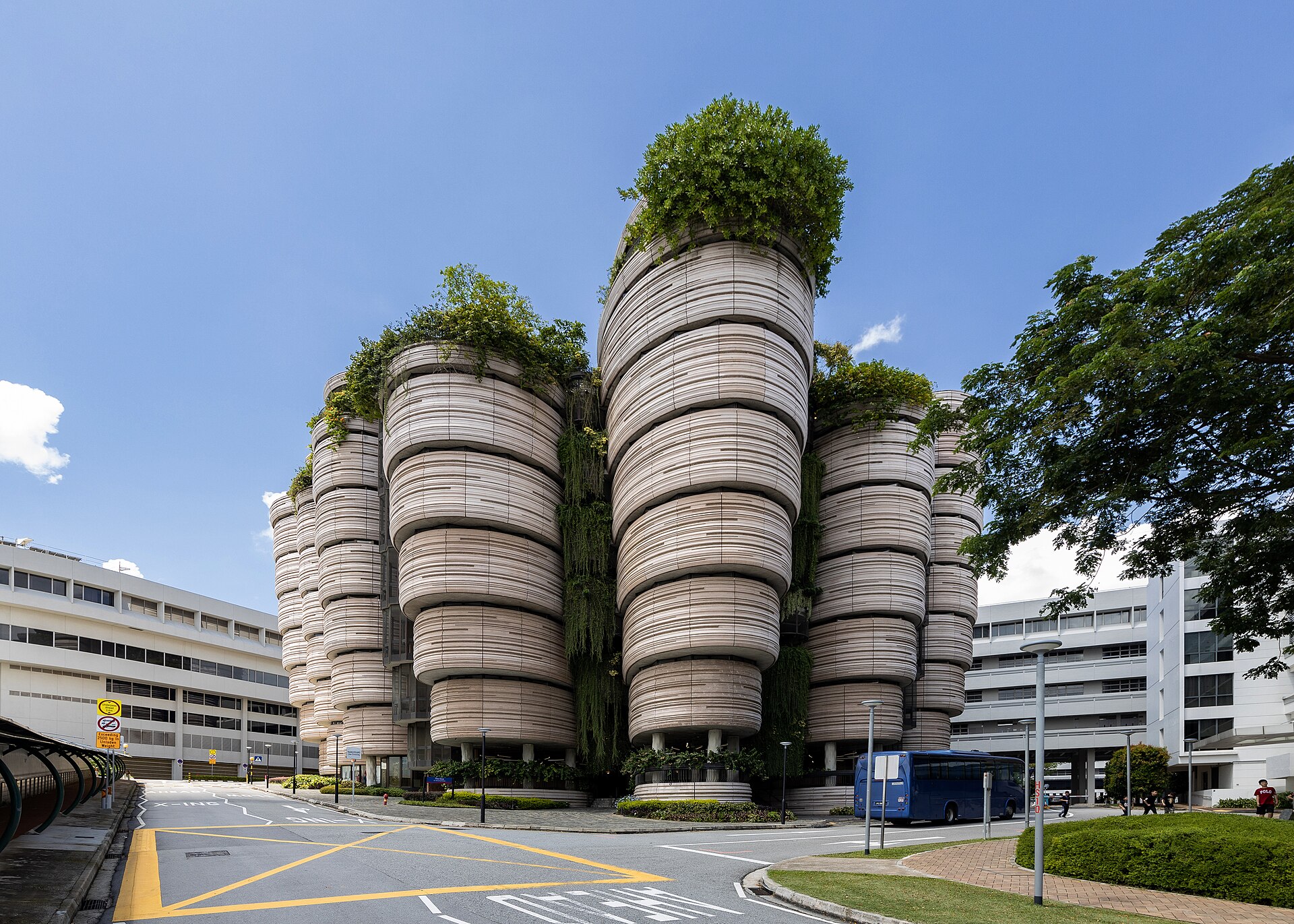
Nanyang Technological University occupies a vast, rolling campus in Jurong West, at the far western end of Singapore. It is a genuinely residential university, with a large share of students living in halls on campus, and it is known as much for its striking modern architecture as for engineering, science and business. Because the campus is big and a long way from the city centre, a visit needs a little planning. This guide shows you what to prioritise.
First, a sense of scale
NTU's main campus is large enough to have its own bus network and a road loop, and the buildings are spread over hills and valleys. Think of it in four areas:
- The academic spines, two long, linked chains of teaching buildings known as the North Spine and the South Spine, with lecture theatres, libraries, food courts and faculty offices.
- Landmark buildings scattered between them, including The Hive and the art school.
- Yunnan Garden, the heritage area, which predates NTU itself.
- The halls, clusters of student residences scattered across the campus, each with its own dining and sports facilities nearby.
Plan on half a day, and use the shuttle buses rather than trying to walk everything in the heat.
Buildings you'll want to see
The Hive. Officially the Learning Hub, this is NTU's most famous building: a cluster of rounded towers that look like stacked baskets or dim sum steamers, designed by Heatherwick Studio and opened in the mid-2010s. Inside, a tall central atrium is surrounded by corner-less tutorial rooms designed for group work rather than lectures. It is the one place almost every visitor photographs.
The School of Art, Design and Media. Its curving, grass-covered roofs rise out of the landscape, so the building seems to grow from the hillside. It's a good example of how the campus tries to blend architecture with greenery.
The libraries and the two Spines. The main teaching buildings are practical rather than photogenic, but walking through them shows where most classes happen, and the food courts along the way are among the busiest places on campus.
Yunnan Garden and the Nanyang story
NTU stands on the site of Nanyang University, a Chinese-language university founded in the 1950s with donations from across Singapore's Chinese community, from wealthy merchants to trishaw riders. Nanyang University later merged into the National University of Singapore, and NTU grew on its old campus, becoming a university in 1991.
The heritage survives in Yunnan Garden. Its focal point is the Chinese Heritage Centre, housed in Nanyang University's former administration building with its traditional roof, and nearby stand the university's old memorial arch and memorial. The garden is a quiet, green place and a good contrast with the futuristic buildings elsewhere.
Living at NTU
Hall life is central to the NTU experience. The university has more than twenty halls of residence, and many students spend at least part of their degree on campus. Halls run their own sports teams, cultural productions and community events, and inter-hall competitions are a big part of the year. Canteens attached to the halls, as well as larger food courts, serve a wide mix of local dishes.
Beyond the halls, there are hundreds of clubs, a large sports and recreation centre, running routes through the greenery, and a campus that stays busy into the evening because so many students live there. For shopping or a change of scene, students head to Jurong Point mall near Boon Lay station, or to Jurong East and the redeveloped Jurong Lake Gardens.
How visits work
The campus is open, and visitors can walk around the public areas and ride the internal shuttles. For prospective students, NTU holds open house events and information sessions, and guided tours for prospective students and school groups have been available at various times. Arrangements change, so check the university's official admissions and visitor pages before you go and register for any tour or event that requires it.
Getting there
- MRT: the nearest stations are Pioneer and Boon Lay on the East-West Line, both on the western side of the network. From there, public buses and the university's shuttle services run to campus.
- From central Singapore: allow about an hour each way by MRT and bus, sometimes more at peak times.
- Taxis and ride-hailing save a lot of time, especially for families with luggage or when it rains heavily.
- Around campus: internal shuttle buses run several loops linking the halls, the academic spine and the main landmarks.
Choosing a base for the visit
- Central Singapore: most visiting families stay around Orchard, the Civic District or Marina Bay and make a day trip out west. It's the most convenient choice if you're also seeing the city.
- Jurong East: a large regional centre with malls and hotels, much closer to NTU and on the East-West Line, practical for an early start.
- Near the National University of Singapore: families visiting both universities sometimes stay around Buona Vista or one-north, between the two. Our NUS campus tour covers that campus.
For a wider comparison of areas, read where to stay in Singapore.
Tips before you go
- Singapore is hot and humid all year and afternoon storms are common; bring water, sunscreen and an umbrella.
- The distances on campus are large; don't try to walk everything.
- Weekdays during term show the campus at its liveliest.
- Visit The Hive and Yunnan Garden first; they are the two things you'll regret missing.
- Confirm open-house dates, tour registration and campus shuttle routes on the official site shortly before your trip.
Bloiq is reader-supported. Some links may earn us a commission; it never affects what we write. How we make money.
Cover photo: Supanut Arunoprayote, CC BY 4.0, via Wikimedia Commons

.jpg)