Home / Travel / United Kingdom · Campus tours
Imperial College London campus tour: South Kensington and beyond
A campus guide to Imperial College London for future students: the Queen's Tower, Exhibition Road, the museums next door, halls, other campuses and where to stay.
Imperial College London is a university of science, engineering, medicine and business set in one of the most museum-rich corners of any city in the world. Its main campus in South Kensington shares its streets with the Natural History Museum, the Science Museum, the V&A and the Royal Albert Hall, with Hyde Park a few minutes' walk north. For a future student, that setting is a big part of the appeal. This guide covers the layout, the landmarks, everyday student life and how to plan a visit.
Albertopolis: why the campus is where it is
After the Great Exhibition of 1851, its profits were used to buy land in South Kensington for institutions devoted to science, art and learning. The area, nicknamed Albertopolis after Prince Albert who championed it, grew into today's cluster of museums, colleges and concert halls. Imperial itself was formed in 1907 by bringing together the Royal College of Science, the Royal School of Mines and the City and Guilds College. Medical schools joined later, including St Mary's in Paddington, where Alexander Fleming discovered penicillin in 1928.
The Queen's Tower and Queen's Lawn
The campus is dense and mostly modern, but its centrepiece is Victorian. The Queen's Tower, a tall, copper-domed tower in white stone, is the only surviving part of the Imperial Institute, built to mark Queen Victoria's Golden Jubilee. The rest of the institute was demolished in the mid-20th century to make room for the college's expansion. The tower's bells are still rung on royal anniversaries and special occasions.
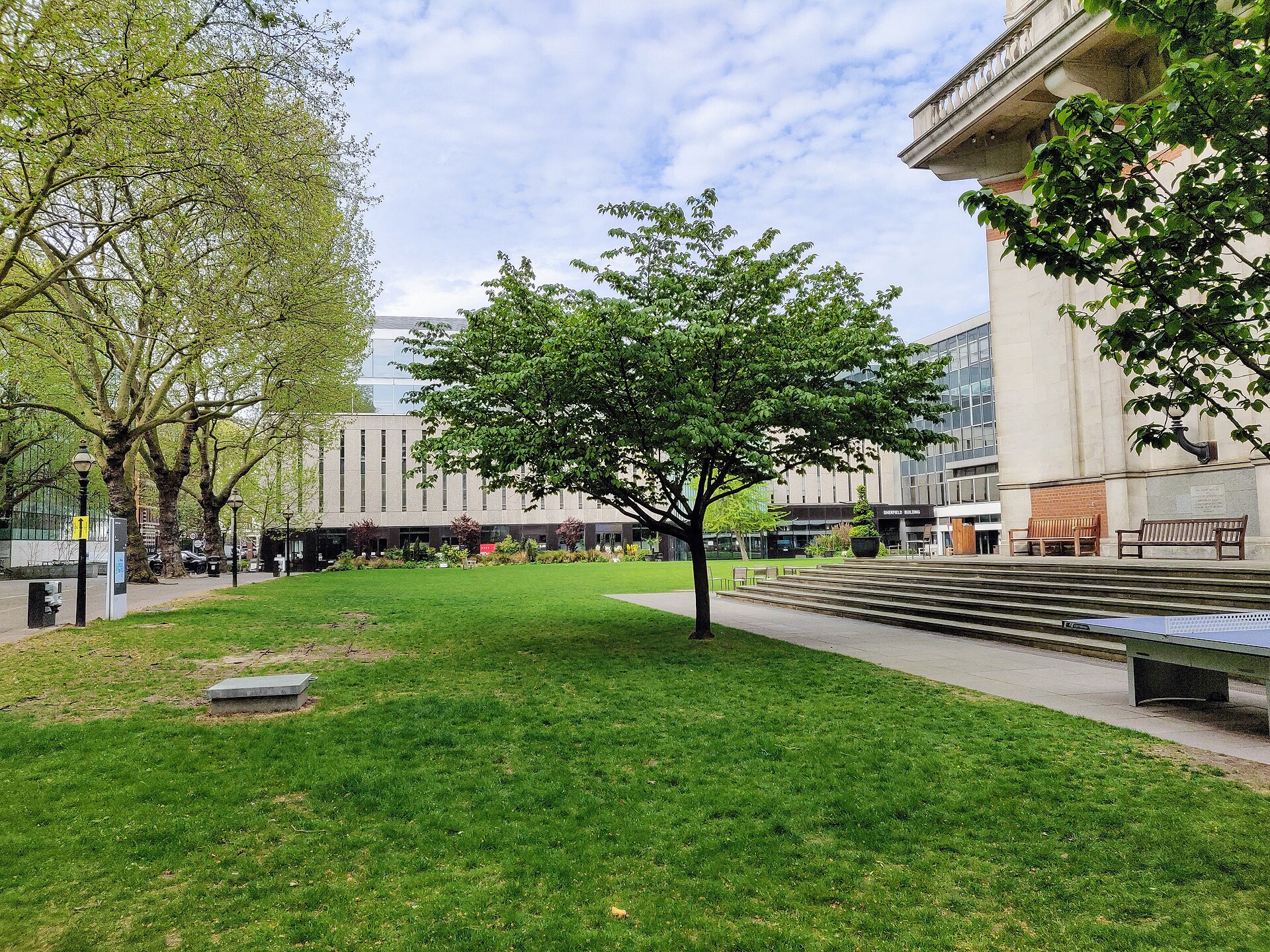
Below it, Queen's Lawn is the main open space: a green square framed by the Central Library, the Sherfield Building and science departments. On a sunny day it fills with students between lectures. Imperial College Road runs along its southern edge and is the easiest line to follow when you first arrive.
Exhibition Road and Prince Consort Road
Imperial has two faces to the street. The main entrance is on Exhibition Road, a wide, largely pedestrian-friendly avenue shared with the museums, where the glass-fronted business school building marks the way in. To the north, along Prince Consort Road, the grand stone façade of the Royal School of Mines building recalls the college's mining and engineering roots and faces towards the back of the Royal Albert Hall.
Each summer, Imperial and its neighbours hold the Great Exhibition Road Festival, a free public festival of science and the arts that takes over the street and the campus. It is a relaxed way for a prospective student to see labs and projects up close, if the dates fit.
More than one campus
South Kensington is the heart of undergraduate life, but not the whole university:
| Campus | Where | Mainly used for |
|---|---|---|
| South Kensington | Central-west London | Most teaching, the library, the union, many halls |
| White City | West London | Research, start-ups and innovation spaces |
| Hammersmith | West London | Medical research, at Hammersmith Hospital |
| St Mary's | Paddington | Medicine, at St Mary's Hospital |
| Silwood Park | Near Ascot, Berkshire | Ecology and environmental research |
Medical students in particular spend time at hospital campuses across west London, so check where your course is actually taught.
Student life
Imperial's student body is large and very international, and its courses have a reputation for being demanding. The student union, based on the campus in Beit Quadrangle next to the Royal Albert Hall, runs hundreds of clubs and societies, from engineering projects and robotics to music, drama and faith groups. The Ethos sports centre on campus has a pool and gym, and the boat club rows on the Thames from a boathouse at Putney.
Most first-year undergraduates are offered a place in university halls. Some are right beside the campus around Prince's Gardens; others are elsewhere in west London, a short Tube ride away. Evenings often mean Hyde Park and Kensington Gardens, the museums' late openings, concerts at the Royal Albert Hall, or heading into central London.
Planning a visit
Imperial holds undergraduate open days, typically in the summer, with department talks, lab visits and campus tours led by current students; there are also campus tours and virtual options at other times of year. Registration is usually required for open days. Check the official visiting and open-day pages for the current schedule before you book travel.
You can see a great deal of the campus from public streets, and the museums next door make it easy to fill the rest of the day.
Transport to and around campus
- Tube: South Kensington station (District, Circle and Piccadilly lines) is a short walk away, with a pedestrian subway leading towards the museums and Exhibition Road. Gloucester Road and Knightsbridge are also close.
- From Heathrow: the Piccadilly line runs direct to South Kensington, which makes arrival simple, if slow at busy times.
- From the main rail stations: Paddington is a short bus or taxi ride away; King's Cross and Euston connect by Tube.
- Buses run along Kensington Road and Cromwell Road, at either end of Exhibition Road, and many students cycle.
Where to base yourself
- South Kensington and Kensington, for walking to the campus and museums; elegant but among London's pricier areas.
- Earl's Court and Gloucester Road, a little further out with a wider range of hotels and quick Tube links.
- Paddington and Bayswater, north of Hyde Park, handy for Heathrow trains.
- Central London, if you are combining the visit with sightseeing; see where to stay in London.
Practical tips
- Build your day around the open day or tour slot, then add a museum or a walk in Hyde Park.
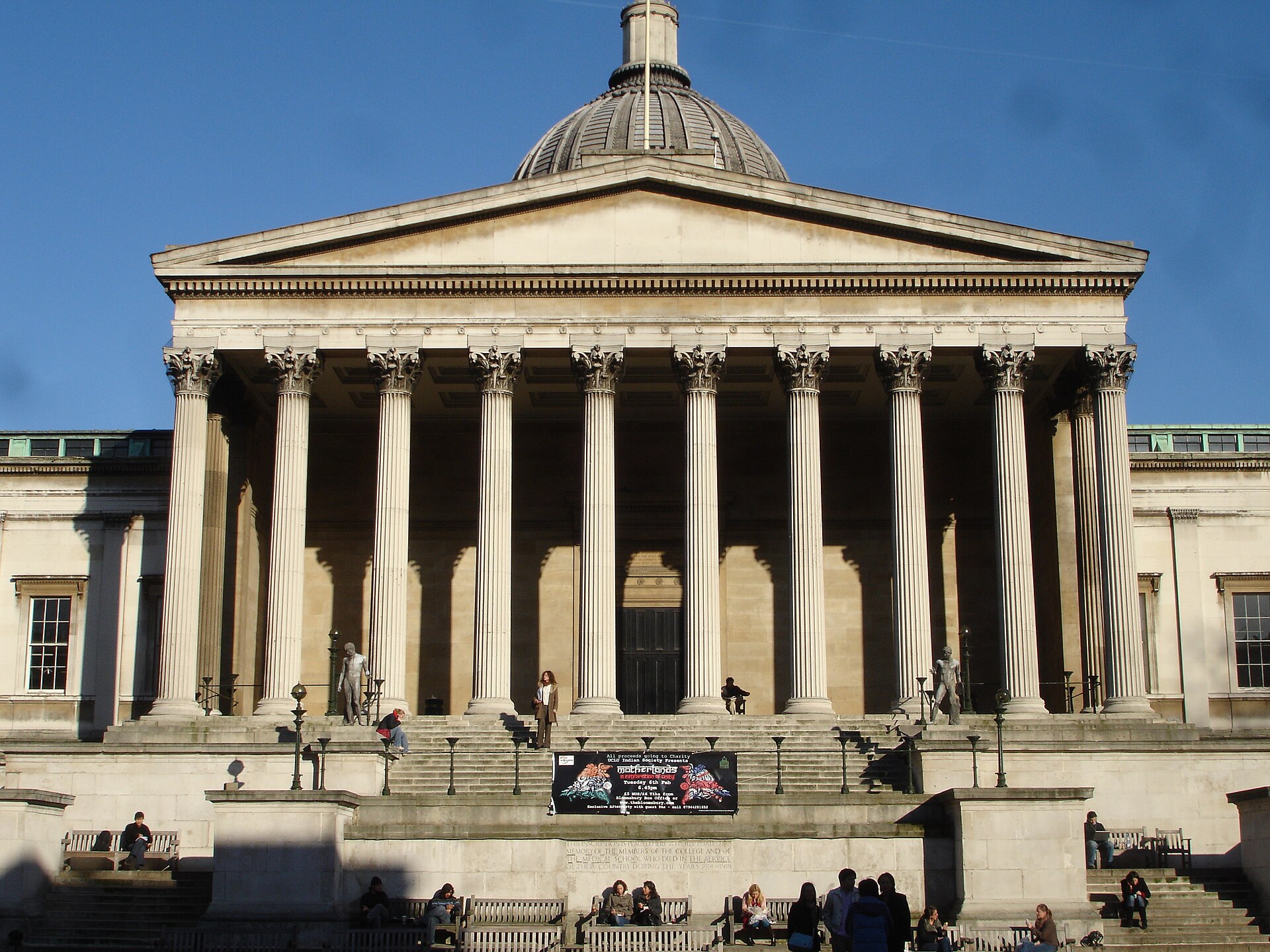
- If you are also considering UCL in Bloomsbury, the two campuses are about half an hour apart by Tube, so both fit into one day.
- Check which campus your course uses before you plan around South Kensington alone.
- For more ideas while you are in the city, see our three days in London itinerary.
Bloiq is reader-supported. Some links may earn us a commission; it never affects what we write. How we make money.
Cover photo: Shadowssettle, CC BY-SA 4.0, via Wikimedia Commons