Home / Tools & DIY · Product overviews / Power & Hand Tools / Drills · More from VEVOR
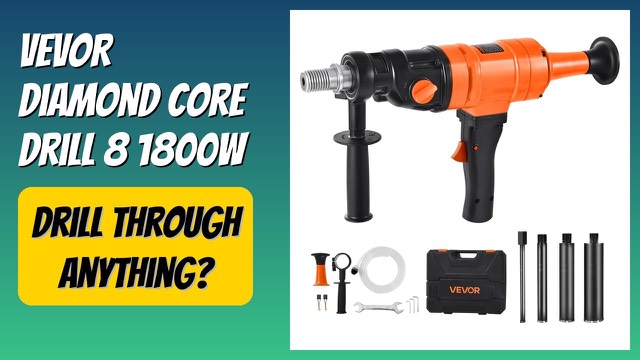
VEVOR Z1Z-CF-9150 Diamond Core Drill: features, specs and who it suits
A 2000W handheld diamond core drilling machine for wet and dry drilling, with 0.8-6.3 inch hole capacity, 0-1800 rpm, a clutch and four bits included.
This page contains an affiliate link, marked as such. If you buy through it, Bloiq may earn a commission at no extra cost to you.
The VEVOR Z1Z-CF-9150 is a handheld diamond core drilling machine with a 2000W motor. A core drill cuts a clean round hole, leaving a solid cylinder of material rather than grinding everything to dust, which is why it is used for pipe, vent and cable holes through concrete, brick and stone. Here is what the specs mean.
How core drilling differs from ordinary drilling
A standard twist bit grinds away all the material in the hole. A core bit is a hollow tube with diamond segments on its rim, so only a ring is cut, and this lets large holes be made with a manageable amount of power. Diamond is hard enough to cut masonry and stone. VEVOR says the included bits go through reinforced concrete, brick and marble.
Motor, speed and hole range
The motor is rated at 2000W, with variable speed from 0 to 1800 rpm. Variable speed matters: starting slowly helps a bit bite without wandering, and the right running speed typically falls as the bit diameter increases. The machine drills holes from 0.8 to 6.3 inches (20-160 mm), and its output shaft is threaded 1/4-7 inch according to the listing, which is how bits connect.
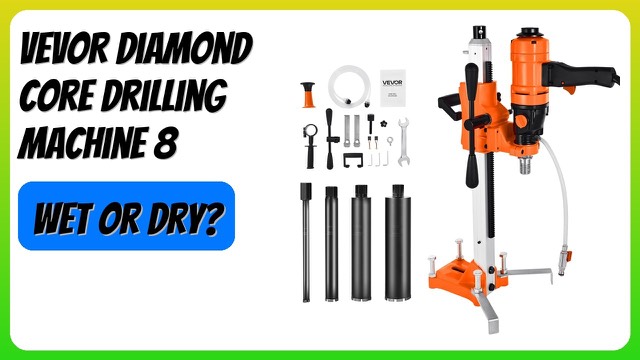
Wet and dry drilling
The tool supports both modes. In wet drilling, water runs through the bit to cool it and flush out debris, which VEVOR says reduces dust and gives smoother holes. Wet drilling is also typically preferred for indoor renovation work, because dust from concrete and masonry contains fine silica. In dry drilling, no water is used, and dust control and a suitable respirator become essential. VEVOR describes a water-seal-free design meant to avoid the seal failures found in some drills, and a reinforced PVC water hose.
Water and electricity need care. Follow the manual on the supply of water, the power connection and the use of a residual-current device (GFCI in North America).
Clutch and build
A built-in clutch stops the drill automatically when it hits hard resistance, such as rebar, which protects both the user and the machine from a sudden twist. The body is aluminium, which keeps the weight down while staying tough; even so, the whole machine weighs 32.6 lb (about 14.8 kg), and a core drill can pull hard against the wrists. The steel output shaft is meant for consistent accuracy.
What comes in the kit
The kit includes four diamond bits at 1, 2, 3 and 4 inches. Larger bits up to the 6.3 inch maximum would need to be sourced separately, and bits are consumable parts that wear with use.
Who it suits
It suits renovators, plumbers, electricians, HVAC installers and keen DIYers who drill for pipes, ducts and cables. People who only need a few small holes may find a hammer drill sufficient.
What to check before you buy
- Hole size: check the diameters you need against the 0.8-6.3 inch range and the bit sizes included.
- Material: confirm the wall type and look for hidden rebar, pipes and cables before drilling.
- Water supply: plan how to feed and catch the water, and protect floors and finishes.
- Dust and safety: wear eye, ear and respiratory protection, and follow the manual.
- Weight and support: 32.6 lb is heavy for overhead or long holes; check whether a stand would help.
- Bit thread: check the thread of any extra bits against the output shaft.
The short version
- A 2000W handheld diamond core drill with 0-1800 rpm variable speed.
- Drills 0.8-6.3 inch (20-160 mm) holes, wet or dry.
- Clutch stops the drill on hard resistance; aluminium body.
- Includes four bits (1, 2, 3 and 4 inches); about 32.6 lb.
- Check the manual, wear protective equipment and scan walls before drilling.
Bloiq is reader-supported. Some links may earn us a commission; it never affects what we write. How we make money.